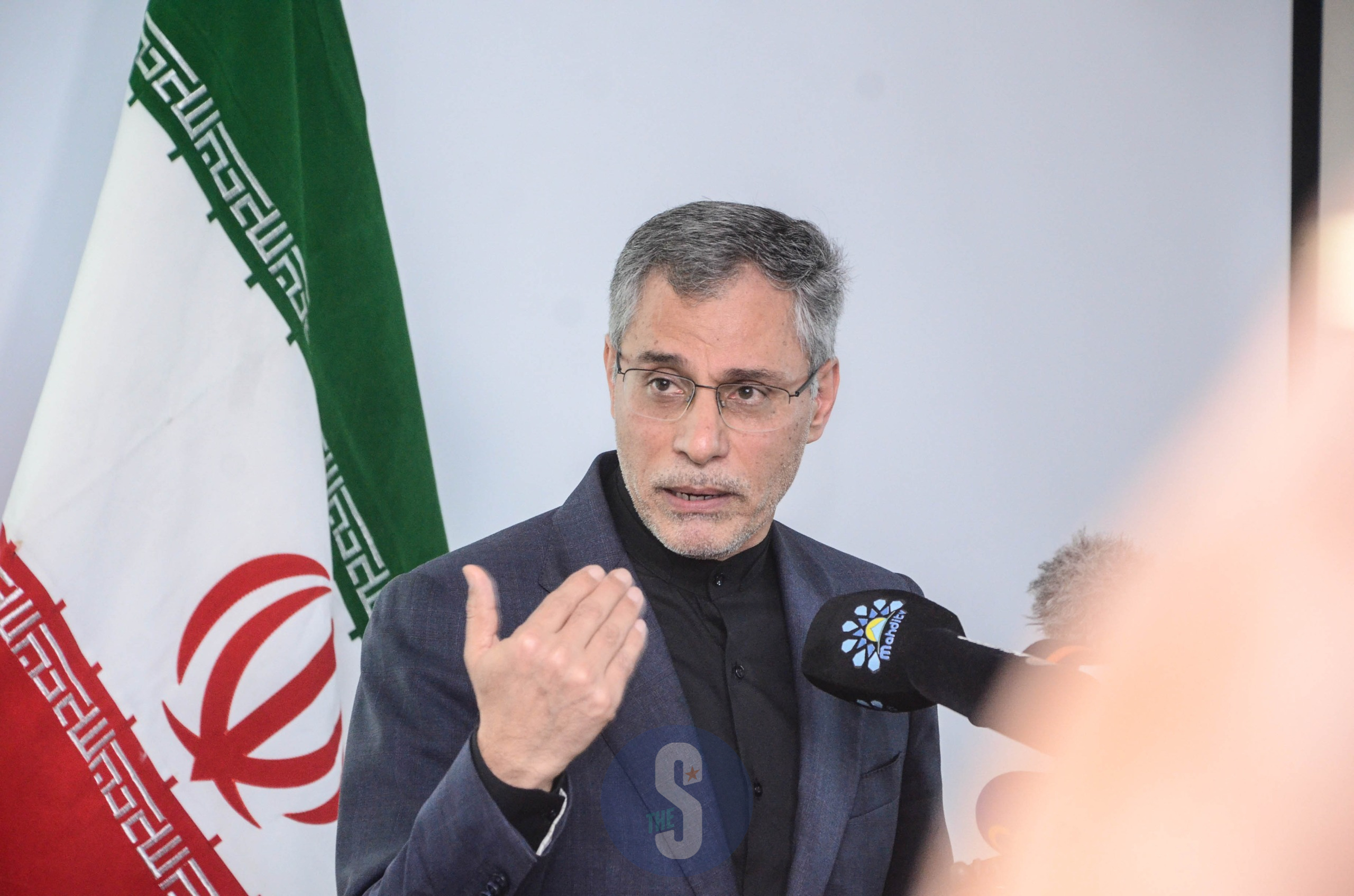
 The Islamic Republic of Iran's ambassador to Kenya, Dr Ali Gholampour, addressing journalists at the Cultural Council of the Embassy of Iran in Westlands on March 2, 2026./DOUGLAS OKIDDY
The Iranian Ambassador to Kenya, Ali Gholampour, has cautioned that the ongoing conflict in the Middle East could have negative economic consequences globally, including in Kenya, but maintained that key oil supply routes remain open.
He stated that Iran has shown “full restrictions” in order not to stop or interfere with the movement of goods necessary for economies in the region and beyond, including Africa.
Central to this assurance is the continued operation of the Strait of Hormuz, one of the world’s most strategic oil transit routes.
“We are very diligently and very smartly controlling the Strait of Hormuz, but it’s open. It’s not closed yet,” he said.
The Strait of Hormuz is a narrow waterway through which a significant portion of the world’s crude oil and liquefied natural gas shipments pass. Any closure or major disruption would have immediate repercussions on global energy markets.
Addressing concerns about the potential impact of war on trade and energy supplies, the envoy acknowledged that in situations of widespread military escalation, economic disruptions are almost inevitable.
“In the time of war, especially when it turns into all-around war and total war, the consequences will impact all nations negatively, not only in the region but also beyond,” he said.
He pointed specifically to trade, economic stability and commercial transportation routes as areas that typically suffer during armed conflict.
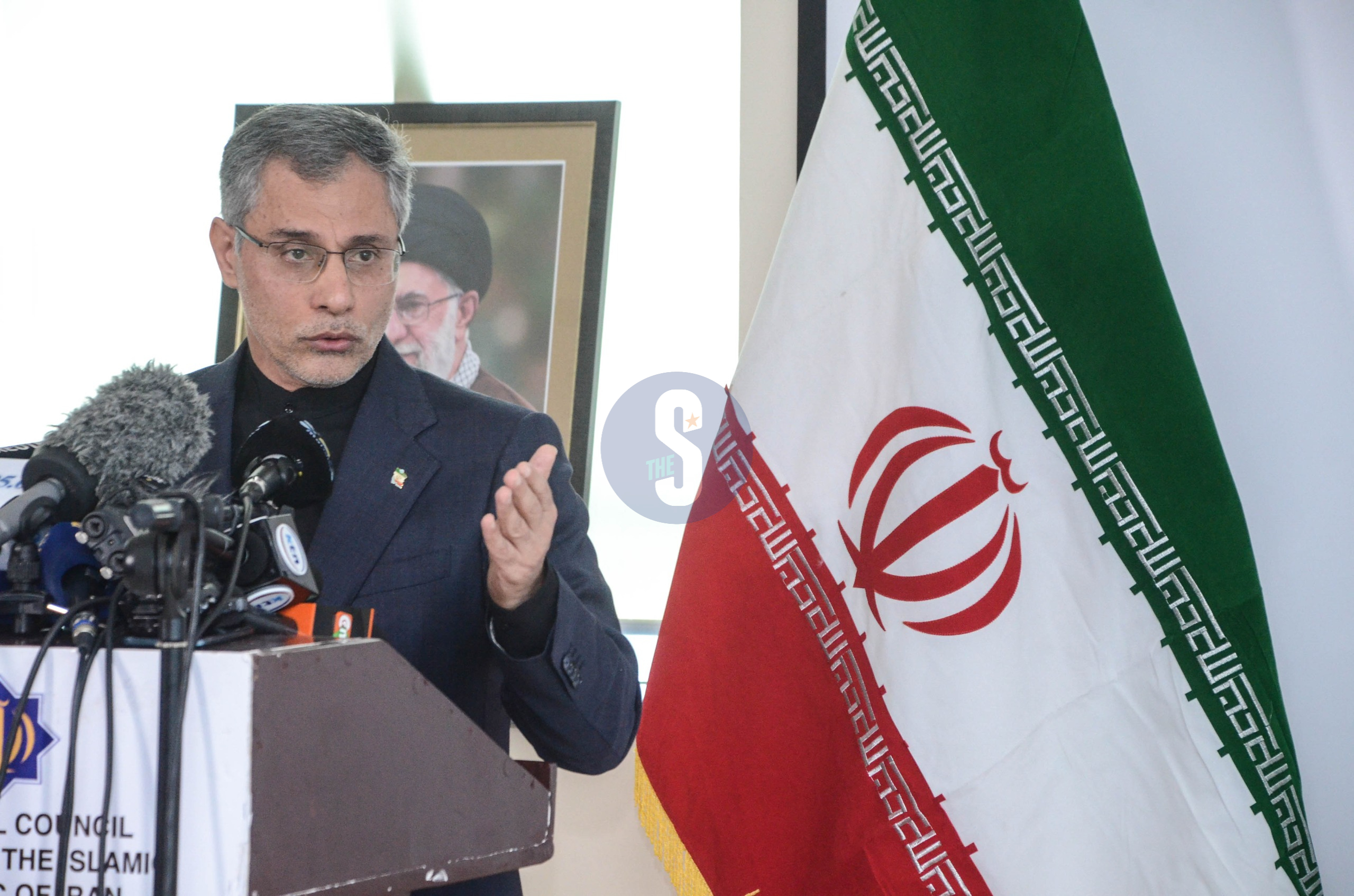 The Islamic Republic or Iran's ambassador to Kenya, Dr. Ali Gholampour addressing journalists at the Cultural Council of the Embassy of Iran in Westlands on March 2, 2026./DOUGLAS OKIDDY
For Kenya, which relies heavily on imported petroleum products and global shipping networks, any disruption in international trade corridors could translate into higher fuel costs, inflationary pressure and increased prices of essential goods.
However, the ambassador sought to reassure that Iran has not taken steps to interrupt the flow of commodities.
He further called on governments worldwide to exercise responsibility in protecting their citizens’ access to prosperity, trade, food and energy.
According to him, preventing economic fallout depends on diplomatic efforts to de-escalate tensions and halt what Iran describes as aggression against its territory.
“We do believe that all the countries and the government should show their responsibility and protect the rights of their people for prosperity, for trade and access to food, access to energy,” he said.
“They should try all their best and good offices to de-escalate and, first and foremost, to stop aggression against Iran.”
The envoy warned that failure to contain the conflict could produce broader negative consequences affecting people around the world.
While insisting that Iran does not wish to disrupt global trade flows, he stressed that sustained military escalation would inevitably create economic instability.
For Kenya and other African nations dependent on stable global supply chains, the unfolding crisis underscores the fragile link between geopolitical tensions and domestic economic realities.