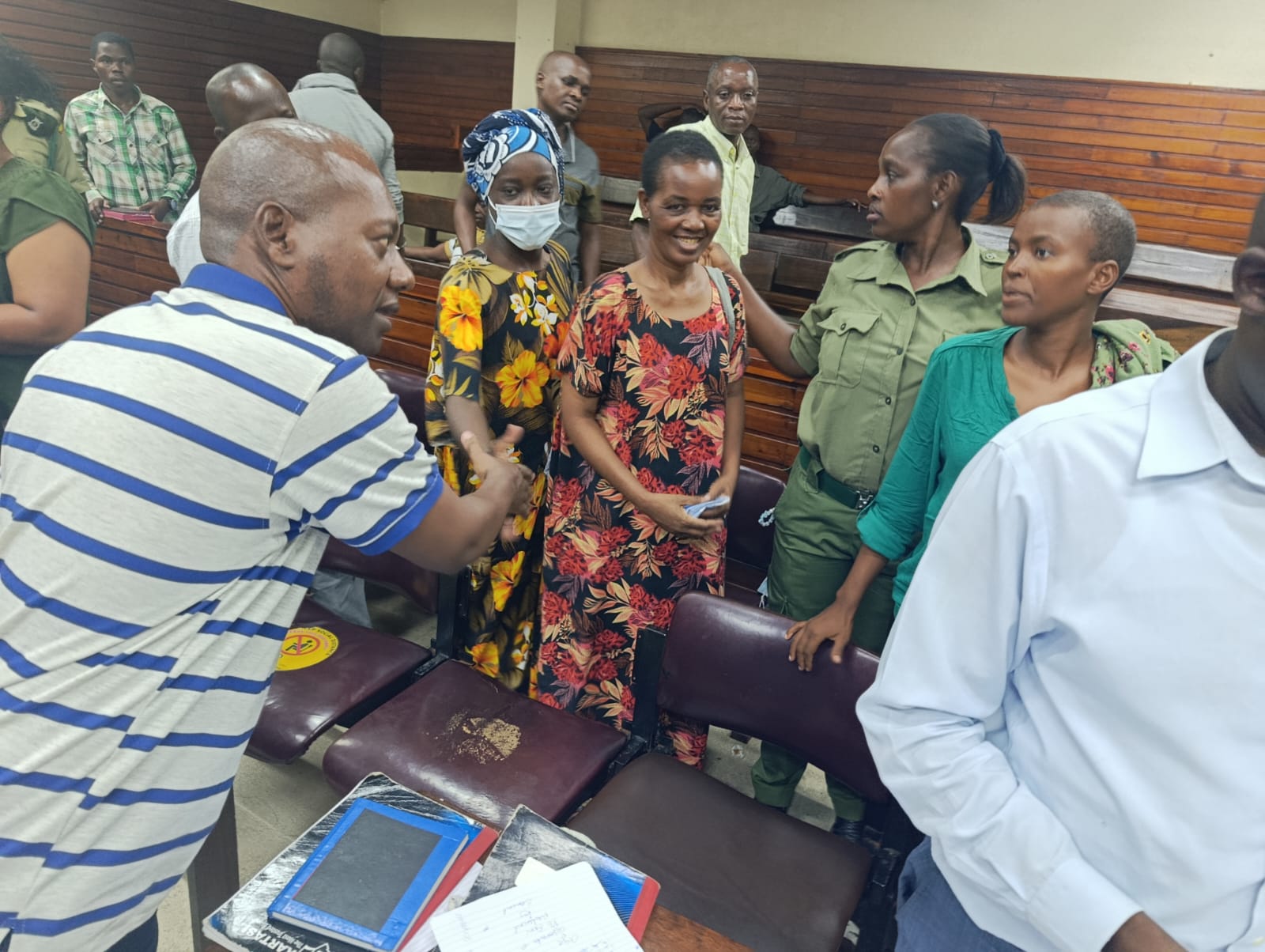
Paul Mackenzie and his co-accused during a court session on Thursday.
The Director of Public Prosecutions has closed the final file in the Shakahola killings, where Paul Mackenzie and 94 others face 238 counts of manslaughter.
The prosecution concluded its case after the lead investigating officer laid bare the depth of control allegedly exercised by Mackenzie, resulting in 429 deaths.
Chief inspector Raphael Wanjohi, the 95th prosecution witness, told Mombasa chief magistrate Alex Ithuku that Mackenzie and his co-accused entered into what he described as a suicide pact, orchestrating deaths under the belief they would meet Jesus before December 2020.
“The suspects had a mutual agreement and shared intention, both individually and collectively, for a suicide pact. They had a common purpose to commit acts of manslaughter by overseeing the deaths of their children through enforced fasting,” Wanjohisaid.
He added: “They had a specific intent to fast to death to meet Jesus and possessed knowledge of committing an unlawful act, as evidenced by the way graves were concealed."
Wanjohi told the court that Mackenzie and the 94 co-accused bore the greatest responsibility for the manslaughter of 238 deceased persons.
The court heard that individuals who resisted the pact fled the settlement, underscoring the level of indoctrination and coercion allegedly imposed on followers.
The group had established itself deep inside the Shakahola Forest, several kilometres from main access points, effectively shielding activities from scrutiny.
Wanjohi testified that the settlement was 14km from schools, 35km from Lango Baya police station, and 32km from the nearest chief’s camp.
Within the forest, Mackenzie and his close associates allegedly enforced strict compliance with prolonged fasting.
The court heard that a militia monitored movements and guarded women and children undergoing fasting inside makeshift canopies.
Call data records presented in court indicated coordination between Mackenzie and his security team, with communications used to oversee activities across the forest during the fasting period.
On the first day of exhumations, about 25km inside the forest, investigators uncovered 65 graves, 14 of which contained multiple bodies.
Seventeen bodies were exhumed that day, documented, assigned unique identifiers, placed in labelled body bags, and transferred to Malindi Subcounty Hospital mortuary.
The court heard that the graves were shallow and contained adults and minors, some wrapped in bed sheets or lesos tied with knots.
Wanjohi said some bodies appeared to have been moved from one grave to another, possibly to evade detection.
Fast-growing crops had been planted on flattened graves to conceal evidence.
Months later, investigators worked with pathologists in four phases to conduct postmortems on 429 bodies.
Starvation was identified as the leading cause of death, followed by injuries.
Some causes could not be determined due to advanced decomposition.
DNA analysis helped confirm identities and link victims to relatives.
Investigators told the court that only two burial permits had been obtained, far below legal requirements.
Children and adults were often buried together, with graves flattened or disguised with crops — actions investigators said pointed to deliberate efforts to conceal evidence.
Wanjohi further testified that followers abandoned employment, sold property, withdrew children from schooland destroyed identity documents before relocating to Shakahola.
He said Mackenzie and his lieutenants used coded language during the fasting period, including terms such as “Wateule” for members, “Mataifa” for outsiders, “Harusi” for burial, “Kunyakuliwa” for rapture and “Kanisa Jagwani” for Shakahola, reinforcing secrecy within the group.
Searches at Mackenzie’s premises recovered DVDs, religious literature, files and registers containing end-times teachings that investigators said shaped followers’ actions.
Police operations led to multiple arrests, with suspects intercepted while fleeing the forest or travelling in Malindi.
Sixty-two suspects were arraigned before Shanzu law courts, while others were presented under miscellaneous applications or custodial orders.
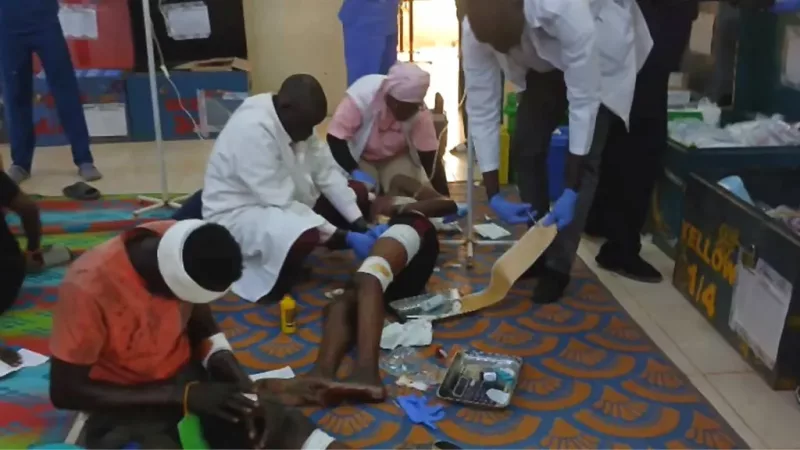
Between June 6 and 10, 2023, several suspects staged hunger strikes in custody.
Six were hospitalised and one died.
Charges of attempted suicide were later withdrawn and the accused were subsequently charged with 283 counts of manslaughter, among other offences.
Investigators relied on forensic analysis, DNA testing, mapping and witness testimony to piece together the scale of events.
Ithuku directed that the matter be mentioned on March 3for directions on submissions.
A ruling on whether the accused have a case to answer will follow.