A fresh standoff is brewing in Parliament after senators proposed that counties receive Sh454.7 billion in equitable share for the 2026-27 financial year.
The development has set the stage for a bruising battle with the National Assembly, which has for years sided with the National Treasury.
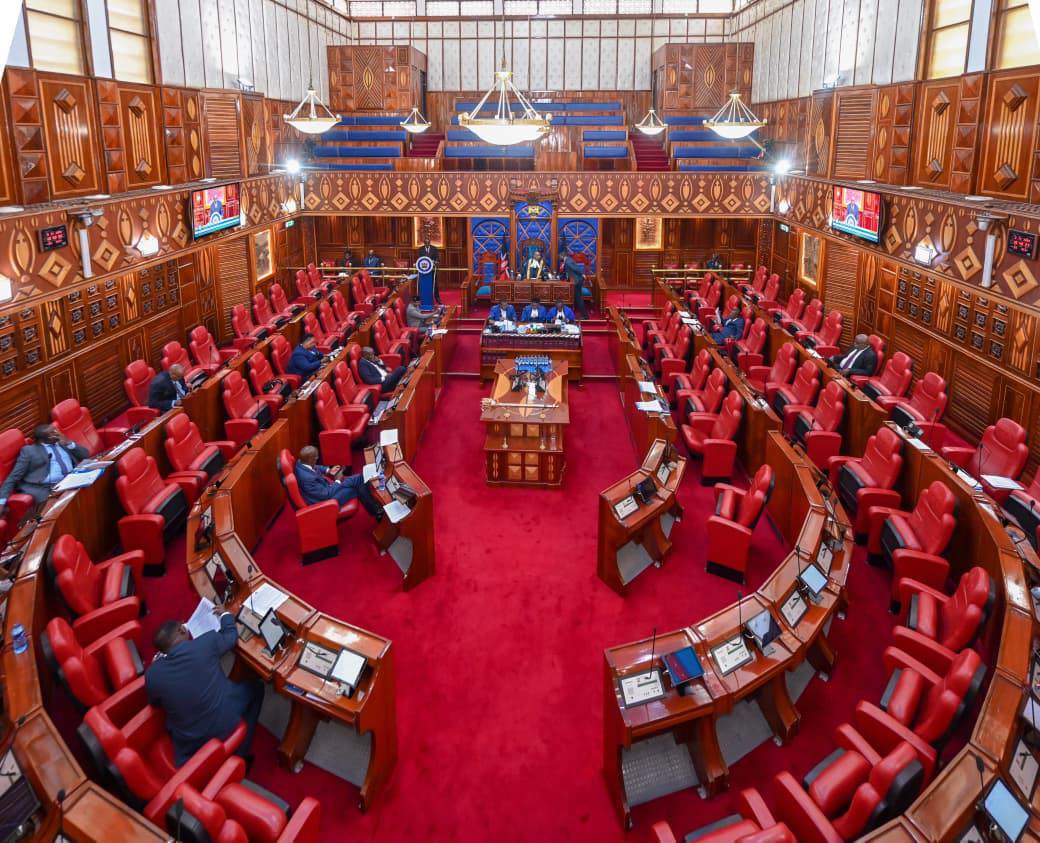
In a report tabled and adopted in the Senate, the Finance and Budget Committee enhanced the allocation to counties, citing inflation, economic growth and hiring of community health workers.
The allocation is higher than the Treasury’s proposal of Sh420 billion for the devolved units.
The Treasury is likely to secure the support of the National Assembly in its proposal, as has been the trend since the advent of devolution.
Governors, through the Council of Governors, are demanding a much higher allocation of Sh534.4 billion.
The governors argue their proposal reflects real financial pressures facing counties, including salary obligations, health sector reforms and the transfer of additional devolved functions from the national government.
They say the Sh534.4 billion request includes Sh35 billion to account for revenue growth, Sh8.94 billion for Universal Health Coverage workers absorption, Sh10.06 billion for SRC pay reviews and Sh65.97 billion tied to functions that have been identified and gazetted for transfer to counties.
“The national government has already implemented all SRC salary cycles, leaving counties behind. This is discriminatory and has triggered industrial action that will escalate if not addressed,” the governors said in a statement.
They further argue that at least Sh65.97 billion is available within national ministries, departments and agencies (MDAs) and should be transferred alongside the devolved functions.
The Commission on Revenue Allocation (CRA), which advises on revenue sharing, has recommended Sh458.74 billion for counties—higher than the Treasury’s Sh420 billion proposal but still below the governors’ demand.
According to the CRA, shareable revenue is projected to rise from Sh2.6 trillion to Sh2.98 trillion in the next fiscal year, an increase of Sh342.6 billion.
Of this, the commission proposes Sh2.5 trillion for the national government and Sh458.7 billion for counties.
Senators, led by Finance and Budget committee chairman Ali Roba, argue the higher allocation is necessary to stabilise county finances, clear pending bills and prevent further service disruptions.
They have also asked the Treasury to allocate an additional Sh100 million to the CRA to address funding shortfalls in key technical programmes, including equitable revenue sharing, public financial management and stakeholder engagement.
The committee wants the Treasury to demonstrate how Senate resolutions on the Budget Policy Statement (BPS) were incorporated, as required under the Public Finance Management Act.
In a bid to enhance accountability, senators have directed the Treasury to submit, by June 30, 2026, an impact assessment of all conditional additional allocations made to counties since the inception of devolution. The report must detail actual transfers, pending disbursements, project purposes and implementation timelines for each county.
They have also given the Intergovernmental Relations Technical Committee six months to finalise the costing of delineated functions in collaboration with the Treasury and the Council of Governors.
To improve financial planning at the county level, the Senate is pushing for the fast-tracking of a revenue forecasting model to help counties accurately project their own-source revenue.
At the same time, the committee has taken a hard line on fiscal discipline, warning that counties that fail to implement pending bills action plans within the first quarter of the financial year could face suspension of funds under Article 225(3) of the Constitution.
The Treasury has also been directed to provide, within 30 days, a timeline for integrating the Human Resource Information System (HRIS-Ke) with the Integrated Financial Management Information System (IFMIS) and an action plan to address unremitted pension deductions.
The Controller of Budget will be required to include the status of pension arrears in quarterly budget implementation reports.
The competing proposals now set the stage for intense negotiations between the two Houses of Parliament and the Treasury, with counties warning that underfunding could cripple service delivery in health, agriculture and infrastructure.