You hear the numbers on TV, but seeing the ripple in real life hits different. According to the latest Nacada data, one in 11 Kenyans aged 15-24 is currently using at least one drug or substance. Alcohol sits at the top, with around 5.2 per cent of young people in that age bracket regularly drinking. Even more alarming, polydrug use among the youth is almost 4 per cent— meaning thousands are mixing substances like they’re choosing a matatu route.
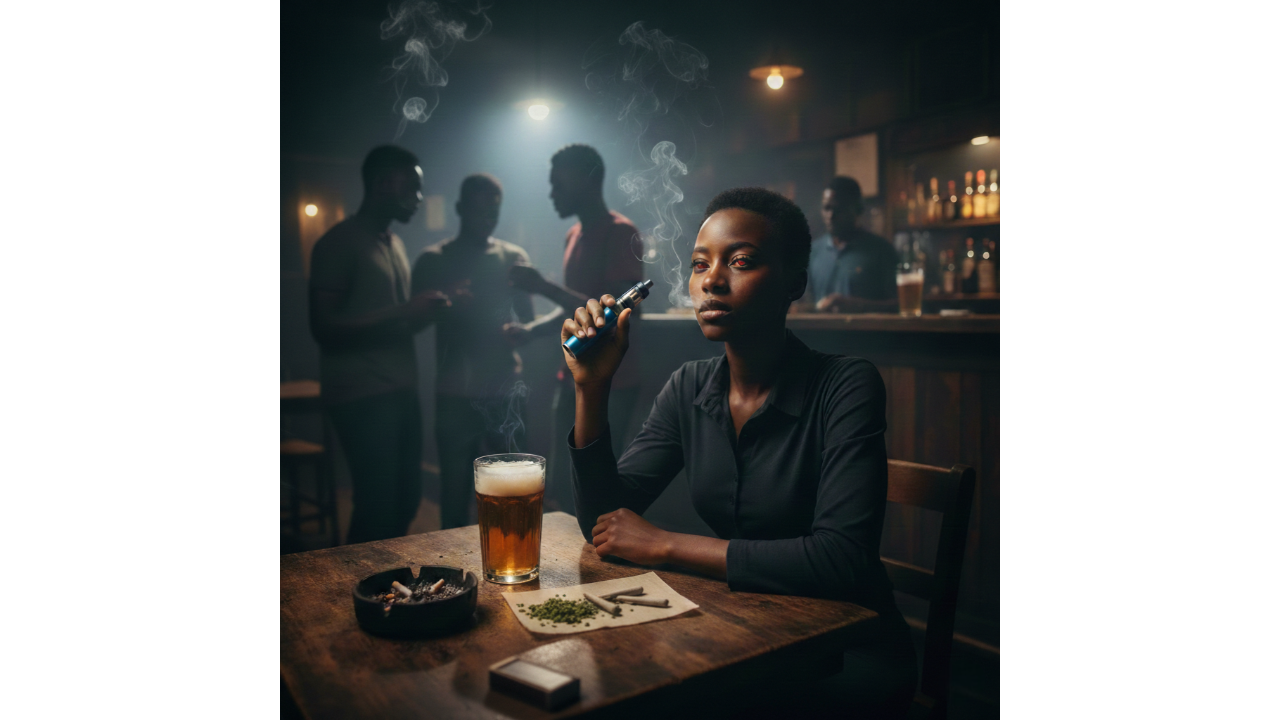
But statistics don’t capture the soundtrack of my generation. They don’t tell you about Saturday nights in dingy bars, where a cheap bottle of local brew is passed around like a concert ticket, except it feels more like an escape hatch than entertainment. They don’t tell you about the whiff of miraa in a parked boda boda bay by 9pm, or the crazy dance of codeine syrup hidden in soft drinks at parties.
They don’t tell you about that one guy in my neighbourhood who insists weed “keeps him creative”, yet he hasn’t finished a single project in two years. Or the first-year student I met at Jkuat who started vaping because it “wasn’t as bad as cigarettes” then couldn’t sit through a lecture without sneaking a puff in the washrooms. Or the way weed has slid quietly into social spaces; not dramatic, not chaotic, just there, like background music you stop questioning.
I remember Mwaura* (not his real name), 23, a guy from Ruiru whom I used to shoot hoops with. Super funny, always cracking jokes. Then in Form 4 he started chasing that “chill” with miraa and chang’aa.
One weekend he disappeared for three days. Came back glassy-eyed, mumbling about “visions”. That was the last time I saw him sober. He now sits by GSU roundabout most afternoons, a reminder that substance use doesn’t just steal time, it steals futures.
But here’s where it gets complicated. My friend, Zeddy*, 26, looked me in the eye and said, “Look, it’s not drugs that are the problem, it’s boredom and no jobs. We’re young, we’re stressed, and we get kicked to the curb if we don’t fit a neat ‘ambitious’ box. So people find ways to cope.”
And honestly? I hear him. When the economy feels like a revolving door of “try, fail, try, still fail”, the escape isn’t a moral breakdown, it feels like survival logic. Another friend, Joyce Atieno, 21, pushed back hard. “You’re not coping, you’re self-destructing,” she said. “This stuff messes with your mind, with your future. I’ve seen my elder brother shrink into shadows.” And she’s right, too.
FAILURE OR FAILED?
It’s not just about bad choices. It’s about the context that shapes them.
Gen Z in Kenya grew up with conflicting signals: be ambitious, but there are only so many jobs; chase your dreams, but the cost of living is steep; stay sober, but where’s the fun, the relief, the release?
Meanwhile, big cities, especially Nairobi, Mombasa and Kisumu, have become funnels for international drug trafficking, flooding the streets with cheap synthetics and uppers.
So what does that tell us? That drug use has become woven into the fabric of youth culture, an uncomfortable fashion statement, a quick fix, a phantom band aid on deeper wounds.
Here’s where it hits home: Society likes to shout “Just say no!” but never asks why so many are saying “yes”. Peer pressure? Sure. Unemployment? Absolutely. Mental health struggles? You bet.
When anxiety feels like a constant companion and formal support systems are too expensive or too far, many of us self-medicate. That doesn’t excuse the behaviour, but it explains why it’s not vanishing anytime soon.
Now, don’t get me wrong; there are youths choosing differently. My cousin, Faith Chebet, 27, works with a community rehab outreach in Thika. During one of our discussions, she openly told me how transformation happens slowly, “not with harsh sermons, but with listening, respect and real opportunity”. It’s a reminder that the story doesn’t have to end in despair.
But the heart of the matter is this: We can’t treat drug abuse among Gen Z as a personal failure when it’s really a societal symptom. It’s about economic disenfranchisement, unmet mental health needs and a culture that glorifies escapism without offering sustainable joy.
We need more spaces where youth are heard, more jobs, more education on substance harm, and real, accessible rehab support, where a child from an impoverished family doesn’t feel like sobriety is a lonely, impossible path.
Until then, what I see on my streets, and in my friends, is not just a generation experimenting but a generation crying out for meaning, and sometimes, finding that meaning in the wrong places.
If our generation is meant to shape Kenya’s future, then drug abuse is the fog we’re walking through to get there. The danger isn’t that we’re lost, it’s that we’re getting used to not seeing clearly. And nothing about that should feel normal.