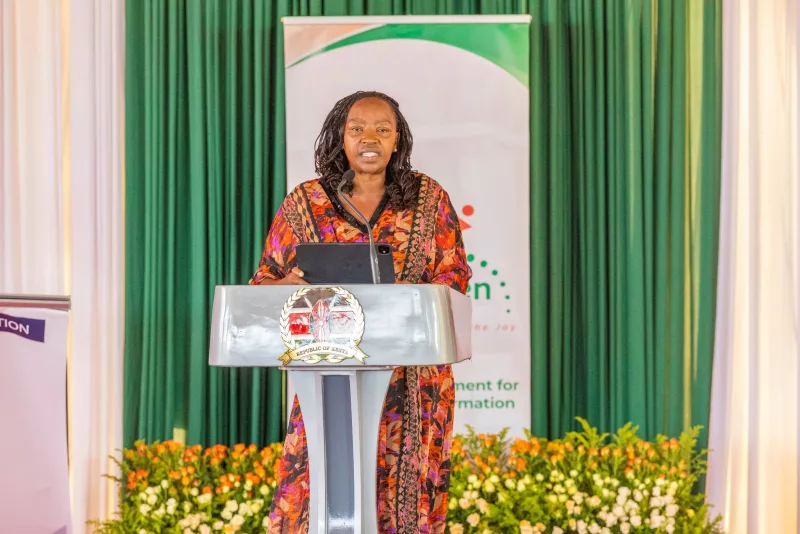
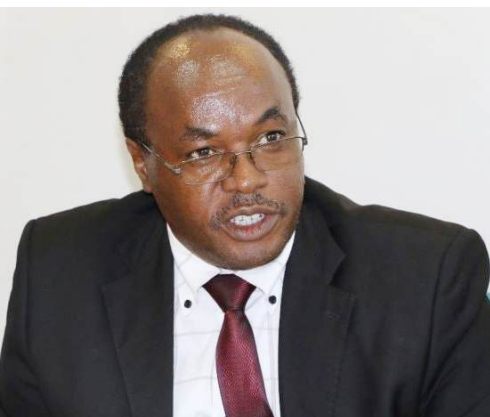
 CUE chief executive Prof Mike Kuria /FILE
Universities across the country are facing a costly overhaul as they prepare to admit the first group of Competency-Based Education (CBE) learners in 2029.
Education experts say institutions must urgently redesign curricula, retrain lecturers, overhaul assessment systems and invest heavily in laboratories.
They argue that universities may require new laboratories, digital learning platforms, innovation hubs, industry-linked training programmes and large-scale lecturer retraining.
At the same time, universities are battling unprecedented financial strain. Many are struggling to pay salaries, remit statutory deductions and settle pending bills.
A Sh223 billion funding crisis threatens to cripple the higher education sector. Education regulators, policy leaders and researchers say there is no luxury of waiting.
Universities face challenges including student loans, mounting liabilities, unmet CBA pledges and stalled development projects.
For the 2026–27 financial year alone, Sh311.9 billion is required for recurrent expenditure, but only Sh155.2 billion is available. Development expenditure faces a further Sh6.55 billion shortfall.
A Sh85.28 billion pending bill has left suppliers unpaid, alongside pension contributions, statutory deductions and bank loans.
Taken together, the sector is operating at barely half of its required funding.
If the gaps persist, stakeholders warn, the country risks welcoming CBE learners into institutions struggling to sustain basic operations.
At the centre of the transition is the Commission for University Education (CUE), which has begun rallying stakeholders to align universities with reforms already implemented at the basic education level.
CUE chief executive Prof Mike Kuria said the country must urgently confront fundamental questions before the first group joins universities in three years.
“What is Curriculum-Based Education? How is it different?” he asked.
“How has CBE been conceptualised and implemented in other parts of the world? Will graduates of the new senior school be different from those of 8-4-4? How will these learners be assessed and graded? What implications will it have for university entry-level criteria?”
He said universities must decide how deep the transformation will go.
“How fundamental will the university curriculum change? Will the transformation be in the content, pedagogy and assessment? What kind of retooling will be mandatory for university faculties to teach the system? We have the basic education curriculum framework; should we use it at the university level? How prescriptive should it be?”
“These questions should be part and parcel of the discussions as we prepare for the first cohort of learners in 2029,” Prof Kuria said.
Under CBE, learners are trained around competencies — that is, interest, potential, values and utility — rather than mastery of theoretical content alone.
However, officials admit universities are not yet fully prepared.
CUE Board chairman Prof James Onyango Awino described the moment as historic.
“We are at the tipping point of education. I call it the fifth revolution,” he said.
According to Prof Awino, the methodology must shift fundamentally.
“The methodology must change to suit CBE learners. Course material will change. Assessment will change. Teaching methodology will change.”
He said universities must adopt learner-centred pedagogy and practical application models.
“Practical applications will bring more needs. We want our students to fly things into space — they cannot do without resources.”
And resources, he emphasised, will not be cheap.
“Resources, and I mean huge resources, will be required.”
The financial implications emerged as one of the clearest warning signals during the stakeholder forum.
Darius Ogutu, Director of Higher Education at the Ministry of Education, acknowledged the cost implications.
“We have to bring on board the conversation of the resources for the UCBE framework. It is going to be more costly than the current group,” he said.
He added that the government would reach out to agencies and organisations such as the World Bank and the African Population and Health Research Centre to provide data to guide informed decisions.
Roberta Malee Bassett, the World Bank’s Global Lead for Tertiary Education, confirmed support for the transition.
“Reforms are a means to an end, the end being youth with higher skills and the ability to adapt to the world’s changing dynamics,” she said.
“The workforce is changing. Some jobs will not exist in five years. CBE should address that, and we are supporting it.”
The urgency of reform is partly driven by labour market data.
Dr Moses Ngware of the African Population and Health Research Centre, said studies show that 60 per cent of employers have difficulty filling vacancies because of skills mismatch.
“How do we use the new curriculum to address today’s experiences? Is the framework solving the national development issue? Does it meet industry demands?” he asked.
The statistic lays bare the challenge facing higher education — producing graduates who are employable in a rapidly shifting economy.
Experts argue that unless universities adapt to CBE principles, the mismatch between education output and labour market needs will persist.
One of the most sensitive areas likely to change is university admission criteria.
Under 8-4-4, entry is largely determined by Kenya Certificate of Secondary Education grades.
But with CBE emphasising competencies, projects and experiential learning, traditional ranking systems may not suffice.
Kenya National Examinations Council CEO Dr David Njengere urged stakeholders to rethink the purpose of university education.
“How do you transform university education? What is the purpose? Why do we offer university education? Why do we invest 27 per cent of the budget on education? What are the problems faced in communities?” he asked.
“For me, what stands out is whether we impart values to the learners.”
Subira Neema, a director at the Kenya Institute of Curriculum Development, said universities must align their outcomes with those of senior school.
“We have to look at broad outcomes for universities. Link them to the outcomes of the specific levels,” she said.
Kenya Institute of Curriculum Development CEO Prof Charles Ong’ondo cautioned that the process will not be smooth.
“Prepare for fireworks in this journey. Education is one of those things where everyone is an expert. Keep thinking about the politics of the curriculum. Thicken your skin,” he warned.
He noted that many academics have not seen a single curriculum designed for basic education.
“We have to interrogate the senior school curriculum and build on it,” he said.
At the heart of the reform is the vision of producing a different type of graduate.
“We must think about a curriculum that will make people think about what to do, earn them an income and contribute to the development of the country,” Prof Ong’ondo added.
INSTANT ANALYSIS
With 2029 fast approaching, the clock is ticking. Universities must redesign programmes, invest in infrastructure, retrain faculty and possibly rethink admission frameworks — all within a tight timeline and under severe fiscal pressure. If funding gaps are not urgently addressed, there is a risk of launching what officials call the “fifth revolution” in education on a financially unstable foundation.