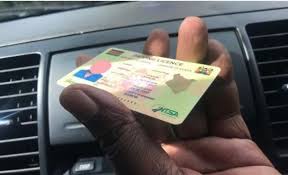
The National Transport and Safety Authority (NTSA) is set to roll out a second-generation smart driving licence to digitise registration, monitoring and regulation of motorists.
The move signals a major shift in road safety management.
According to the agency, the new electronic driving licence (e-DL) will operate as an integrated system linking driver records, traffic enforcement, payment platforms and real-time compliance monitoring.
The system is part of a wider Public-Private Partnership (PPP) with KCB Bank Kenya Limited and Pesa Print Limited seeking to modernise driver licensing and strengthening accountability on Kenyan roads.
Application and upgrade process
Motorists applying for a new licence or upgrading from the current version will start the process through NTSA’s Transport Integrated Management System (TIMS) or at designated enrolment centres.
Applicants will first submit their personal details online, select the licence category and pay the prescribed fee of Sh3,000 for issuance, replacement or renewal.
After online registration, the applicant will book an appointment at one of the more than 100 enrolment centres to complete biometric capture.
At the centre, officials will collect fingerprints, facial images and digital signatures to secure identification and prevent duplication or fraud.
Once biometric data is verified, the information will be transmitted electronically to the production facility for card personalisation.
The smart licence, made from high-security five-layer polycarbonate material with an embedded chip, will then be produced and delivered within 24 to 48 hours.
Applicants will receive notifications when the card is ready for collection or distribution.
Integration with digital platforms
Beyond the physical card, the new system introduces a Mobile Driving Licence (MDL) wallet that allows motorists to carry a digital version of their licence on their phones.
The digital licence will be accessible through mobile applications and USSD platforms and will be integrated with TIMS, enabling drivers to view their status, expiry dates, endorsements and compliance records in real time.
The wallet will also support payments for fines, licence renewals and other NTSA services through mobile money, banking and other digital channels.
Tracking violations and compliance
A central feature of the smart licence system is the introduction of a driver lifecycle management framework that records a motorist’s entire driving history.
Traffic offences detected through automated cameras, police handheld devices or manual enforcement will be logged directly into the driver’s profile.
Each offence will attract merit or demerit points under a structured system designed to identify repeat offenders and promote responsible driving behaviour.
Motorists will receive instant notifications of violations and penalties through SMS or the mobile wallet, allowing them to pay fines promptly and monitor their compliance status.
Link to vehicles and insurance
The smart licence will be linked to vehicle registration records within TIMS, allowing authorities to associate drivers with specific vehicles and usage patterns.
This integration will support better monitoring of commercial drivers, public service vehicle operators and fleet managers.
The system is also expected to interface with insurance and inspection databases, enabling faster verification of compliance with statutory requirements such as valid insurance cover, inspection certificates and licence endorsements.
Support for law enforcement
For traffic officers, the smart licence will significantly improve roadside verification and enforcement.
At roadblocks or checkpoints, officers will be able to scan the smart card or access the driver’s digital profile using handheld devices connected to the central system.
This will instantly display licence validity, driver history, outstanding fines, endorsements and demerit status, reducing the need for manual checks and paperwork.
The real-time access is expected to minimise impersonation, eliminate forged licences and reduce opportunities for corruption by limiting discretionary decision-making.
The system will also be linked to the National Command and Control Centre, enabling coordinated monitoring of traffic offences captured through speed cameras and other automated enforcement tools.
Improving road safety
NTSA says the smart licence system is designed not only for convenience but also to improve road safety outcomes.
By maintaining a comprehensive driver record and tracking repeated violations, the authority will be able to identify high-risk drivers and take corrective action, including targeted enforcement, retraining requirements or licence suspension where necessary.
The data-driven approach will also support policy decisions, road safety planning and risk profiling across different regions and categories of drivers.
With road fatalities rising to more than 5,100 annually, the authority hopes that the combination of biometric identification, automated enforcement and continuous monitoring will strengthen discipline and accountability among motorists.
Nationwide rollout
The project will involve the production of up to five million smart cards every three years over a 21-year period, supported by more than 390 enrolment kits deployed across the country.
NTSA said the system is expected to enhance service delivery, reduce fraud, shorten processing times and bring Kenya’s driver management framework in line with global digital standards.
As the new system takes effect, motorists will transition from a one-time licensing model to a continuous digital relationship with the regulator, one that tracks behaviour, simplifies compliance and places road safety at the centre of everyday driving.