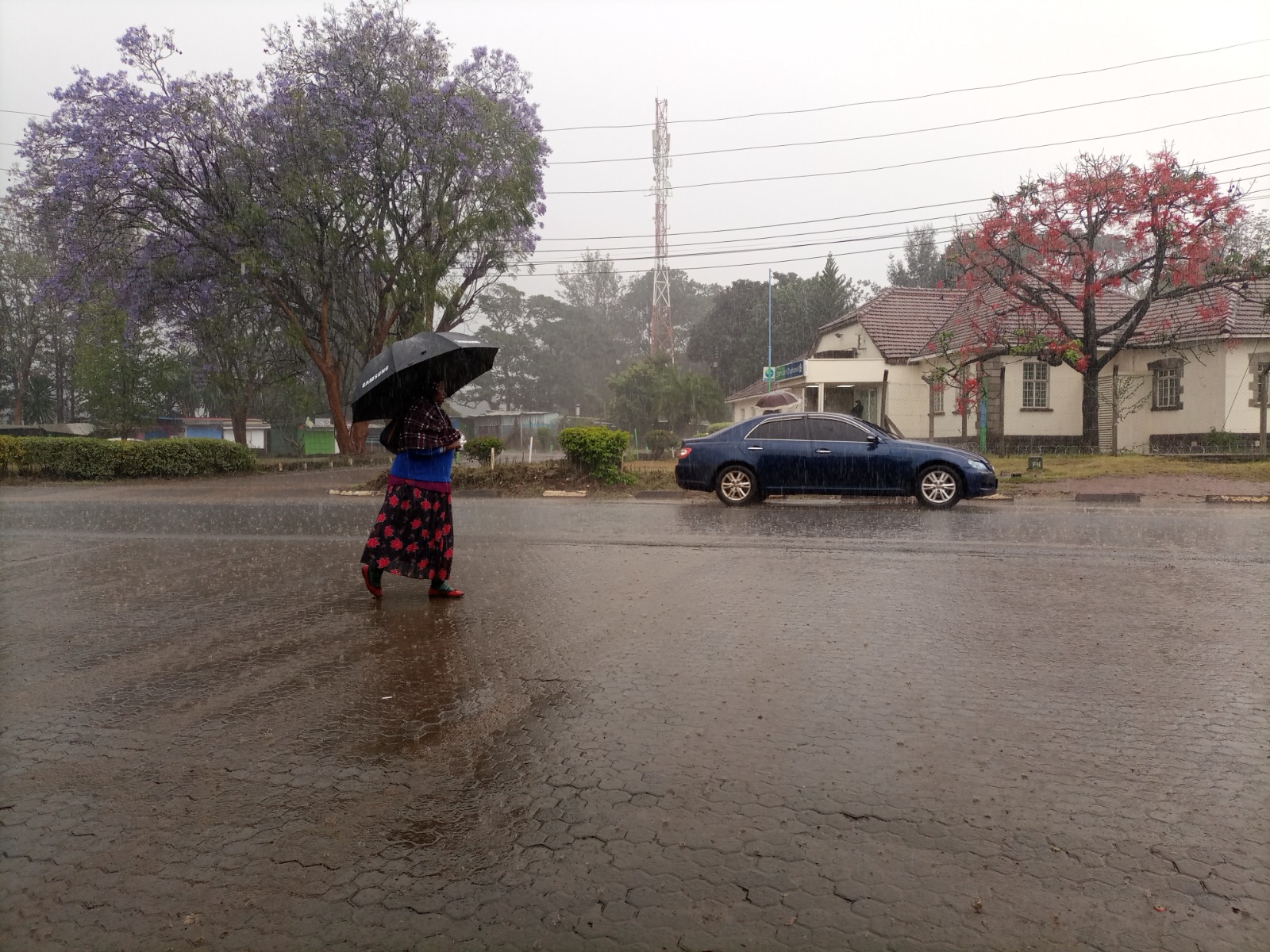
Nyeri is among counties expected to receive heavy rains in the remaining part of February.
A routine weather advisory from the Kenya Meteorological Department dated February 20, 2026, listed 22 counties expected to continue experiencing heavy rainfall until February 26.
Counties included in the national climate advisory are Tana River, Mombasa, Kericho, Nairobi, Machakos, Narok, Kisii, Migori and Nandi.
“The rainfall being experienced over the Lake Victoria Basin, the Rift Valley, and highlands west and east of the Rift Valley, including Nairobi, is expected to intensify to more than 20mm in 24 hours on 21st February 2026,” stated the advisory update signed by KMD acting Director Edward Muriuki.
“The heavy rainfall is likely to intensify to more than 30mm in 24 hours on 22nd, 23rd, and 24th February 2026 and spread to the southeastern lowlands and the Coastal region, especially the south Coast. It is projected to reduce in intensity on 25th February 2026.”
KMD has advised residents in the listed regions to exercise caution and avoid exposing themselves to risks that could endanger their lives or those of their loved ones during this brief rainy season.
The advisory has also been sent to the Presidency and all emergency and disaster-related agencies as a precaution in case urgent assistance is needed.
“Residents in all the mentioned areas are advised to be on the lookout for potential floods. Flood waters may appear in places where it has not rained heavily, especially downstream. People are advised to avoid driving through or walking in moving water or open fields. Updates will be provided promptly if there are any changes,” the report stated.
Agencies that have already released SOS lines for public use include the Kenya Red Cross Society, which has issued a toll-free number (1199) for reporting incidents requiring emergency response.
In its seasonal prediction for the long rains, KMD had indicated that the long rain season would commence from the third and fourth week of March. However, the ongoing rains have caught many by surprise.
Nyeri county Director for Meteorological Services, Peter Wambugu, said the current downpour is expected to end by the end of February and should not be taken as the start of the long rain season.
He advised farmers to seek guidance from their county agricultural extension officers on whether the current rains are suitable for planting.
“What we are experiencing this month is just a fleeting downpour, which will eventually give way to a dry spell beginning March 1. We had already alerted the country that February would be wet, followed by a dry spell. The normal long rainy season is not expected until around the third and fourth week of March,” Wambugu told KNA.
In its climate outlook for the March–April–May rainfall season, KMD predicted that areas around the Lake Victoria Basin, the highlands west of the Rift Valley, and the highlands east of the Rift Valley will receive near-average to above-average rainfall.
In addition, the southern lowlands, northeastern and parts of northwestern Kenya, and the Coastal region are expected to receive near-average to below-average rainfall.
The peak of the rains is predicted to occur in April across most regions, except the Coast, where the peak is expected in May.