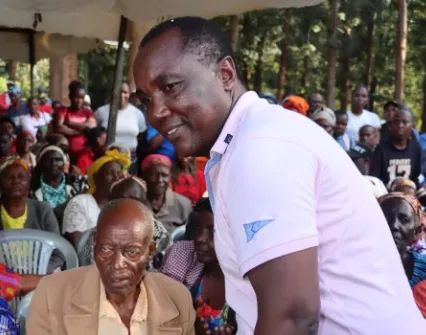
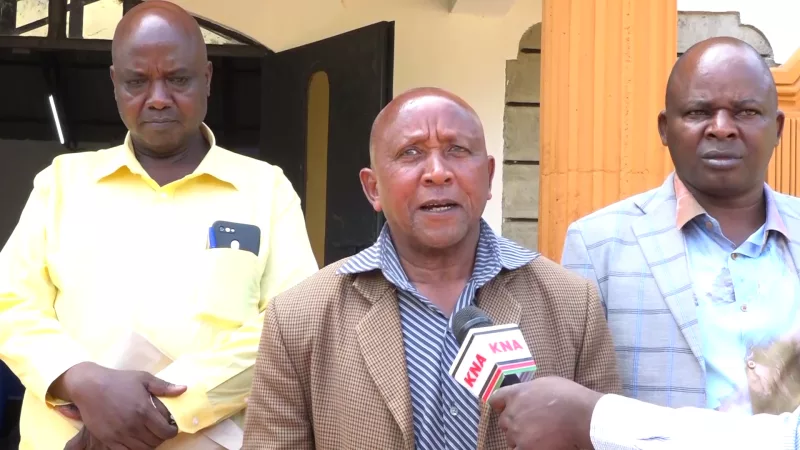
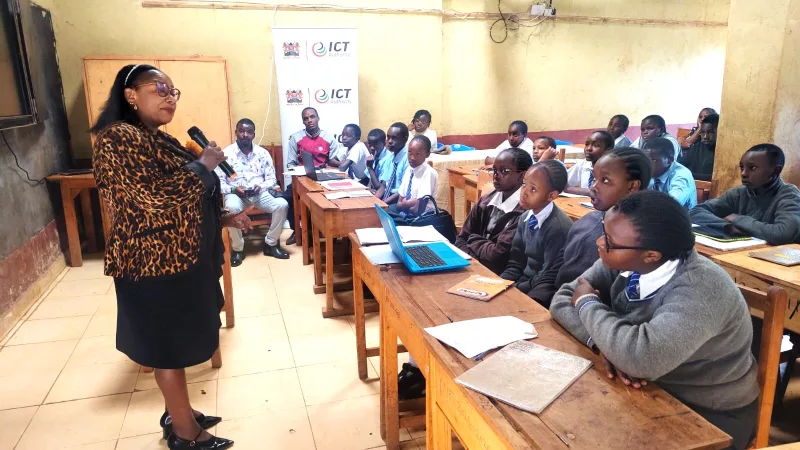
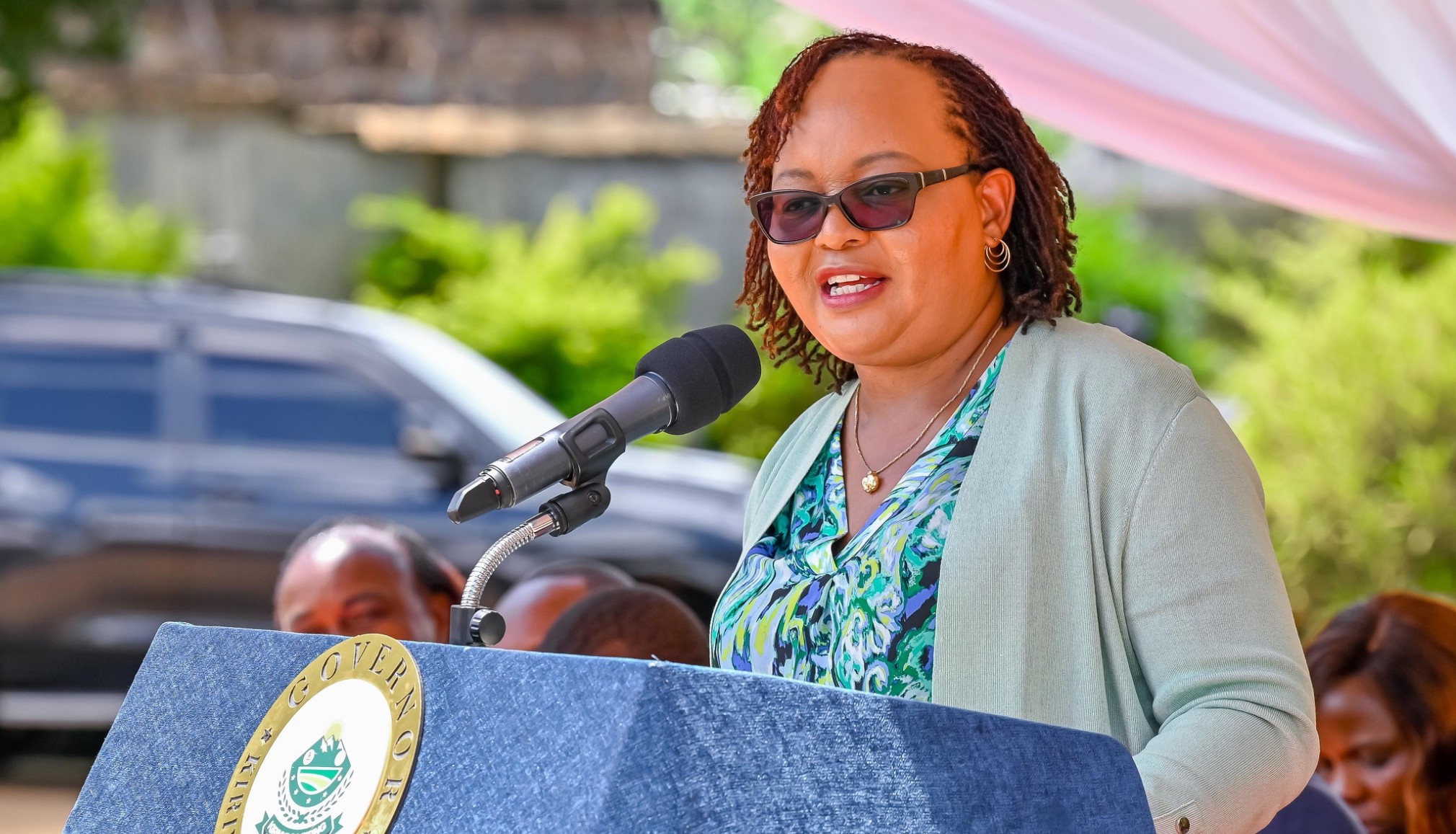
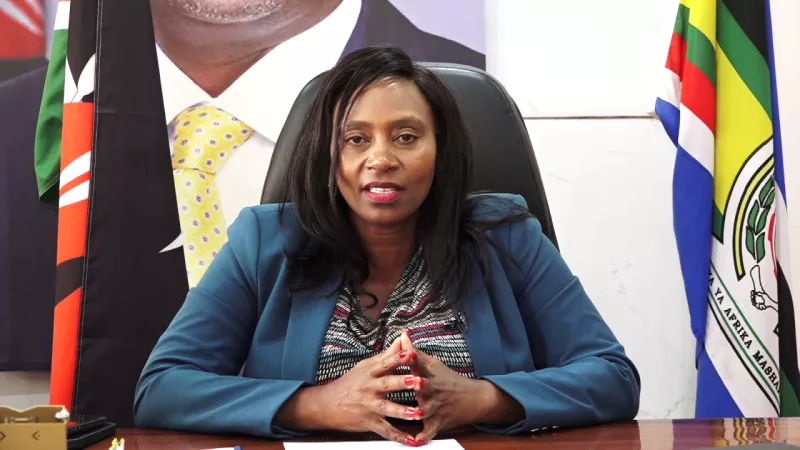
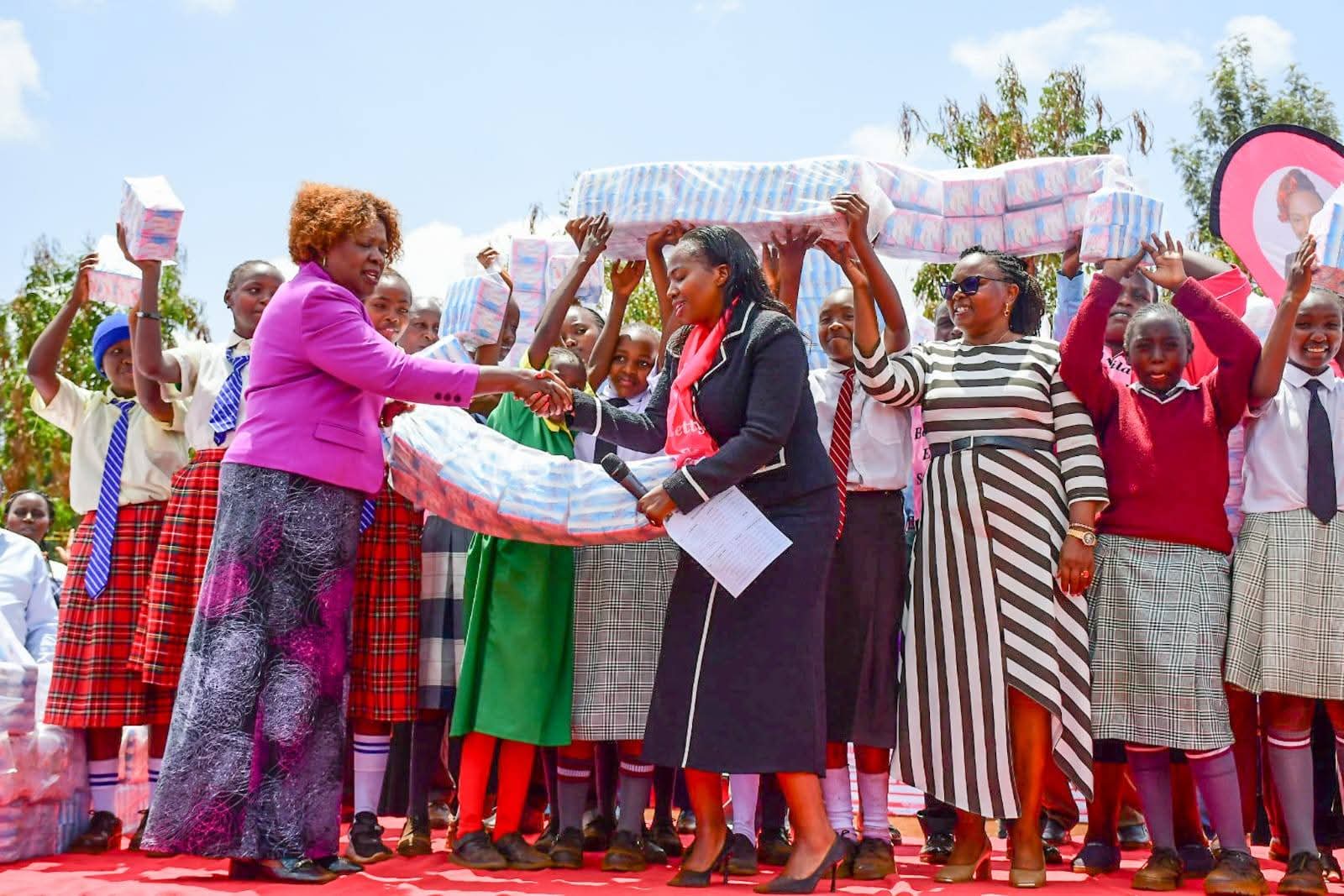
 Lands Cabinet Secretary Alice Wahome and Murang'a woman representative during the flagging off of sanitary towels at Kimorori grounds on February 20, 2026/ ALICE WAITHERA
Some 41,300 girls in junior secondary and primary schools across Murang’a have been given free sanitary towels in a renewed push to end period poverty and keep learners in schools.
Many girls from disadvantaged backgrounds miss several days of school each month due to a lack of sanitary towels, with some resorting to pieces of cloth because of financial constraints.
Others are exposed to exploitation by older men who take advantage of their vulnerability, leading to cases of teenage pregnancies and school dropouts.
Murang’a Woman Representative Betty Maina said learners from Grade 5 to Grade 9 will each receive four packets of sanitary towels to support them for several months.
“Girls from all 511 public comprehensive primary schools will benefit. Today we are flagging off more than 162,000 packets that will be distributed to all schools," she said.
She spoke at Kimorori grounds where the distribution was flagged off.
Maina said the programme will ease the financial burden on parents, especially those from low-income households, allowing them to channel resources to other basic needs.
She emphasised the need to empower girls undergoing puberty and to eliminate the stigma associated with menstruation.
“We want to resist any stigma and encourage the understanding that menses are a natural bodily process that cannot be avoided. Every woman of reproductive age uses sanitary towels,” she said.
She added that menstruation should never be used to shame girls and encouraged them to embrace the changes that come with adolescence.
The MP urged school heads to ensure all eligible learners receive the sanitary towels, noting that beneficiary lists had already been submitted to institutions.
According to Maina, the programme is expected to reduce absenteeism, improve academic performance and boost girls’ confidence in school.
She also called on security agencies to intensify efforts to curb Sexual and Gender Based Violence, claiming that some miraa vendors secretly sell bhang to school-going children.
She linked the claim to rising cases of sexual offences in the county.
“Parents work hard to educate their children. People cannot be allowed to destroy their lives. We want sober parents who can guide their children and allow them to realise their potential,” she said.
Maina cautioned mothers against leaving their children in the care of male relatives and friends amid increasing cases of defilement and sodomy.
She cited the case of Nicholas Macharia, 35, who was sentenced to death by a Nyeri court last week for defiling a seven-year-old girl, saying relatives are among the leading perpetrators of sexual violence.
Lands Cabinet Secretary Alice Wahome echoed the call for parental vigilance, noting that mothers play a critical role as the first line of protection for their children.
She also commended women MPs for lobbying for the continuation of the sanitary towels programme, observing that it had previously faced challenges, including mismanagement and diversion of supplies to private businesses.
Murang’a South deputy county commissioner Bernard Odino said authorities are taking a firm stance against sexual abuse and warned that offenders will face severe punishment.
The National Free Sanitary Towels Programme was introduced by the government in 2017 following an amendment to the Basic Education Act, which obligates the state to provide free, sufficient and quality sanitary towels to girls in public basic education institutions.
The initiative was informed by studies showing that thousands of girls miss up to four school days every month due to lack of menstrual products, translating to significant loss of learning hours annually.
Approximately 65 per cent of girls and women in Kenya cannot afford sanitary pads and are forced to use improvised alternatives such as rags, tissue, or pieces of mattress, which are often unhygienic and unsafe.