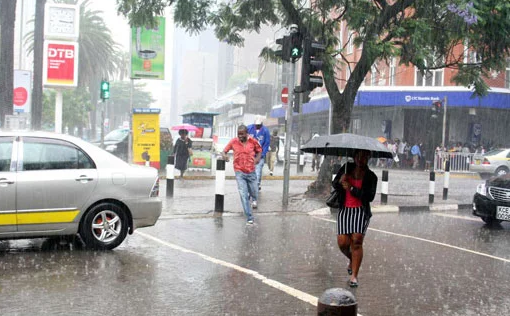
 Kenyans shied themselves from rainfall / FILE
Widespread light to moderate rainfall is expected over various parts of the country Monday evening, with the Kenya Red Cross urging the public to avoid crossing flooded roads and bridges.
In an update issued Monday afternoon, the Kenya Meteorological Department said the forecast covers the Lake Victoria Basin, Western Kenya, the Rift Valley, the Central Highlands including Nairobi, and the Southeastern Lowlands.
Counties likely to be affected include Siaya, Kisumu, Homa Bay, Migori, Kisii, Nyamira, Baringo, Uasin Gishu, West Pokot, Elgeyo Marakwet, Nandi, Kericho, Bungoma, Kakamega, Busia, Trans Nzoia, Vihiga, Laikipia (Laikipia West), Nakuru, Narok and Nairobi.
Kitui, Makueni, Machakos, Kajiado and Taita Taveta, as well as Nyandarua, Nyeri, Kirinyaga, Murang’a, Kiambu, Embu, Meru and Tharaka Nithi, are also expected to receive rainfall.
Although the meteorological department indicated that the rains will largely be moderate, the Kenya Red Cross called for utmost caution, warning that the downpours could trigger flooding in some areas.
“Expected heavy rains may cause isolated flash floods in your area. Avoid crossing floodways, stay off bridges. For inquiries, call 1199,” the humanitarian agency said in text messages sent to residents.
The latest update follows a heavy rainfall advisory issued on Friday by the meteorological department, warning of rainfall exceeding 20mm in Migori, Nyamira, Bungoma, Kakamega, Embu, Murang’a, Nyeri, Tharaka Nithi, Kisii, Narok, Kajiado, Makueni, Machakos, Nairobi, Kericho, Bomet, Taita Taveta, Kitui, Kwale, Mombasa, southern Tana River and parts of Kilifi.
“The heavy rainfall is likely to intensify to more than 30mm in 24hrs on 22nd, 23rd and 24th February 2026 and spread to the Southeastern lowlands and the Coastal region especially south Coast. It is projected to reduce in intensity on February 25, 2026,” Kenya Met acting director Edward Muriuki said in the advisory.
He advised residents in the affected areas to remain vigilant for potential flooding, cautioning that floods may occur even in places that have not experienced heavy rainfall, particularly downstream.
“People are advised to avoid driving through or walking in moving water or open fields,” he said, adding that further updates would be issued promptly should conditions change.
Heavy rainfall in Nairobi and other urban centres often results in significant economic and social disruption, largely due to overwhelmed drainage systems and rapid, unplanned urbanisation.
The immediate impacts typically include flooded roads, destruction of property in informal settlements and severe traffic gridlock.
Commuters frequently bear the brunt of transport disruptions, waiting for hours in long queues and facing increased fares as matatu operators take advantage of reduced vehicle availability.
At pick-up points where saccos fail to enforce order, near-stampede incidents are common as commuters scramble for the limited vehicles available, further compounding the situation.