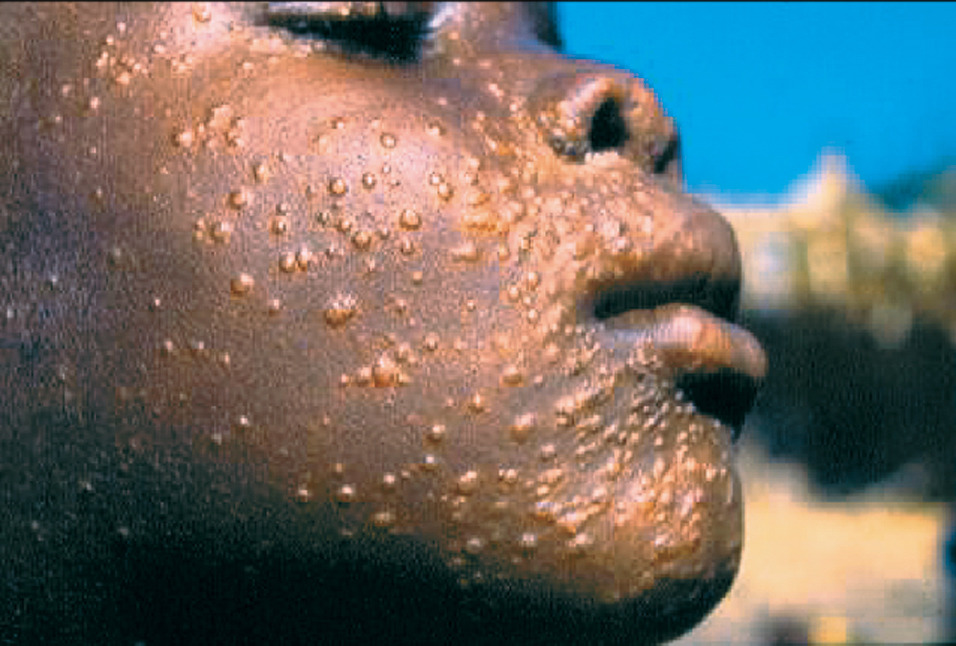
 A boy with a Kala-azar infection.
The tiny sand flies that spread kala-azar are now biting
people inside their homes.
This is a major shift from their previous habit of biting in
remote grazing fields, Kenyan scientists have found.
Sand flies spread Visceral Leishmaniasis (VL), or kala-azar,
a silent killer that begins with fever, followed by weakness and weight loss.
It attacks the liver and spleen and can be fatal if not treated.
The disease mostly affected people in dry grazing fields and
pastoral areas in northern Kenya.
However, scientists have discovered that the sand flies that spread kala-azar are changing habitats and now bite people inside their homes.
They said the habitat shift is driven by climate change and
environmental disruption, complicating efforts to eliminate the disease by
2030.
Dr Daniel Masiga of the International Centre of Insect
Physiology and Ecology (Icipe) said as the climate becomes hotter and rainfall
patterns shift, new areas are becoming suitable for sand flies to live and
reproduce.
This, he said, complicates efforts to eliminate the disease
by 2030.
Masiga presented findings of his study titled “Visceral
Leishmaniasis in East Africa: Insights from disease mapping” at the 16th
KEMRI Annual Scientific and Health Conference in Nairobi.
He said; “Rising temperatures and changing rainfall patterns
can expand suitable habitats for the insects, increasing the risk of
transmission in areas that were previously too cool or too dry to sustain large
vector populations.”
Even more worrying is who is being infected.
Children and adolescents are bearing the greatest burden.
Most cases occur in individuals under 19 years old.
In some areas,
including Wajir and Kajiado counties, infections have been detected in children
younger than four.
“That tells us transmission is happening close to
homesteads,” Masiga said. “It is not just associated with grazing fields or
traditional pastoral movement.”
Most past infections were linked to grazing fields, where
herders spent long hours outdoors. Now, if children under four are getting
infected, it means sand flies are biting near houses and in places where
families gather in the evening.
This suggests that sand flies may be breeding in cracks in
nearby soil, animal shelters or vegetation around homes. It also places
families who are not pastoralists at risk.
Masiga said when a disease moves from distant grazing lands
into compounds and homesteads, protection becomes harder and outbreaks can spread
more quickly.
According to the Ministry of Health, over 3,500 cases
occurred in 2025.
Endemic counties include Turkana, Wajir, Mandera, Marsabit,
Baringo, West Pokot, Kitui, Machakos, Meru, Isiolo, Garissa and Tharaka Nithi.
Other scientific evidence from Kenya also supports Icipe’s
warning.
A 2026 study titled “Mapping visceral leishmaniasis (also
known as kala-azar) and examining environmental influences in Baringo county,
Kenya” analysed five years of disease data alongside rainfall and temperature
records.
The researchers found that mean monthly temperature and
precipitation were significantly associated with kala-azar prevalence at
sub-location level.
This means that when temperatures and rainfall changed,
kala-azar cases also changed.
The study also identified four transmission hotspots in
Baringo between 2019 and 2024, confirming that the disease is clustering in
specific areas linked to environmental conditions.
The World Health Organization and Kenya’s Neglected Tropical
Diseases Master Plan recognise this shift. The national plan states: “The
disease foci in Kenya are changing to areas previously not known to be endemic
as a result of climate change and population movements.”
The WHO notes that outbreaks of visceral leishmaniasis occur
frequently in East Africa and that the region carries a large share of the
global burden.
The organisation aims to eliminate kala-azar as a public health problem by 2030.
However, scientists say climate-driven changes in vector
distribution could make that goal more difficult without stronger surveillance
systems.
Dr Masiga called for increased county-level involvement in
monitoring cases, expanded studies on sand fly biology and ecology, and
improved disease modelling to help governments target interventions where risk
is highest.
“As the climate changes, disease patterns change,” Masiga said. “We must adapt our surveillance and control strategies to match that reality.”




![Africa CDC Director General Dr Jean Kaseya at a past event. [Photo: Arthur Mbuguah, WHM]](https://cdn.radioafrica.digital/image/2026/10/8ced213c-affb-4dff-97ca-1b6bac1f958e.webp)