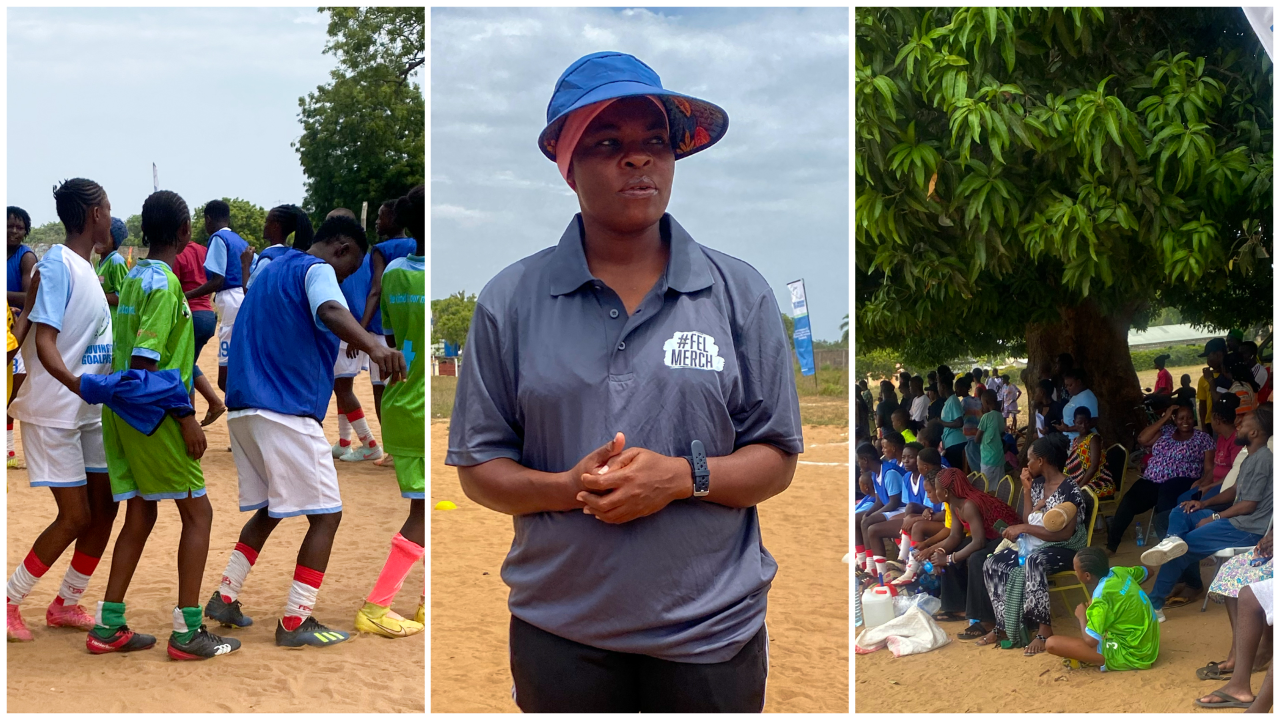
By 9am, Fathime Omari is standing on a football pitch in the quaint, creekside community of Mnarani in Kilifi county.
She has already seen her child off to school. Now, she is in full-blown coach mode. Whistle in hand, she commands the technical drills for Moving The Goalposts (MTG) United.
Known to her community
and peers as ‘Coach Tibu’, the 32-year-old is the head coach of MTG’s football
team. Her presence on the sidelines is a deliberate disruption of the status
quo in a region where professional sports coaching remains an overwhelmingly
male-dominated field.
"To be honest, being a female football
coach is not easy," Omari told bird. "In this league, you find that
90 per cent of the coaches are men. When you are there as an opponent, there is
a lot of pressure because they feel they are playing against a woman, and a
woman cannot beat them."
As a CAF B Licence holder — the only woman in
the coastal region to reach this professional level — Tibu represents a
significant shift in the local football landscape. She said her role involves
more than tactical instruction; it is about building the internal confidence of
her players so they can perform effectively on the field.
HOW SHE STARTED
In 2006, the then 12-year-old Omari followed a friend to Moving the Goalpost with more curiosity than skill. MTG is a sport-for-development organisation that utilises the football pitch as a laboratory for leadership and economic independence. Their aim is to move away from "recreational" sports and toward a professional "Play to Purpose" model.
She recalls those early days with a laugh, remembering how she could barely kick a ball five metres. Her presence on the field caused a stir in her community, where many argued that a Muslim hijabi-wearing girl had no business playing sports or wearing athletic shorts.
The criticism turned to
respect when Omari reached a crossroads after primary school. With no money
available for further education, her future in the classroom looked uncertain
until her talent on the pitch earned her a full high school scholarship.
"See now the benefit of playing
football?" she would tell those who had doubted her. By paying her own way
through school, she proved that football was not just a game but also a
lifeline.
Her transition from player to leader happened quickly. She began coaching the under-13 team at just 15 years old. By the time she was 23, she had risen to become the head coach of MTG United.
In 2018, she led her
squad to a remarkable second-place finish in the Kenyan Women’s League, scoring
34 points and finishing just two points behind the winners.
BREAKING THE CEILING
Globally, only about 3 per cent of high-performance coaching jobs in professional male-dominated leagues (like the NBA) are held by women. In Africa, CAF has recently addressed this by licensing 267 new female coaches (Levels D through B) in 2025 alone.
MTG executive director Dorcas
Amakobe says the success of leaders like Coach Tibu proves that sport is an
entry point for shifting societal expectations.
"Fatime is a great example of how women are changing narratives within their communities," she says.
"She has been
instrumental in making female leadership visible, influencing girls to learn
from people they see every day. She proves that women and girls can lead and
coach in spaces where it was previously thought they could not."
Beyond tactical drills, Omari views the pitch as
a classroom for life skills. Whenever they have a home game, she ensures she
helps the girls prepare the field rather than just paying someone to do it or
ordering the girls to do it. By marking the lines and setting up the nets alongside
them, she instils trust and discipline.
"This is a platform or a free space where
they can share their ideas and build their confidence," Omari said.
This mentorship has enriched players, like team
captain Rita Jilani. The 22-year-old, who was once very shy, credits Coach Tibu
for giving her the courage to lead.
"Fathime has taught me skills to overcome
challenges I wasn't able to before," Rita said. "Like never to give
up".
This local movement is part of a larger success
story across Africa. In 2024, Zambian striker Racheal Kundananji made history
with a record-breaking $860,000 (Sh110 million) transfer to Bay FC in the
United States.
Similarly, South Africa’s
Dr Desiree Ellis, a four-time CAF Women’s Coach of the Year, has shown that
African women can dominate the global coaching stage.
RISING ABOVE SEXISM
For Omari, despite her
successes, the professional landscape remains competitive and occasionally
hostile. She speaks candidly about the mockery she faces from opposing fans and
male coaches who struggle to accept a woman in a position of authority.
"The fans will throw insults but as a
woman, you must be resilient," she said.
Omari highlights the systemic ‘motherhood
penalty’ that forces many talented women to choose between their families and
their careers.
"Motherhood adds another layer of
difficulty. Many women leave the field because there is a lack of support for
balancing those responsibilities with the time-consuming nature of professional
sports," she said.
Yet, she balances her domestic responsibilities with her professional ambitions, proving that motherhood should not be a barrier to a career in sports.
Across the region, the
sidelines of women's football are witnessing a profound social shift as a
growing number of men trade their traditional skepticism for a seat in the
stands. Male spectators are now acknowledging that female athletes also apply
technical skill and physical intensity.
Pwani University student Wycklife Omondi, a
regular at the games, observes that the draw is the sheer quality of the
competition.
"I love watching these games because it is
great to see girls on the field who now play as aggressively as men," he
said.
The 2025 Class of the 50 Most Influential
African Women in Sports featured leaders like NBA Africa CEO Clare Akamanzi and
Rwanda Sports Minister Nelly Mukazayire. This marks a shift where women are no
longer just playing the game but running the business.
SOCIAL IMPACT
Top player Nelly Kache become a leading scorer
under Omari’s training. Kache’s talent led to a professional contract with a
team in the Tanzanian Premier League, pushing women's football in East Africa
deeper into the professional market.
Kilifi county U23 head coach Ferdinand Mwambire
says that for a true transformation in women’s sports to take hold, technical
leadership must be firmly planted where the journey begins.
"It is important to put some of our big
women achievers at grassroots levels so they can act as motivation to other
young women," Mwambire, who also coaches the regional Chapa Dimba winners,
said.
As the final whistle blows on the day’s training, the impact of leaders like Omari is measured not just in technical drills but also in the shifting mindset of an entire community.
By professionalising the game and claiming technical roles once reserved for men, they are ensuring that the football pitch remains a powerful laboratory for leadership.