As Kenya prepares to celebrate Labour Day in Vihiga county, workers across the country are quietly checking whether there’s anything left in their payslips to celebrate. There usually isn’t.
In 2026, the Kenyan worker exists in a peculiar state: technically employed, but financially on life support.
The year began with a flourish of deductions so enthusiastic they could qualify as a national sport. High earners watched their NSSF contributions climb, while the new Social Health Insurance Fund (SHIF) stepped in with a confident 2.75 per cent bite of gross income.
Between SHIF, NSSF, taxes and the occasional mysterious deduction labelled “adjustment”, workers have begun to suspect their payslips are interactive fiction, every month a new plot twist, rarely a happy ending.
Meanwhile, inflation continues its stealthy rise. Food prices are up, as are transport costs and hope is trading at an all-time low. A trip to the supermarket now feels like a psychological experiment: “How much can you remove from your basket before you stop recognising your own life?”
If the payslip doesn’t finish you off, your laptop might. Automation and AI have entered the workplace like an overachieving intern who never sleeps and doesn’t require lunch breaks.
Hiring freezes have become so common that job seekers now describe employment as a “vintage experience.”
A December 2025 poll revealed that 15 per cent of Kenyans fear losing their jobs in 2026. The other 85 per cent are either already unemployed or have simply chosen denial as a coping mechanism.
In the midst of all this, the Central Organisation of Trade Unions (Cotu) has demanded a 23 per cent minimum wage increase. It’s a bold request, widely applauded by workers and quietly filed under “aspirational fiction” by employers.
Public sector employees, particularly clinical officers, are still chasing unpaid salaries and unfulfilled agreements. For them, “back pay” has become less of a financial term and more of a mythological creature, frequently discussed, rarely seen.
According to data from the Federation of Kenya Employers (FKE), a staggering 67 per cent individuals aged 15 to 34 are unemployed, while more than one million young people enter the job market annually. Only 8.6 per cent of employed Kenyan youth are in formal jobs.
Degrees are plentiful, but it is accurate to say that jobs are, let’s just say, conceptual. There’s also the small issue of a skills mismatch. Employers want experience; graduates have enthusiasm and a LinkedIn profile. It’s a standoff that has lasted so long it might soon qualify as a cultural tradition.
For many workers, survival now depends on a delicate ecosystem of salary advances and digital loans. Over half of salaried employees rely on short-term credit just to get through the month. Payday, therefore, is not a celebration; it’s a brief moment of liquidity before creditors descend like highly organised sugar ants.
According to some reports last year, Kenyans are borrowing approximately Sh15 billion per month from digital lenders. That’s roughly Sh500 million a day, or one collective “we’ll figure it out later.” Meanwhile, default rates have climbed, suggesting that “later” has arrived and is demanding payment.
The Central Bank of Kenya introduced new regulations that require lenders to verify borrowers’ ability to repay. This is a quaint development, given that many borrowers themselves are still trying to verify that.
Meanwhile, Kenya’s Employment (Amendment) Bill, 2022, sought to grant employees the legal right to disconnect from work-related communication (emails, calls, messages) outside of authorised working hours, aimed at curbing burnout and reducing unpaid overtime.
Parliament passed this in 2023, and it was excellent news for employees who still have jobs, electricity and emotional energy. For everyone else, the main thing they’re disconnecting from is their bank balance.
More than 80 per cent of Kenya’s workforce is self-employed, which sounds empowering until you realise it comes with increased taxes, regulations, and administrative demands.
Being your own boss now means you can fire yourself for non-compliance.
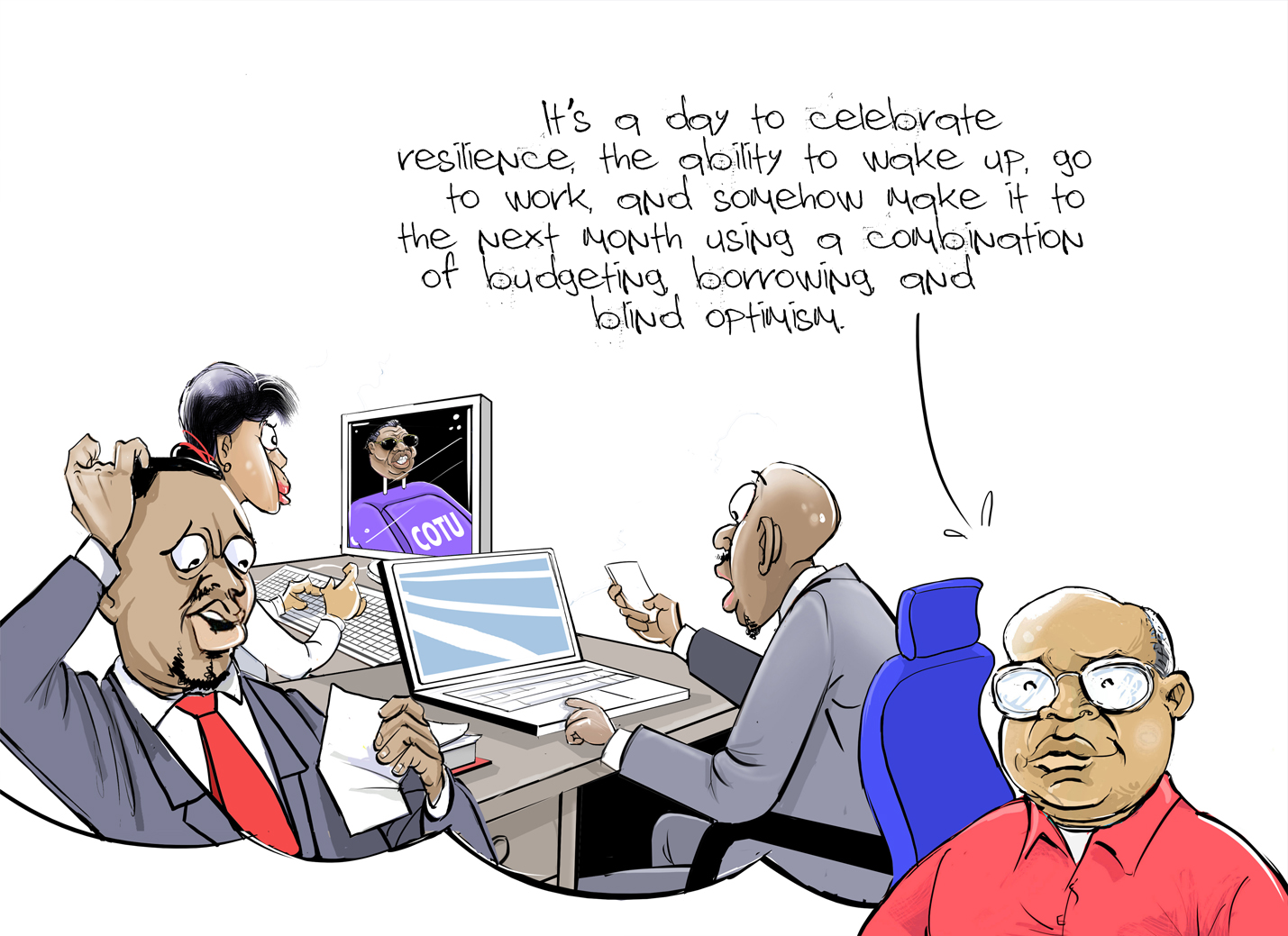
So what does Labour Day mean in 2026? It’s a day to celebrate resilience, the ability to wake up, go to work, and somehow make it to the next month using a combination of budgeting, borrowing, and blind optimism.
It’s also a day to reflect on the modern Kenyan worker: a multitasking marvel who can earn, owe, spend, and worry simultaneously.
Kenyan workers aren’t just building the nation. They’re financing it, surviving it, and occasionally, when the deductions are feeling merciful, living in it.
Happy Labour Day.