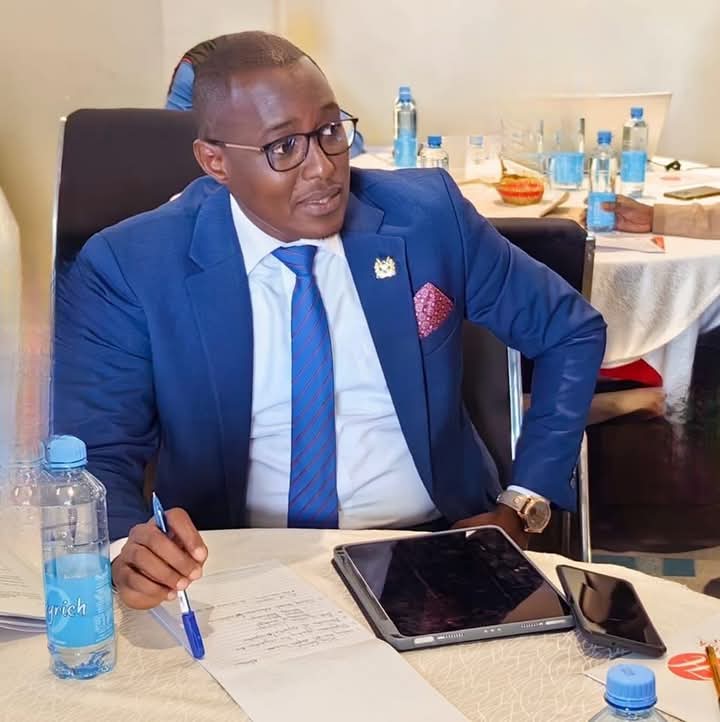
 Scrap Metal Council chairperson Francis Mugo during a past event/FILE
Francis Mugo has been reappointed as the Non-Executive Chairperson of the Scrap Metal Council for a three-year term, reinforcing government efforts to streamline the sector and intensify the fight against illegal scrap metal trade.
In a Gazette Notice dated February 20, 2026, Trade Cabinet Secretary Lee Kinyanjui confirmed the reappointment under the Scrap Metal Act, 2015.
“In exercise of the powers conferred by section 4(1)(a) of the Scrap Metal Act, 2015, the Cabinet Secretary for Investments, Trade and Industry re-appoints Francis Mugo as the Non-Executive Chairperson of the Scrap Metal Council for a period of three (3) years with effect from February 20, 2026,” the notice states.
Mugo’s return comes at a time when authorities have stepped up enforcement to curb what they described as illegal scrap metal dealings linked to vandalism of critical national infrastructure.
Speaking recently on the ongoing crackdown, Mugo warned that the council will not relent in restoring order in the industry.
“We will not allow rogue dealers to profit from vandalism that disrupts essential services and undermines the economy,” he said.
“Our focus is to ensure strict compliance with the law while protecting legitimate businesses.”
The illegal scrap trade has been blamed for widespread theft of power cables, transformers, railway components, road guardrails and telecommunications equipment.
State agencies and utilities have suffered heavy losses, while communities have faced power outages, transport disruptions and safety risks.
According to Mugo, the council is working closely with security agencies and county governments to dismantle criminal networks and tighten licensing requirements for dealers.
“Every licensed dealer must maintain proper records of suppliers and stock. If you cannot account for the source of your materials, you risk closure and prosecution,” he said.
The council has intensified nationwide inspections targeting scrap yards suspected of handling stolen materials.
Dealers operating without licences or in violation of regulations face closure, fines and possible criminal charges.
Mugo emphasised that the clean-up is meant to create a fair and sustainable operating environment rather than punish legitimate traders.
“This is not a war against business. It is a reform process to protect genuine investors and ensure the sector operates within the law,” he said.
“A regulated scrap metal industry supports manufacturing, recycling and environmental conservation.”
The government has in recent years imposed strict controls, including export restrictions and tighter oversight, following spikes in infrastructure vandalism.
Industry stakeholders say the existence of an unregulated market has encouraged theft by providing ready buyers for stolen metal.
Losses from vandalism have run into billions of shillings, particularly affecting the energy and transport sectors.
In some cases, theft of power equipment has resulted in prolonged blackouts and costly repairs funded by taxpayers.
Mugo said the council is also pursuing digital tracking systems to improve transparency and traceability in the supply chain.
“We are moving towards technology-driven monitoring to ensure accountability from collection to processing,” he said.
His reappointment signals continuity in the government’s efforts to reform the sector and strengthen enforcement against illegal operators.
With a fresh three-year mandate, Mugo said the council will focus on protecting national infrastructure, supporting compliant businesses and transforming the scrap metal trade into a structured and responsible industry.
“The message is clear. Those operating outside the law should either comply or exit the market," he said.