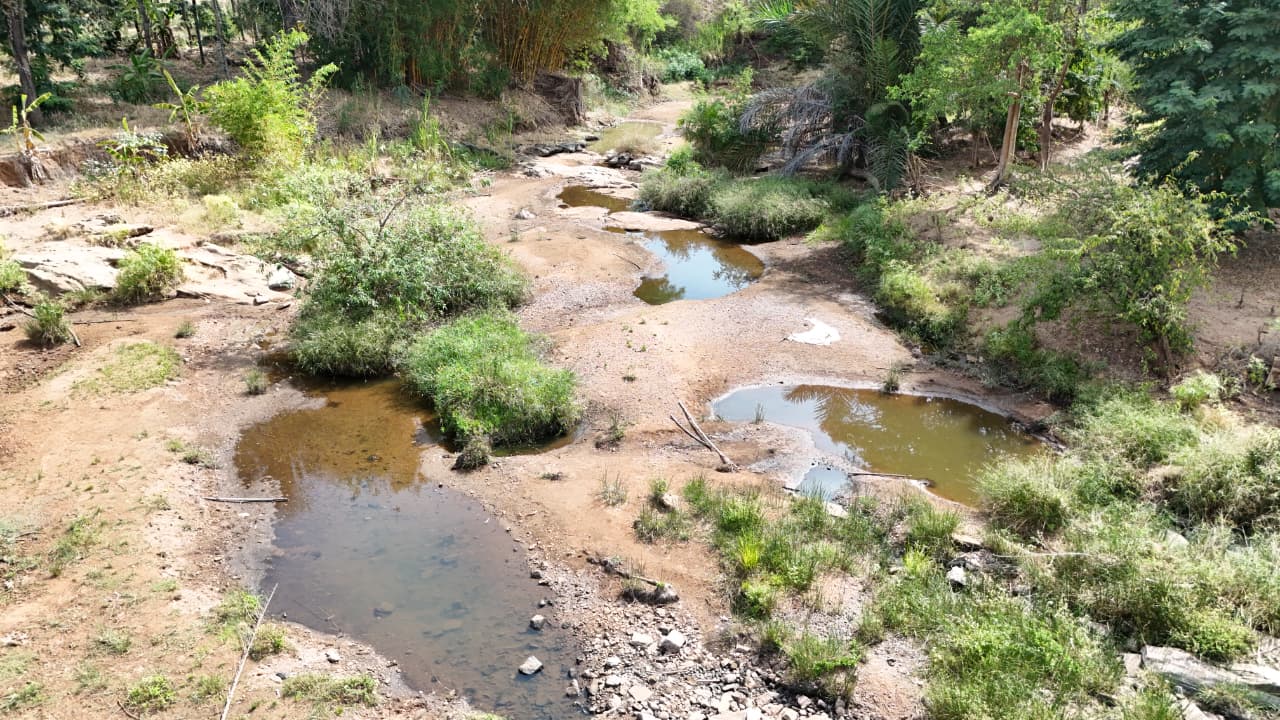
 River Ena, a permanent river that has dried up due to extended drought./ALICE WAITHERA
Mbeere North residents are staring at starvation after key water sources dried up, plunging the semi-arid constituency into a deepening humanitarian crisis.
Families are now trekking long distances in search of water for domestic use and livestock, as the prolonged dry spell tightens its grip on the lower parts of Embu county.
The drying up of River Ena, a permanent water source, has dealt a major blow to the largely agrarian community.
With crops withering in the fields and pasture diminishing rapidly, residents have said their hopes for a bumper harvest this year have been shattered.
Resident Kennedy Mugo said the acute water shortage has disrupted farming activities and their everyday lives.
Women and children are now forced to spend hours walking in search of water, while livestock owners are struggling to keep their animals alive.
“We are suffering. There’s no water for drinking, for our homes, or even for our animals. Everything has dried up.”
Those who can afford it are digging deep into their pockets to buy water from privately owned boreholes that have not yet dried up, a costly option for many households already grappling with failed crops and shrinking incomes.
Resident Njinjo Mbiti appealed to the national government to intervene urgently with food donations to cushion affected families.
He said crops on most farms have withered, leaving households without food and income.
“We expected good harvests this year, but everything has dried up. People are now depending on food relief,” Mbiti said.
He said the situation is so dire that some residents are forced to use any available water without regard to its safety, raising fears of waterborne diseases.
Many are now pinning their hopes on the onset of rains to save their livestock and remaining crops.
The crisis in Mbeere North reflects the broader drought situation affecting several parts of the country, with large swathes of arid and semi-arid regions grappling with erratic rainfall and prolonged dry spells, worsening food insecurity and water shortages.
For residents of Mbeere North and neighbouring Mbeere South, the drought has exposed long-standing development challenges.
The lower parts of Embu county have historically faced water scarcity due to limited infrastructure, such as dams, water pans, and reliable irrigation systems.
Residents said successive administrations have failed to implement sustainable water projects, leaving the community heavily dependent on seasonal rivers.
Community members are now calling for long-term solutions, urging both levels of government to invest in water reservoirs to ensure reliable access to clean and safe water for domestic use and farming.
“We cannot continue living like this every time there is drought. We need permanent solutions,” Mbiti said, noting that changes in weather have caused rising anxiety in households depending on rain-fed agriculture.
Nationally, an estimated 3.3 million Kenyans are facing acute food insecurity, a figure that could rise to 3.6 million by June if drought conditions persist.
Acute malnutrition is also on the rise, with 810,000 children and more than 100,000 expectant and lactating women vulnerable due to food shortages.
Twenty-three counties have been classified as facing acute food shortages by the National Drought Management Authority amid the prolonged drought affecting arid and previously more secure agricultural regions.