 Dennis Mwenda/ HANDOUT
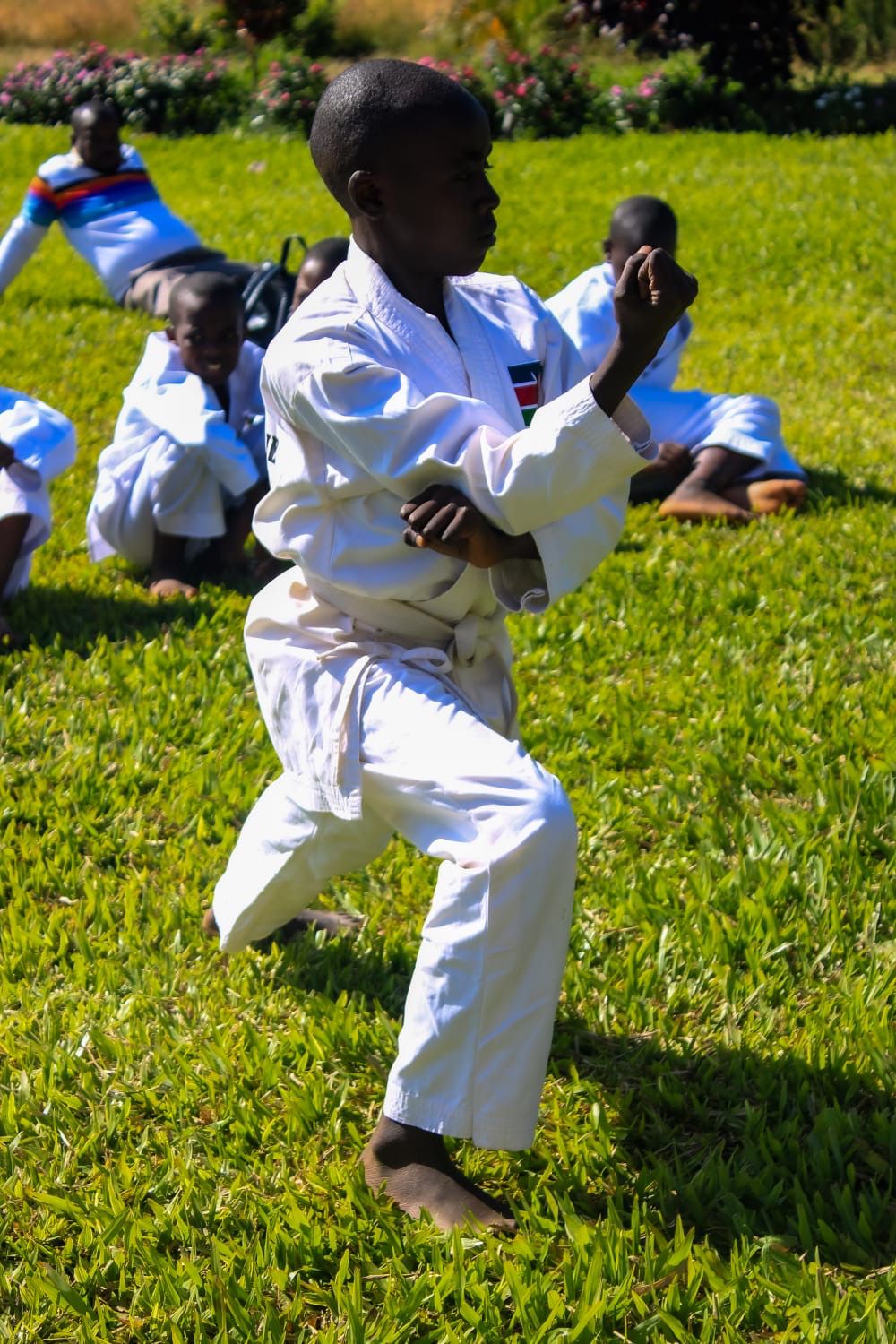
There is a quiet intensity about Dennis Mwenda that is difficult to ignore.
When he steps onto the mat, the 15-year-old from Meru carries himself with a composure that belongs to someone far older, someone who has spent years learning not just how to fight, but how to think, breathe and compete under pressure.
For Mwenda, karate is not a hobby.
Read Also
His story begins at home, in the kind of ordinary domestic setting that produces extraordinary things.
His father, Jamlick Karani, a National Police Service officer with a deep passion for Shotokan Karate, would run practice sessions at their home in Meru.
Mwenda, then just eight years old, would hover nearby, watching, absorbing and mimicking. He could not stay away.
“During my practice sessions back at home in Meru, the young lad was always showing interest,” Karani recalled.
“I felt it was important to have him learn the game slowly, and by the time he was 10, he showed promising talent.”
That promise has since grown into something tangible and decorated.
Seven years after throwing his first punch, Mwenda has gone on to amass 15 medals (five gold, nine silver and one bronze) earned across some of Kenya’s most competitive karate tournaments.
He has stood on the podium at the JKA Cup, the Nairobi Open, the Taifa Open in Mombasa, the Rift Valley Open in Nakuru, the National Junior Championship, the Mount Kenya Schools Championships and the Sky Thika Open.
For a teenager still sitting his high school classes at Mukuuni Boys High School, it is a record that commands genuine respect.
However, Mwenda is not the type to dwell on what he has already won, his eyes are fixed on something bigger.
“I feel really good winning and competing in various events,” he said.
“I now want to focus on winning major events in Africa and hopefully participate in a global event.”
His father, who doubles up as his coach, intends to make that happen. Karani has laid out a demanding 2026 schedule that will take Mwenda far beyond Kenyan borders.
The journey begins locally with the Kenya Open and the National Junior Championship before escalating to the UFAK Africa Championship in Abuja, Nigeria, on July 22, and the Karate One Youth League in Harare, Zimbabwe.
The season’s ultimate destination is the World Karate Cadet, Junior and Under-21 Championship in Bielsko, Poland, from October 14 to 18.
On this stage, the best young karate minds in the world will converge. “The continental and global events will help Mwenda showcase his tremendous skills, discipline and respect,” Karani said. “He has shown great mastery, and I feel it is right for him to conquer higher heights.”
Mwenda trains with the Screaming Eagles club, which Karani founded with just 15 students aged 10 to 18. The club’s approach has never been purely about technique.
From the beginning, Karani built a programme rooted equally in physical conditioning and mental resilience — teaching beginners the fundamental Shotokan stances, punches and kicks before introducing advanced practitioners to sweeps, jumps and stabs.
At the SKA Open in Thika, the Screaming Eagles finished fourth out of 17 teams, winning two gold and two silver medals with just two competitors. It was a performance that turned heads across the Kenyan karate community.
Through the holiday seasons, while his peers rest, Mwenda is on the mat. Training. Sharpening. Preparing.
From a wide-eyed boy peering at his father’s training sessions in Meru to a nationally decorated competitor preparing to face the world in Poland, Mwenda’s journey is a testament to what patience, parental guidance, and genuine passion can build.