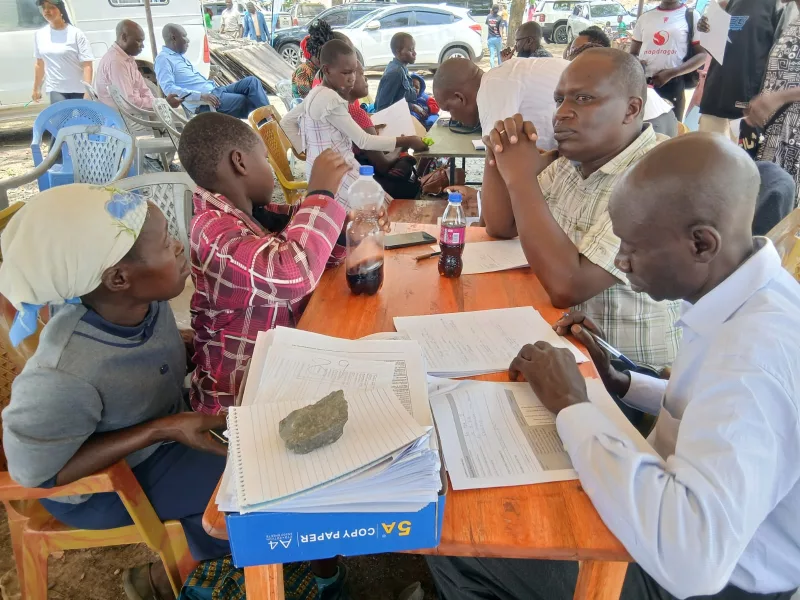
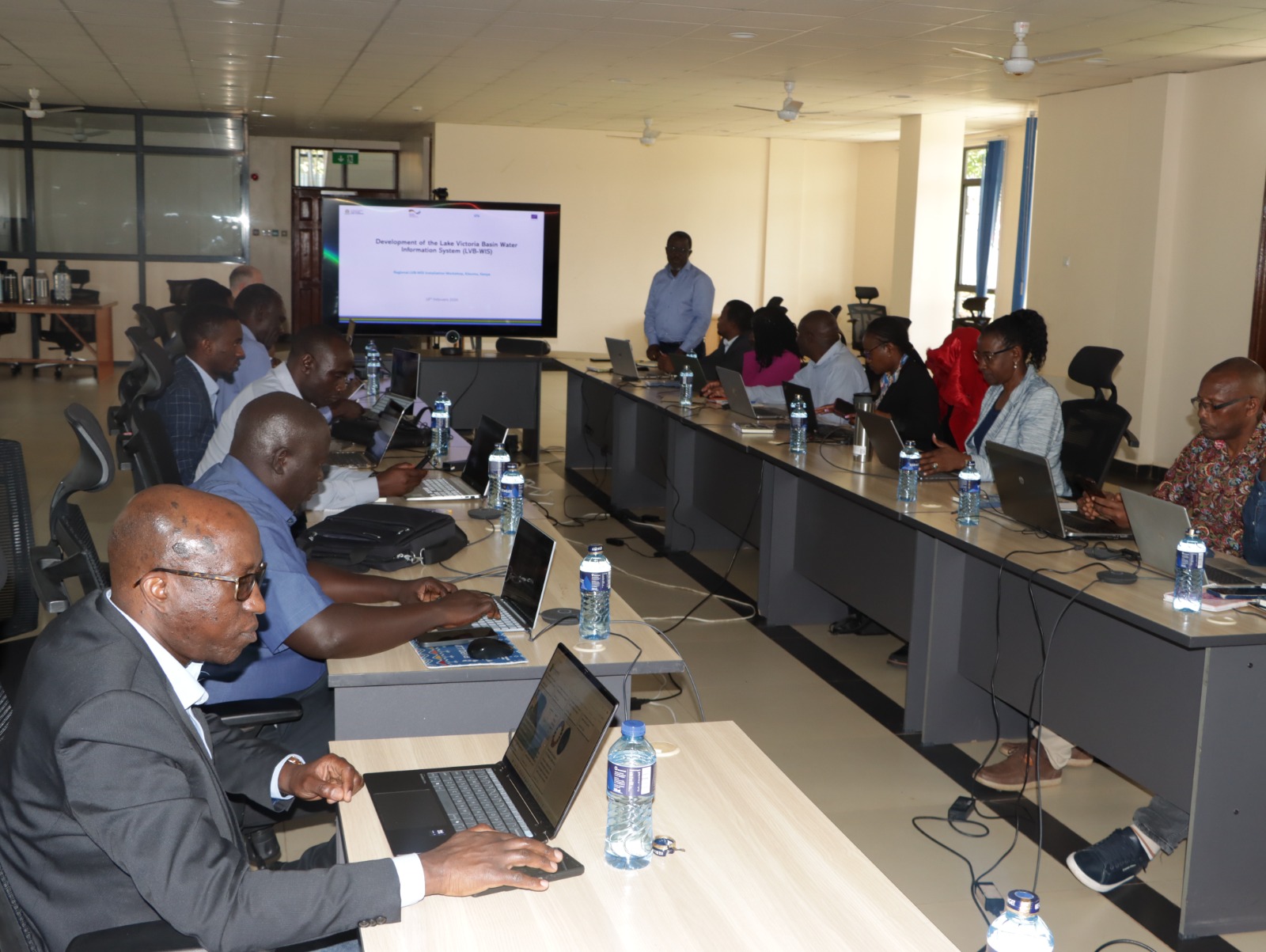
 The Lake Victoria Basin Commission (LVBC) ongoing regional technical workshop at its headquarters in Kisumu./ Faith Matete
The Lake Victoria Basin Commission (LVBC) has begun the process of operationalising a regional digital platform aimed at strengthening the management of shared water resources across East Africa.
The Commission is hosting a two-day regional technical workshop at its headquarters in Kisumu to install and activate the Lake Victoria Basin Water Information System (LVB WIS), a decision-support system expected to enhance coordination among East African Community (EAC) Partner States.
The system has been jointly developed by experts from EAC Partner States in collaboration with the Nile Basin Initiative (NBI).
It integrates multi-sectoral data into a single client-server platform hosted at the LVBC headquarters.
Once fully operational, the platform will support real-time modelling, forecasting and advanced data analysis to improve flood preparedness, water allocation, climate outlooks, environmental protection and long-term development planning across the Lake Victoria Basin.
LVBC Executive Secretary Dr. Masinde Bwire said the initiative marks a significant milestone in the region’s efforts to strengthen sustainable and coordinated management of shared water resources.
“The Lake Victoria Basin Water Information System is the first shared digital platform specifically designed to support joint decision-making across the Basin. It will greatly enhance how we collect, analyse and use data to respond to water, environmental and climate-related challenges,” said Dr. Bwire.
He noted that by bringing together hydrological, meteorological, environmental and socio-economic data into one system, the platform will promote evidence-based planning and improve cooperation among Partner States.
During the workshop, national and regional experts are installing and testing the full client-server system, integrating key modelling tools and configuring national and regional applications.
These include flood risk management tools for Kenya and Rwanda, as well as basin-wide water quality monitoring and hydrological forecasting.
Participants are also undergoing hands-on technical training to ensure that each Partner State can operate, maintain and apply the system in line with national priorities while strengthening regional collaboration.
According to Dr. Bwire, the platform will help governments make faster and more informed decisions, particularly in times of extreme weather events such as floods and droughts.
The LVB WIS is part of the Lake Victoria Basin Integrated Water Resources Management Programme.
It is financed by Germany’s Federal Ministry for Economic Cooperation and Development (BMZ) and the European Union through KfW, in close collaboration with Deutsche Gesellschaft für Internationale Zusammenarbeit (GIZ).
Lake Victoria Basin remains one of Africa’s most important shared water systems, supporting millions of people through agriculture, fisheries, transport and domestic water supply.
Officials say the new system will play a crucial role in safeguarding these resources while enhancing resilience to climate change and environmental pressures across the region.