The latest Programme for International Student Assessment (PISA) results reveal a significant trend in global education: East Asian nations are currently setting the gold standard for science proficiency among 15-to-16-year-olds.
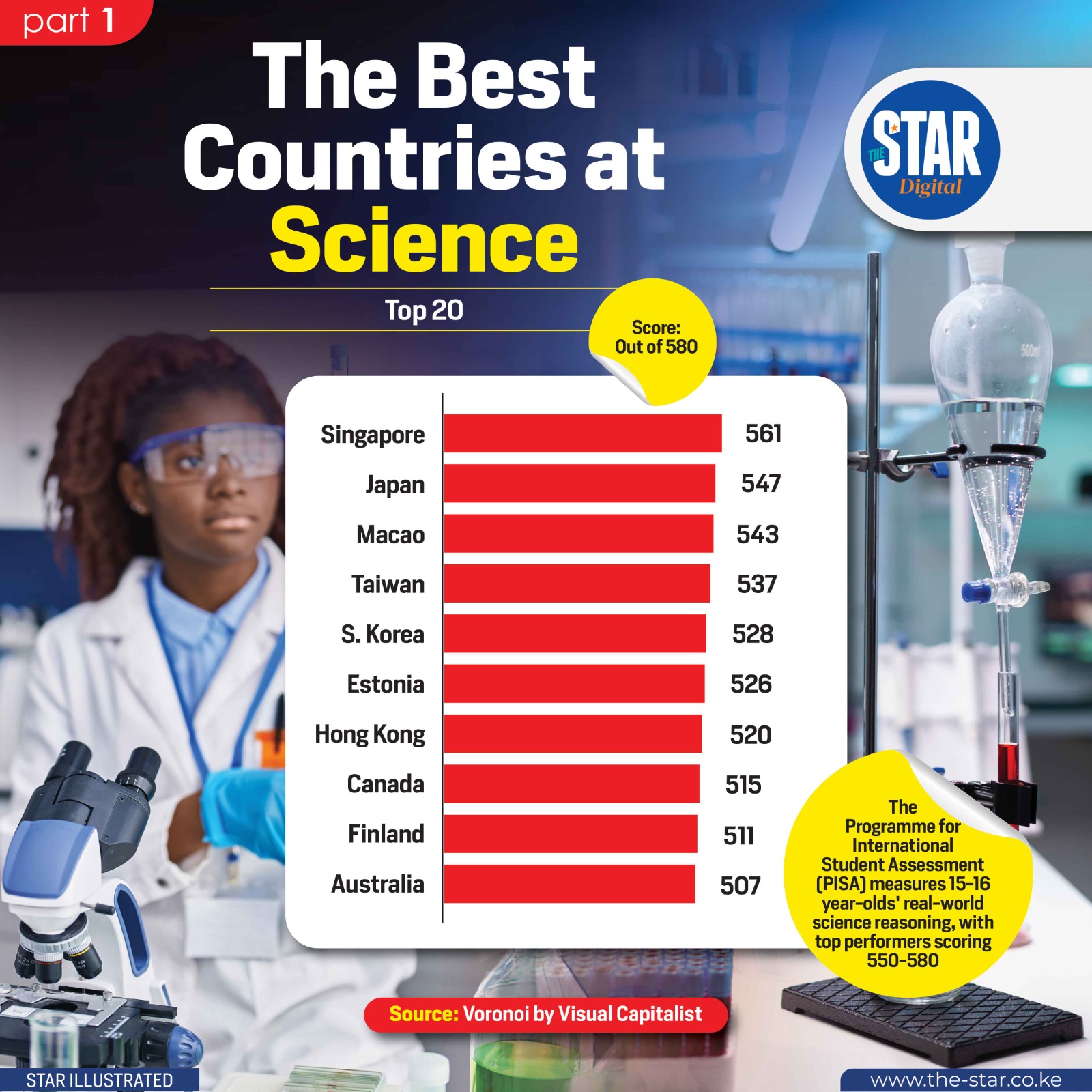
These assessments, which measure real-world science reasoning rather than rote memorisation, show Singapore firmly at the top with an impressive score of 561 out of 580.
This puts Singaporean students in the elite bracket of global performers, closely approaching the maximum possible score.
The data underscores a broader regional dominance, with Japan (547), Macao (543), Taiwan (537), and South Korea (528) occupying the next four spots. This cluster of high-performing territories suggests a highly effective educational culture across East Asia that prioritizes scientific inquiry and analytical thinking.
Beyond Asia, Estonia has emerged as the leading European nation in the field, securing the sixth position with a score of 526. Other top-tier performers include Hong Kong (520), Canada (515), Finland (511), and Australia (507).
While these nations remain competitive, the gap between the top-ranked Singapore and other developed nations remains notable.
The PISA findings continue to serve as a critical benchmark for policymakers worldwide, highlighting where educational systems are succeeding in preparing the next generation for a science-driven global economy.