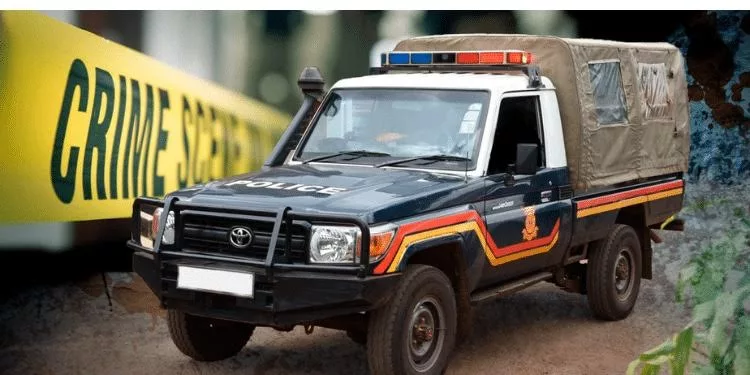
If you spend any significant time on a Kenyan highway—be it the dust-choked stretch of Mombasa Road or the multi-laned expanse of Thika Superhighway—you will eventually encounter the "Beast."
It usually announces itself not with a horn, but with a presence. It is the Toyota Land Cruiser Prado, specifically the J150 series, known colloquially as the "TX."
Advertisement
Advertisement
In the Kenyan social lexicon, the Prado is more than a mid-size SUV. It is a rolling manifesto of success, a steel-and-chrome declaration of "arrival." But as any Kenyan motorist will tell you, it is also the primary source of a specific, high-octane brand of road-based anxiety.
To understand the "dangerously reckless world" of the average Prado owner is to understand the complex intersections of class, power, and the desperate hustle of 21st-century Kenya.
THE ANATOMY OF AN ICON
Why the Prado? In a country where the Mercedes-Benz S-Class signifies old money and the Subaru Forester suggests a youthful (often reckless) speed, the Prado occupies the "Goldilocks Zone" of Kenyan prestige.
It is rugged enough to handle the crater-sized potholes of a rural "shagz" road, yet polished enough to be parked outside a high-end mall in Westlands without the valet turning up their nose.
Advertisement
Advertisement
For the Kenyan middle class, the Prado is the ultimate trophy. It represents the transition from the "hustler" who drives a fuel-sipping Vitz to the "Mkubwa" (Big Man) who no longer cares about the price of petrol.
It is the car of the successful contractor, the mid-level politician, the tenderpreneur. This versatility of ownership is exactly where the trouble begins.
When everyone, from a legitimate CEO to a rogue Member of County Assembly (MCA) drives the same vehicle, the "Prado Persona" becomes a chaotic blend of entitlement and anonymity.
THE ART OF THE "OVERLAP"
The most defining characteristic of the Prado owner is their relationship with the "line." To a normal Kenyan driver, a traffic jam is a shared misery. To a Prado driver, a traffic jam is merely a suggestion—a challenge to their creativity.
"Overlapping" is the Prado driver’s spiritual calling. When the traffic on Waiyaki Way grinds to a halt, the Prado is the first to pivot. With a practiced flick of the steering wheel, it mounts the curb, its high-clearance suspension soaking up the sidewalk’s irregularities.
They drive on the grass, they drive on the pedestrian walkways, and they drive in the opposite lane against oncoming traffic, usually with one hand on the wheel and the other clutching a smartphone.
There is a psychological component to this recklessness: the Value of Time theory. In the mind of the Prado driver, their time is inherently more valuable than the collective time of the fifty people sitting in the Matatu they just bypassed.
They are "Mheshimiwa" (The Honourable), even if they only represent a neighbourhood cattle-dip committee. To sit in traffic is to admit that you are an ordinary citizen, and the very point of owning a Prado is to prove that you are not.
THE HIGH-BEAM HIERARCHY
If the Prado is the sword of the Kenyan road, its high-beam LED lights are its shield. There is a specific form of bullying that occurs at night on the Nairobi-Nakuru highway. It begins with a flicker in the rearview mirror—a blinding, white light that seems to emanate from the sun itself.
The Prado driver does not use the indicator to signal an overtake; they use the "flash." It is an aggressive, rhythmic strobe designed to induce panic in the driver of the smaller car ahead.
The message is clear: Vacate the fast lane. I have 3,000cc of Japanese engineering, and you have a 1.3-liter engine held together by prayers and a cheap mechanic.
This intimidation isn't just about speed; it's about the physical hierarchy of the road. In Kenya, right-of-way is often determined by the size of the vehicle and the perceived depth of the driver’s pockets.
A Prado knows it can win a fender-bender against a Toyota Probox. It knows the police are less likely to flag down a tinted SUV than a dusty saloon car. This "immunity" creates a feedback loop of recklessness.
THE SIREN AND THE STROBE: THE "WANNABE" VIP
Perhaps the most contentious aspect of the Prado world is the illegal installation of sirens and strobe lights. In recent years, the Kenyan government has cracked down on non-essential vehicles using "lead car" equipment, but the Prado remains the primary offender.
There is a sub-species of Prado owner—often a junior government official or a well-connected businessman—who thrives on the "VIP Illusion."
By installing a hidden siren and blue-and-red flashing lights behind the grille, they transform their commute into a high-stakes state motorcade. They weave through traffic with a self-important urgency, forcing other motorists into the ditch.
When you finally catch a glimpse through the dark-tinted windows, you often don't see a cabinet secretary or the President. You see a man in a sharp suit, smelling of expensive cologne and "deals," looking bored as he terrorises the public. It is a performance of power that perfectly encapsulates the "Me-First" culture.
THE VICTIM’S PERSPECTIVE: A VIEW FROM THE VITZ
To the rest of the road, the Prado is a rolling hazard. For the "Small Car" owners—the Vitz, Demio, and Note drivers—the Prado is a predator. There is a palpable sense of "Road Caste" in Kenya.
"If a Prado hits you," one motorist lamented on a popular Nairobi Facebook group, "the first thing the driver does isn't to check if you're okay. It’s to come out of the car, adjust their coat, and start shouting about how you were in their way. They assume they are right because their car costs five times yours."
Pedestrians fare even worse. The Prado’s ability to "off-road" means that the last sanctuary of the walker—the sidewalk—is no longer safe.
During peak hours, the dust clouds kicked up by Prados racing along the dirt shoulders of the road force pedestrians to cover their faces, literal casualties of someone else’s social climb.
THE COUNTER-NARRATIVE: THE "QUIET" OWNERS
To be fair, not every Prado owner is a road-hogging menace. There exists a silent minority of owners who bought the car for its actual intended purpose: reliability.
These are the families who need a safe car for long-distance travel, the engineers who spend their days on construction sites, and the retirees who want a comfortable vehicle for their sunset years.
However, these "quiet" owners are being drowned out by the noise of the "TX Culture." They find themselves lumped in with the "Wash-Wash" boys and the aggressive MCAs. They, too, are victims of the stereotype, often finding that other drivers are reluctant to let them merge into traffic because they expect a Prado to behave like a bully.
THE ECONOMIC ENGINE OF THE EGO
The "reckless world" of the Prado is also fueled by a massive second-hand import market. Kenya’s "Ex-Japan" car industry ensures a steady supply of five-to-seven-year-old Prados. This makes the vehicle accessible to the rising middle class.
For many, the Prado is the ultimate investment. It holds its resale value better than almost any other vehicle in the country. In the Kenyan "shylock" (money lending) economy, a Prado logbook is better than gold.
It can be used to secure a loan for a new business, pay school fees, or settle a sudden hospital bill. This economic utility gives the car a sense of "gravity"—it is a serious asset, and the owner feels a serious sense of importance while driving it.
A MIRROR TO THE NATION
In the end, the dangerously reckless world of the Kenyan Prado owner isn't really about the car itself. Toyota designed a perfectly capable, reliable SUV. The "danger" comes from what the car represents in the Kenyan psyche.
The Prado is a mirror held up to Kenyan society. It reflects our obsession with status, our struggles with class disparity, and our "shortcut" mentality.
When a Prado overlaps on the pavement, it is doing what many Kenyans wish they could do: bypass the "system" and get ahead of the crowd, regardless of who gets stepped on.
Until the Kenyan road becomes a place of shared rules rather than a theatre of power, the Prado will remain the king of the asphalt—feared by some, hated by many, but secretly envied by almost everyone stuck in the traffic behind it. Buckle up; it’s going to be a bumpy, high-speed, and very dusty ride.

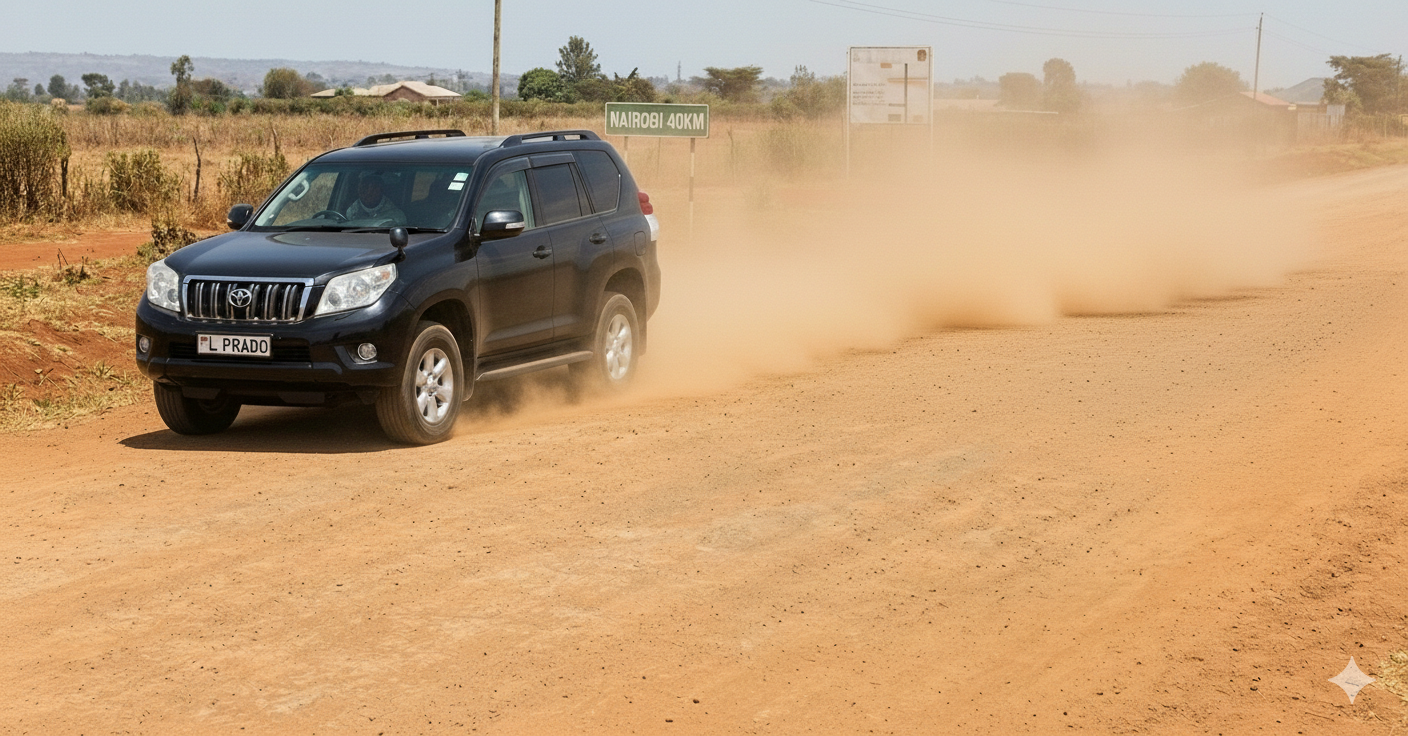 AI Illustration/Gemini