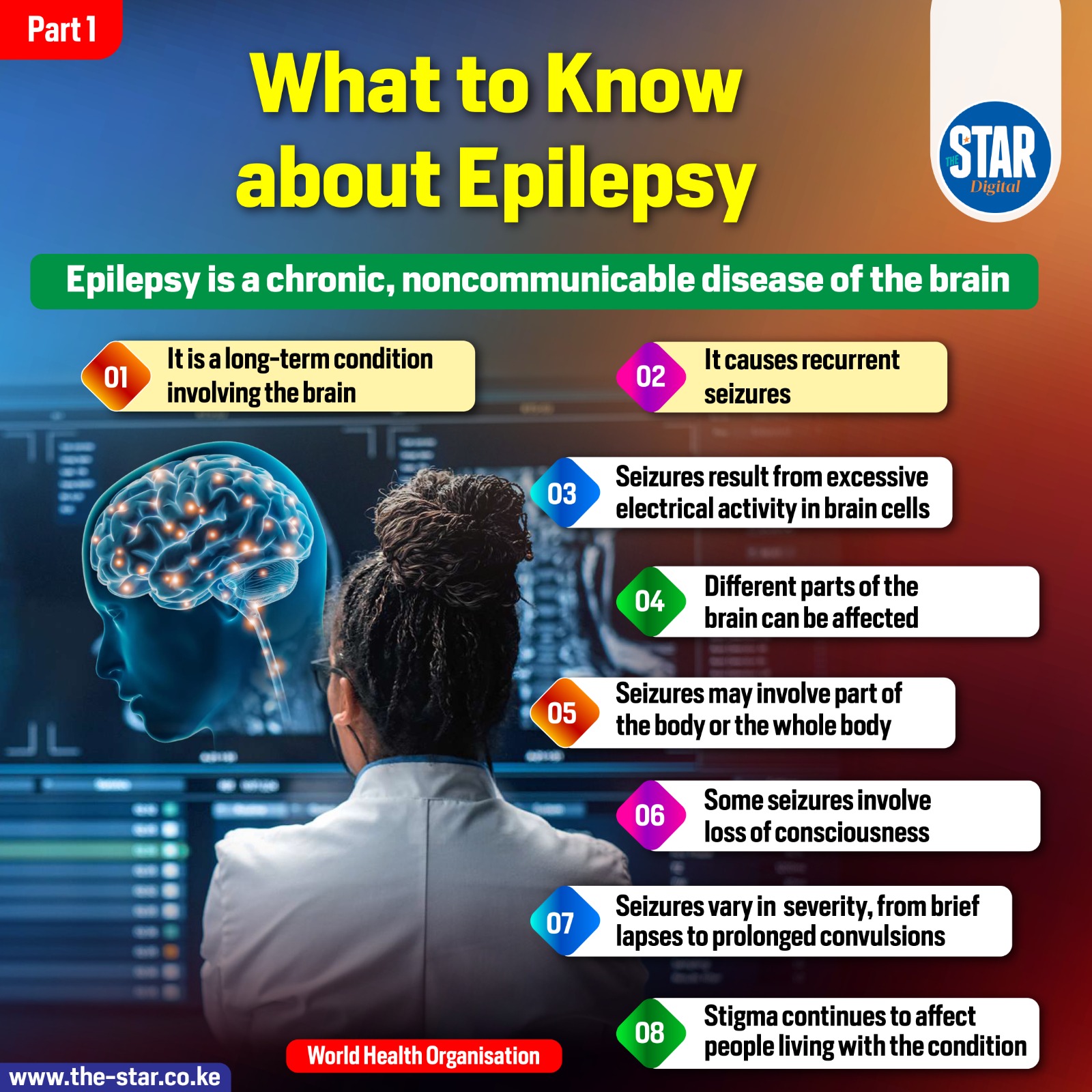
World Health Organization defines epilepsy as a chronic brain disease characterised by recurrent seizures.
A seizure is a brief episode of involuntary movement that may involve part of the body (partial) or the entire body (generalised).
It can sometimes be accompanied by loss of consciousness and control of bowel or bladder function. Seizures occur due to excessive electrical discharges in a group of brain cells.
According to WHO, symptoms vary depending on the type of seizure.
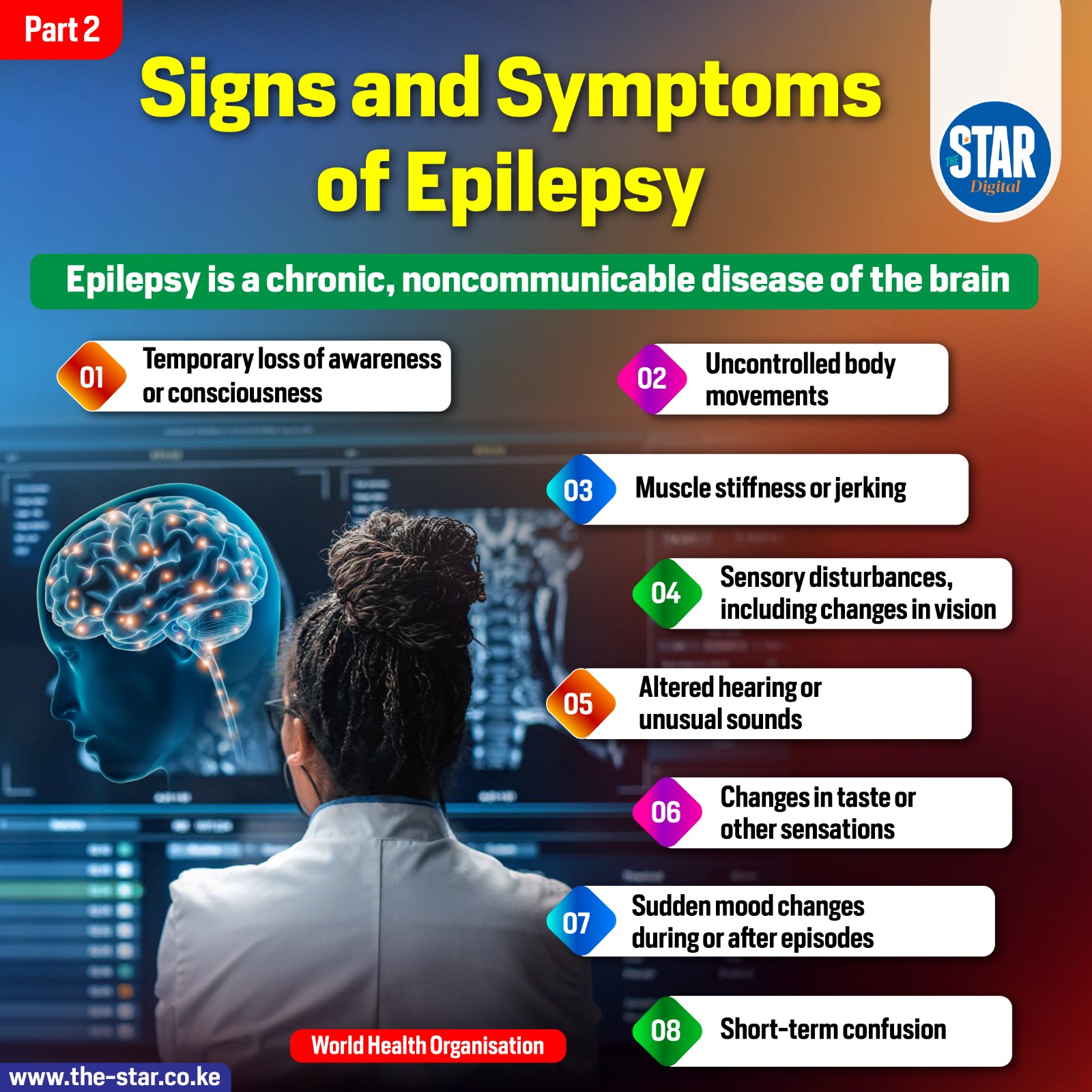
They may include temporary confusion, a staring spell, stiff muscles, jerking movements of the arms and legs, loss of awareness, or unusual sensations such as tingling, fear or déjà vu.
Some people may fall suddenly or experience brief lapses in attention.
WHO notes that epilepsy is not contagious and can affect people of all ages.
With proper diagnosis and treatment, seizures can be controlled in most people, significantly improving quality of life.