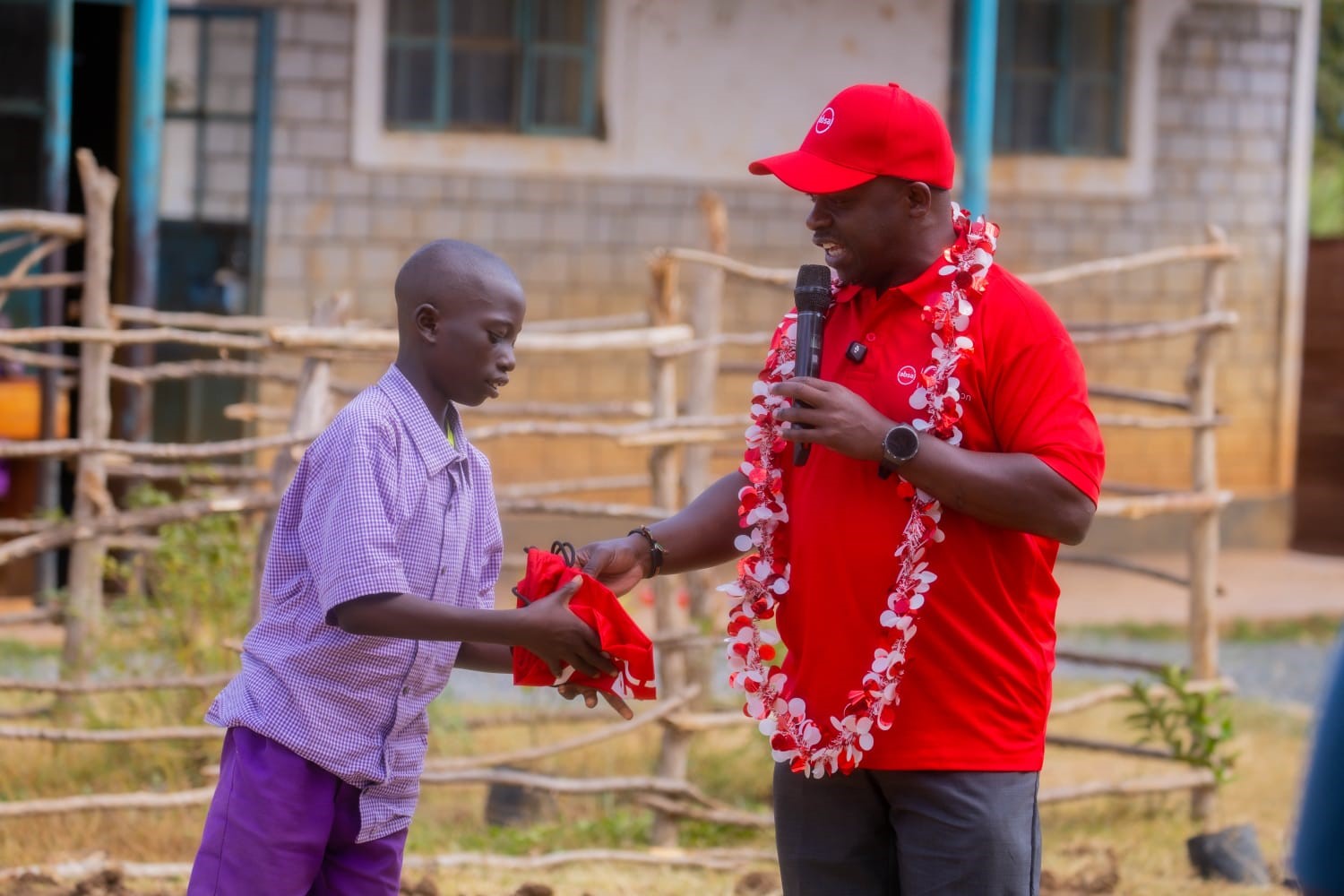
 Absa Bank Managing Principal Corporate and Investment Banking James Agin awards an upcoming athlete/HANDOUT
For many Kenyan athletes, success comes quickly.
Prize money, bonuses, and endorsements can arrive while they are still teenagers.
Yet, without proper guidance, many of these athletes risk seeing their earnings disappear after retirement, leaving them in financial difficulty despite years of hard work and achievement.
Recognising this, Absa Bank Kenya is placing financial literacy at the centre of its support for athletes.
Ahead of Saturday’s Sirikwa Classic Cross Country the bank engaged about 60 young runners at the Complete Sports Athletics Training Centre in Kaptagat for a session focused not on speed or endurance, but on managing money.
“Winning races is important, but life after sport is longer than the sporting career itself,” said Charles Wokabi, Head of Sustainability and Corporate Affairs at Absa Kenya.
“Many athletes earn significant prize money at a young age, but without proper planning, those earnings can vanish. Financial literacy gives athletes control. It helps them make smart decisions, protect their earnings, and build a stable future.”
The training included about 60 top under-17 athletes, some of whom have already competed internationally at the Olympics or World Championships.
Wokabi emphasised that an athlete’s productive years are short, and without guidance, the wealth they earn during their careers can quickly fade.
“Yes, they are talented. Yes, they will earn money. But what do they do with that money once their active years are over?” he asked.
Absa’s support extends beyond financial literacy.
At Jasho Primary School in Kapseret, the foundation installed a 10,000-litre water tank and planted fruit trees to support nutrition and environmental conservation.
“Strong communities produce strong athletes,” Wokabi said.
As title sponsor of the Sirikwa Classic for the fourth consecutive year, Absa aims to provide holistic support that lasts beyond the track.
“We want year-long engagement with athletes, even outside competition days,” Wokabi explained.
“It’s about helping them thrive both on and off the track and ensuring that the money they earn supports them for life.”
Ultimately, Wokabi said, they seek to help athletes avoid the common trap of earning big during their active only to fade into poverty after retirement.