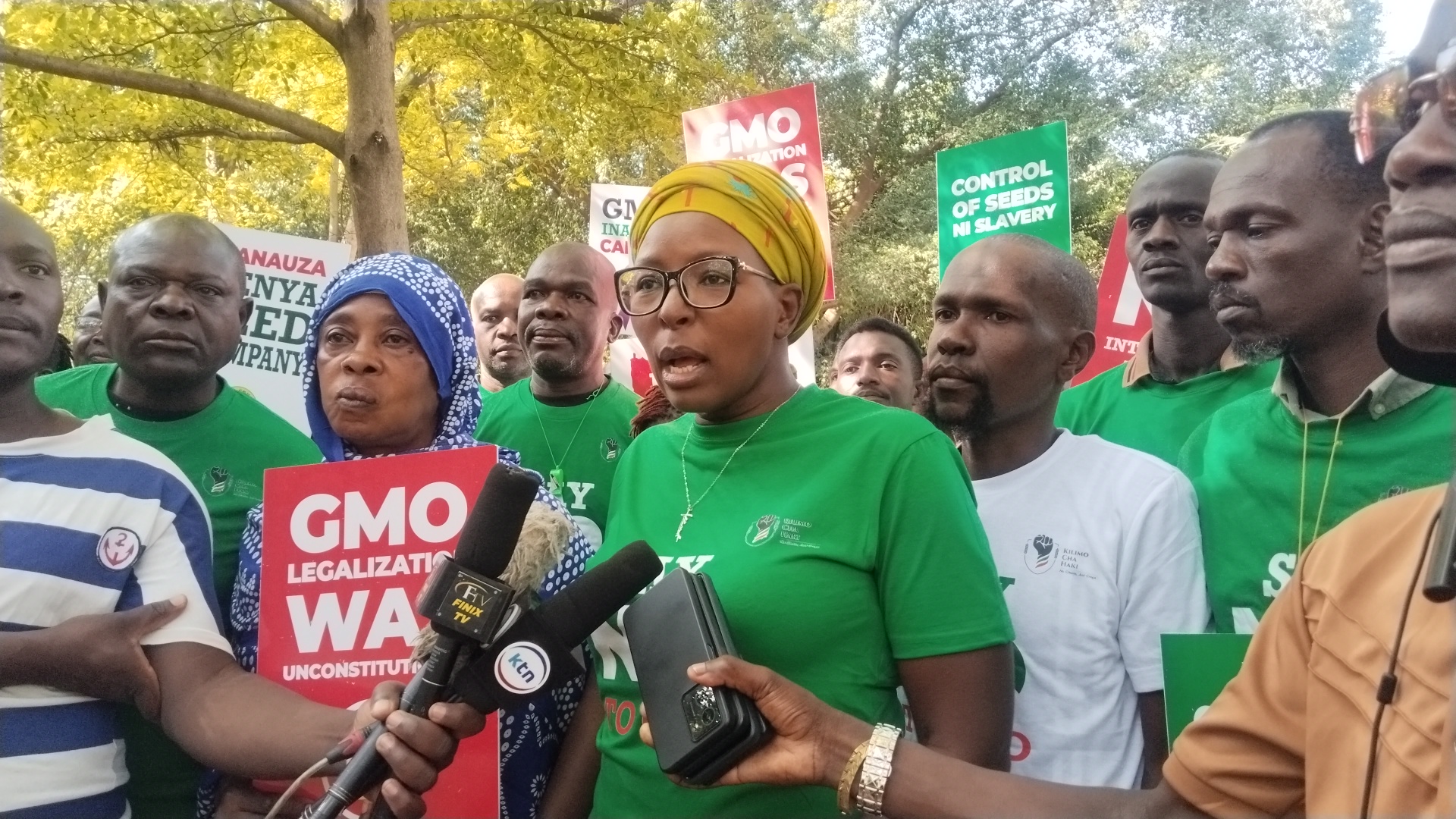
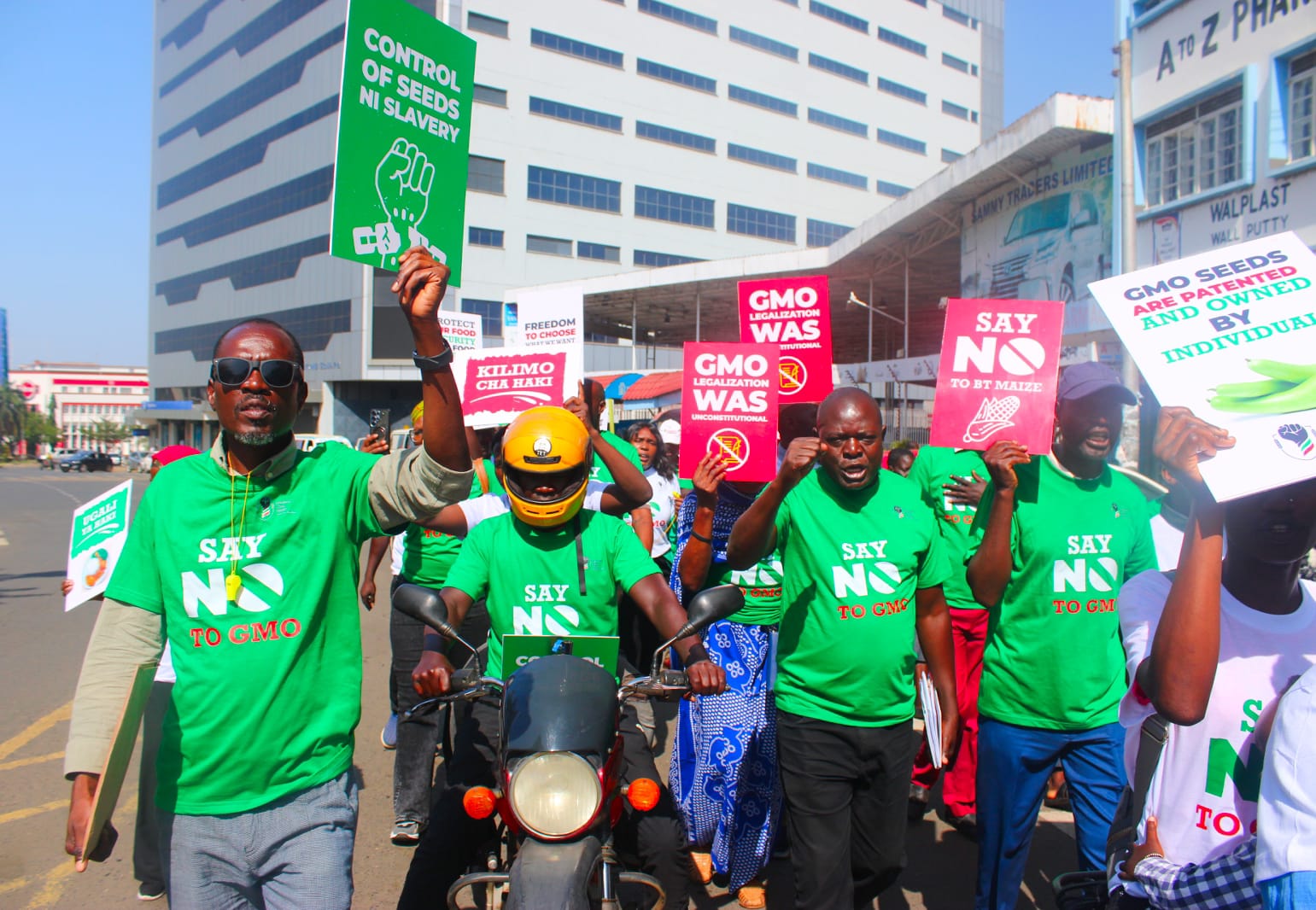

Anti-GMO activists have intensified their campaign against genetically modified organisms in Kenya with street sensitisation marches in Kisumu.
The group, from the Kilimo Cha Haki movement, said it would continue protests and grassroots mobilisation until the policy is reversed. They also threatened legal action should authorities ignore their demonstrations.
On Thursday, the group marched through Kisumu streets to raise public awareness and educate residents on GMOs and their potential effects.
Kilimo Cha Haki convenor Mary Kathomi Riungu said the team was in the Nyanza region to inform residents about what they described as the dangers of GMOs and to rally opposition to their adoption.
“We are not going to sit back. We will fight this in court, in the streets and in every space available to us,” Riungu said. She added: “This is a matter that touches on our food, our health and the future of our farmers.”
Riungu argued that GMOs were approved for use in Kenya in 2023 without meaningful public participation. She also raised concerns over the proposed privatisation of the Kenya Seed Company, saying it could threaten indigenous seeds and smallholder farmers.
“When you legalise GMO and at the same time move to privatise Kenya Seed Company, what message are you sending to Kenyan farmers?” she asked. She added: “It means mass production of GMO seeds that farmers will have to buy season after season.”
She described the trend as “seed colonisation,” claiming it transfers control of seed production from farmers to private corporations. Riungu said Kenya has long relied on indigenous seed varieties that are adaptable, affordable and culturally rooted.
“From time immemorial, our communities have used local seeds to produce safe and nutritious food. We believe our Constitution protects those indigenous seeds,” she said.
The activists also questioned claims that GMO crops automatically result in higher yields and improved incomes. Riungu cited the introduction of Bt cotton in parts of Nyanza years ago, saying many farmers did not experience significant economic gains.
“Cotton production was said to have increased, but did the farmers become wealthier? Many were left struggling, and some ended up in debt,” she said.
Bryon Otieno, another campaigner, said the movement was taking its message beyond Kisumu to ensure communities understand what he described as the long-term implications of GMO adoption.
“We are tired. Farmers are already burdened with high costs and limited support. Now they are being told to buy expensive seeds and chemicals without subsidies or irrigation,” Otieno said. He added: “We want this message to reach every corner of the country, say no to GMO.”
Organic farmer Sheryl Mboya echoed the concerns, warning that GMO crops could affect neighbouring farms practising organic agriculture.
“It is up to us as farmers to know what we are feeding our children and how it affects their growth,” she said. “I use organic manure and practise organic farming because I want to produce safe food. GMO crops can even contaminate nearby organic farms.”
The group said it supports local seed-sharing initiatives such as Kenya Seed Savers, which promote the preservation and exchange of indigenous seed varieties among farmers. They vowed to continue holding public forums, marches, and legal advocacy to push for what they described as food sovereignty and protection of small-scale farmers.
The government has previously defended the introduction of GMOs, saying they are safe and intended to boost food security. The debate, however, continues to draw sharp divisions among policymakers, scientists, and civil society groups.