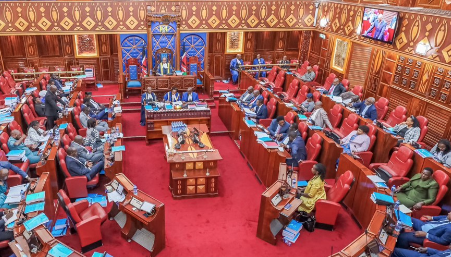
 Plenary sitting/FILE
The National Assembly has released its 2026 calendar, outlining key sitting periods, recess breaks, and committee suspensions for the year.
The schedule, approved by Members of Parliament on Wednesday, February 11, 2026, was formally communicated through a notice by Clerk of the National Assembly Samuel Njoroge.
“It is notified for general information that, pursuant to the provisions of Standing Order 2B of the National Assembly Standing Orders, by a resolution made on Wednesday, February 11, 2026, the National Assembly approved the Calendar of the Assembly (Regular Sessions) for 2026,” the notice reads.
According to the approved programme, the calendar will run from Tuesday, February 10, 2026, to Thursday, December 3, 2026.
The first sitting period began on February 10 and will continue until March 12. During this time, the House will sit on Tuesday afternoons, Wednesday mornings and afternoons, and Thursday afternoons. A short two-week recess will follow from March 13 to March 30.
Sittings will resume on March 31 under the same weekly schedule, running until April 30. A long recess is scheduled from May 1 to May 25. The annual National Assembly prayer breakfast will be held on May 28. Sittings will then continue from May 26 to June 25, maintaining the established days and time slots.
Another short recess will run from June 26 to July 20, after which the House will reconvene from July 21 to August 20. Members will then proceed on a long recess from August 21 to September 21.
The final legislative stretch will run from September 22 to October 15, followed by a short recess from October 16 to November 2.
Sittings will resume on November 3 and continue through December 3, marking the end of the 2026 regular session. Following the close of sittings, the House will proceed on a long recess until January 25, 2027.
During this period, there will be an annual suspension of committee sittings from December 14, 2026, to January 18, 2027.
The notice also clarifies official sitting hours.
“In accordance with the Standing Orders, morning sittings will commence at 9.30am and afternoon sittings at 2.30pm,” it states. However, the House retains flexibility to adjust its timetable when necessary. “The House may resolve to hold sittings on other days and times outside the published calendar,” the notice adds.
The release of the calendar provides legislators, parliamentary committees, government ministries, and stakeholders with a structured roadmap for legislative business in 2026.
It also allows the public to track parliamentary proceedings, key debates, and oversight activities throughout the year.
With clearly defined recesses and sitting periods, the National Assembly has set the framework for its legislative agenda as MPs prepare for a full year of law-making, budget scrutiny, and oversight responsibilities.