Kenya has unveiled two digital trade platforms aimed at transforming African embassies into active drivers of cross-border commerce, marking a major step in advancing intra-African trade under the African Continental Free Trade Area (AfCFTA).
The platforms, BiasharaLink and Deal House, were launched in Addis Ababa, Ethiopia, and are designed to reposition diplomatic missions as transaction-enabling hubs for trade and investment.
The announcement was made during a high-level reception held on the sidelines of the 39th African Union Summit, where Heads of State are pushing for practical, execution-focused measures to unlock the full potential of the continental free trade pact.
The initiative underscores a shift from policy ambition to tangible deal-making, as Kenya moves to digitise economic diplomacy and strengthen regional integration.
The platforms were developed by Real Sources Africa, a pan-African trade infrastructure institution that serves as Kenya’s AfCFTA Trading Company.
They aim to close what officials describe as Africa’s “trade execution gap” — the disconnect between trade enquiries and actual deal closures.
According to the developers, African embassies collectively receive more than 3,500 trade enquiries monthly, yet fewer than one per cent translate into completed transactions.
BiasharaLink is expected to allow diplomatic missions, exporters, investors and market actors to formally capture, structure and track trade and investment opportunities aligned with AfCFTA priorities.
Deal House will serve as the execution engine, validating opportunities, matching them with credible counterparties, connecting them to financing and moving them toward contract signing.
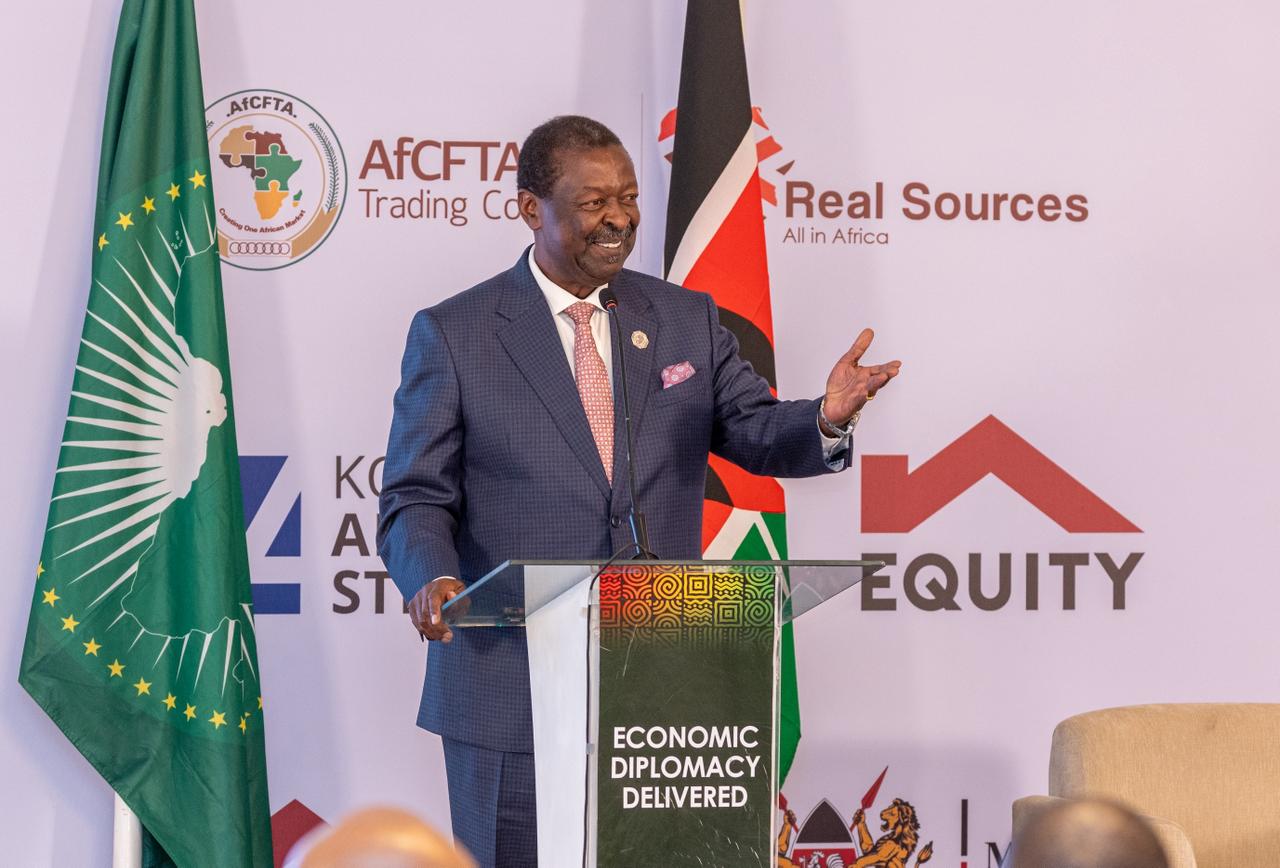
Speaking at the launch, Prime Cabinet Secretary and Cabinet Secretary for Foreign and Diaspora Affairs Musalia Mudavadi described the platforms as a new model of economic diplomacy.
“BiasharaLink and Deal House represent a new model of economic diplomacy — one that is results-oriented. It provides a common platform for capturing and organising opportunities. It connects opportunity to execution. Together, the platforms turn diplomacy into delivery,” he said.
AfCFTA Secretary General Wamkele Mene noted that as global supply chains face disruptions and rising protectionism, Africa must deepen its internal market.
He said the continent has no alternative but to build a strong domestic market anchored on effective trade systems.
The initiative also places an emphasis on empowering small and medium-sized enterprises (SMEs) and women-led businesses by giving them structured access to cross-border opportunities and financing mechanisms.
Kenya’s leadership role in the project reflects President William Samoei Ruto’s position as Chair of the AU Assembly Committee of Heads of State and Government on AfCFTA implementation and Co-Champion of the Digital Trade Protocol.
Private sector leaders welcomed the move as a practical step toward building what was described as a “trade superhighway” linking markets across the continent.
Developed in partnership with Real Sources Africa, Kenya’s designated AfCFTA Trading Company, and supported by Konrad-Adenauer-Stiftung and Equity Group Holdings, the platforms seek to digitise and coordinate trade opportunities generated through Africa’s more than 1,000 diplomatic missions.
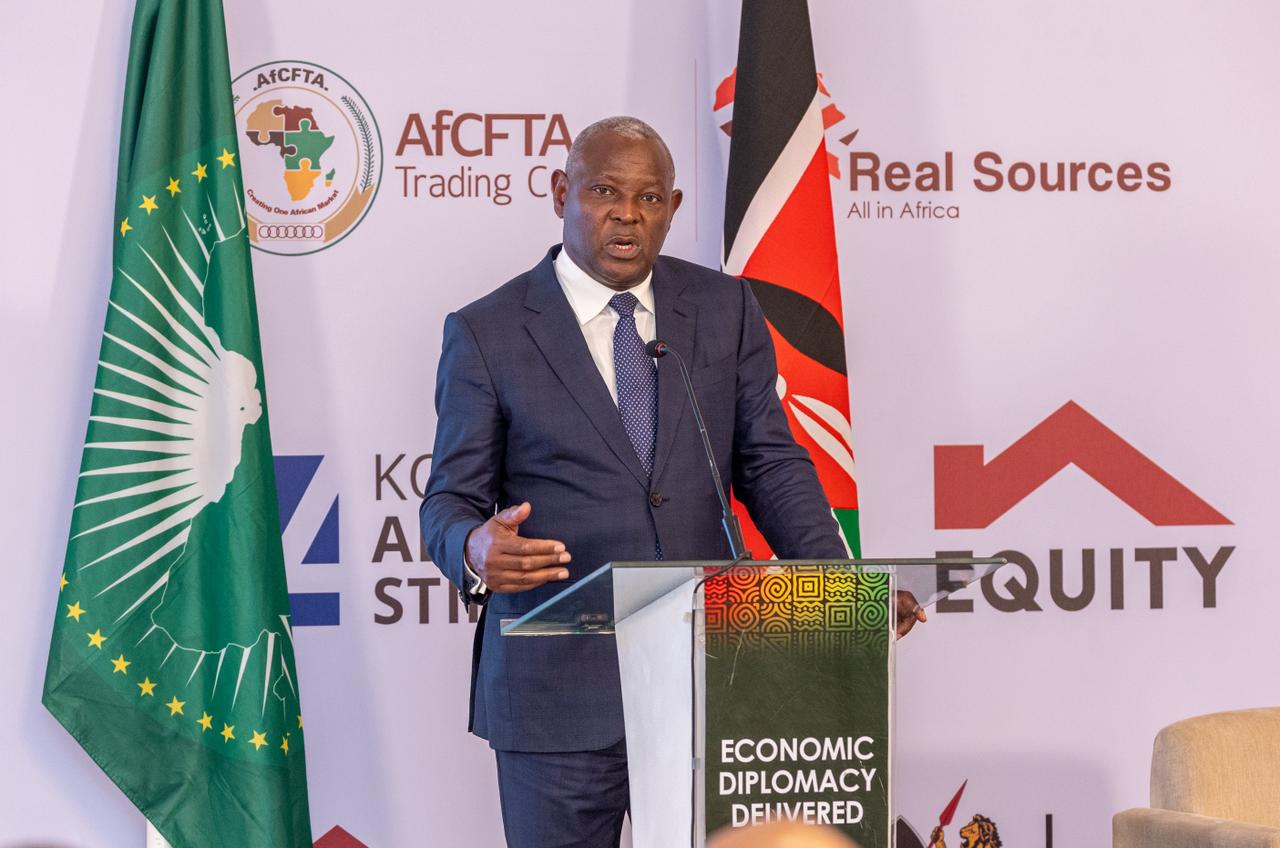
Equity Group CEO James Mwangi framed the launch as a structural turning point for Africa’s trade architecture.
“Africa does not suffer from lack of opportunity. We suffer from lack of structured execution. When we institutionalise execution, growth becomes predictable,” Mwangi said.
He argued that while trade agreements have laid the groundwork for integration, the real test lies in converting commitments into financed, bankable transactions.
“A trade agreement is a promise. A financed transaction is progress. Our role is to bridge that gap,” he said.
Mwangi described the partnership between government and private sector as the building of a “trade superhighway,” anchored on digital infrastructure that connects producers, buyers, logistics providers and financiers in one seamless system.
“Digital infrastructure is the new trade corridor. It connects producers, buyers, logistics, and finance in one seamless flow. Integration becomes real the moment a product crosses a border, a payment is settled, and value is created on both sides,” he said.
He emphasised that Africa’s small and medium-sized enterprises are not short on competitiveness, but on access.
“Africa’s SMEs are competitive. What they require is structured access to markets and finance. When you solve that, you unlock scale,” Mwangi noted.
He added that trade must shift from informal networks to institutional systems.
“Trade must move from informal relationships to formal systems. Systems create transparency. Transparency creates confidence. Confidence attracts capital,” he said.
Mwangi cautioned that AfCFTA should not be viewed as a single milestone but as a sustained process.
“AfCFTA is not an event. It is an execution journey. And execution requires platforms, partnerships, and patient capital. Diplomacy must now deliver measurable economic outcomes. It must originate deals, structure transactions, and close opportunities,” he said