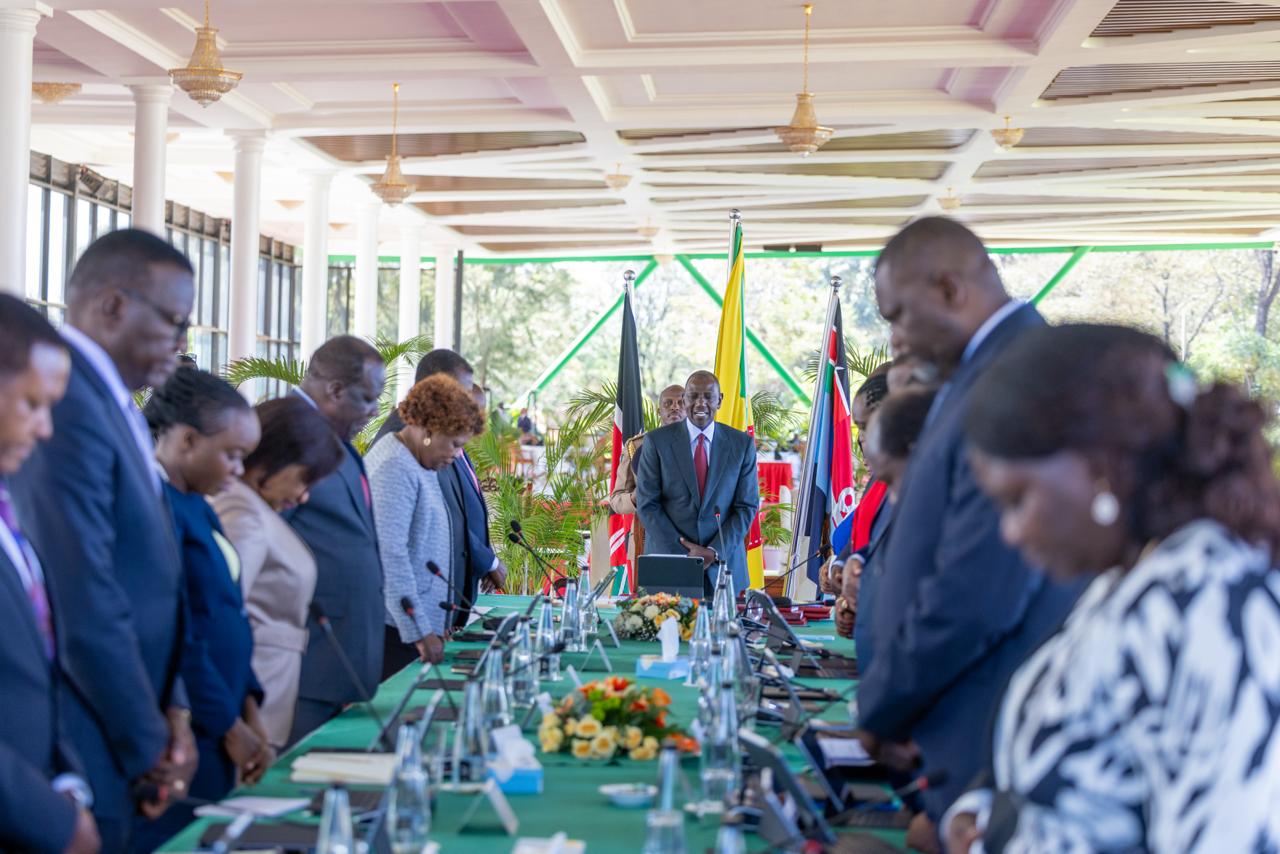
The Cabinet has ordered that statutory deductions for workers in state agencies be effected at source to rescue thousands of employees trapped in a growing payroll crisis across universities and major parastatals.
The directive follows revelations that a number of government institutions deduct cash from payslips but do not remit the funds, leaving workers blacklisted by credit reference bureaus, banks and Saccos.
As a result, employees who meet their obligations have been unable to access loans, secure tax compliance certificates, or qualify for emergency financing because their employers failed to submit deductions.
Controller of Budget Margaret Nyakang’o’s latest budget review paints a grim picture.
As of September 2025, state agencies had not remitted Sh25 billion in Pay-As-You-Earn to the Kenya Revenue Authority (KRA).
Parastatals owe Sh868 million to the National Social Security Fund (NSSF) and Sh24 million to the Higher Education Loans Board (Helb).
Agencies further owed saccos Sh10.9 billion, funds already deducted from employees, alongside Sh2.4 billion in staff loan repayments.
Pension arrears stood at Sh2.6 billion, while the National Hospital Insurance Fund - now the Social Health Authority - was yet to receive Sh39 billion.
Salary arrears of up to Sh37 billion remained unpaid, compounded by suppliers’ debts of Sh36 billion.
Audit reports by Auditor General Nancy Gathungu show that cash-strapped agencies, particularly universities and large state corporations, are among the worst affected.
Universities alone had outstanding payments totalling Sh29.6 billion, with Kenyatta University leading at Sh17 billion.
Auditors found that the institution had accrued penalties and interest due to delayed remittances, but failed to disclose them in its financial statements.
For the year ended June 2024, KRA issued Kenyatta University with a Sh7.5 billion demand, comprising Sh42 million in unpaid corporation tax and Sh7.46 billion in unremitted PAYE deductions.
Seven universities did not disclose accrued penalties or provide structured repayment plans, which Gathungu said contravened statutory requirements.
Under the Retirement Benefits Act, employers who fail to remit pension contributions face penalties of five per cent of unremitted amounts or Sh20,000, whichever is higher, in addition to full payment with interest.
The Income Tax Act requires PAYE to be remitted by the ninth day of the following month, with penalties of five per cent and interest of one per cent per month for noncompliance.
Despite these sanctions, entities continued holding workers’ money.
Egerton University had salary arrears, deductions and pension contributions totalling Sh7.5 billion, and had failed to remit Sh25 million to Helb despite deducting it from staff.
Masinde Muliro University recorded Sh156 million in unremitted PAYE, NSSF, NHIF, Helb, housing levy and VAT, while Rongo University owed Sh219 million in pension deductions.
The Technical University of Kenya had outstanding PAYE, NHIF and NSSF remittances of Sh2 billion, with Multimedia University reporting Sh1.2 billion.
At Posta Kenya, non-remitted PAYE, pensions, gratuities, cooperative contributions and staff bank loans stood at Sh3.4 billion.
Under the new arrangement, deductions and loan repayments will be remitted directly from the Exchequer before salaries are released to institutions, closing loopholes that allowed agencies to sit on employees’ money.
The Employment Act requires employers who deduct money from workers’ pay to remit it within stipulated timelines.
Cabinet directed that Principal Secretaries, accounting officers and heads of parastatals meet to oversee the implementation of the new system and ensure compliance.
Staff unions have in recent months raised alarm over delayed remittances that exposed employees to penalties, accrued interest and damaged credit ratings. Some workers reported being denied loans or blocked from accessing sacco savings, while others were turned away by banks when seeking emergency funds for medical care or school fees.
Labour groups and legislators accused errant parastatals of using statutory deductions to plug budget shortfalls, effectively treating workers’ money as interest-free loans.
Cabinet said the reforms would address integrity issues “left unresolved by previous administrations” and ensure that deductions are applied uniformly at source. The decision followed a special audit that uncovered governance failures in the government’s human resource systems.
“The audit revealed widespread payroll anomalies relating to identity records, tax compliance and bank accounts, compounded by poor system integration and the failure of about 300 state corporations to migrate to HRIS-K,” the Cabinet brief said.
The audit also found that 720 system editors altered more than 4.7 million payroll records without audit trails, including instances of staff editing their own data. Weak cybersecurity safeguards, unauthorised payments, excessive salary arrears, poor disaster recovery arrangements and expired ICT licences were flagged as major risks to public funds.
Accounting officers have been warned they will be held personally responsible for future violations.
INSTANT ANALYSIS
Once fully implemented, the framework is expected to restore workers’ access to financial services and tighten oversight of employee contributions across state agencies.