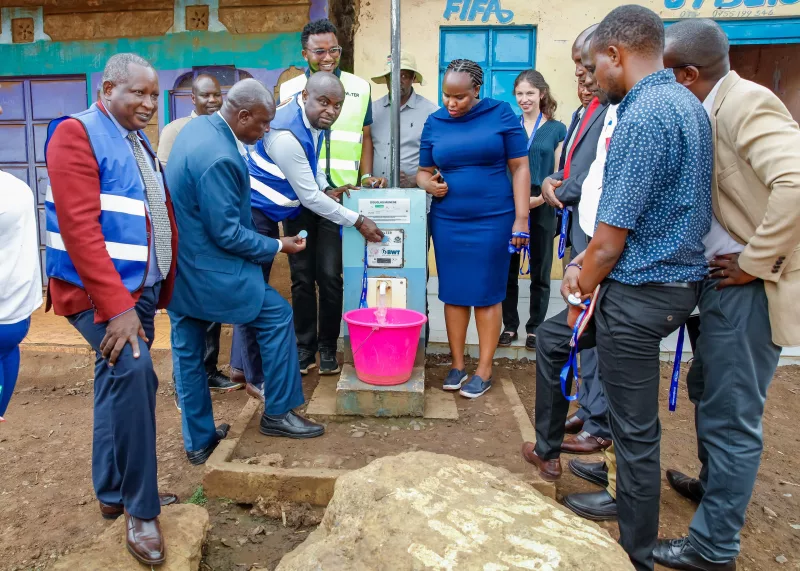
More than 200 women and youth gathered in Nakuru County on Wednesday to discuss practical ways of entering industries where women remain underrepresented, during the launch of the second phase of the Biashara Pawa initiative.
The programme, implemented by SNV Netherlands Development Organisation under the IYBA-SEED framework, targets women entrepreneurs working in sectors such as manufacturing, engineering, technology, agribusiness and the blue economy.
For many participants, the forum went beyond policy discussion, offering space to reflect on long-standing social attitudes that influence career choices.
Coach Blessed Abby, founder of Abby’s Holistic Wellness Hub, said deeply rooted stereotypes continue to shape perceptions of what professions are considered suitable for women and men.
“For a long time, society has made us believe that professions like Uber drivers are for men, and nursing is for ladies,” she said.
“These stereotypes are reinforced by our communities, creating a mindset that some careers are only for men. This discourages many women and youth from exploring opportunities in these fields.”
Participants described social pressure faced by women who pursue careers in engineering, transport, construction and large-scale agribusiness.
Several young women said limited access to mentorship and visible role models remains a major challenge.
Organisers said the Biashara Pawa initiative aims to address these gaps by profiling women who have succeeded in non-traditional sectors and amplifying their experiences.
According to George Wayne, Chief Executive Officer of Nakuru Box, the programme works with local business associations and ecosystem support organisations to improve the visibility of women entrepreneurs.
“Biashara Pawa is committed to creating meaningful change by working directly with grassroots organisations and key stakeholders,” Wayne said.
“Our focus is on promoting women’s participation through sector-based dialogue events, identifying role models, strategic storytelling, and amplifying community-rooted narratives.”
Several participants said increased visibility of women in male-dominated industries helps challenge both internal doubts and resistance from their communities.
Nduta Ndirangu from SNV Kenya said efforts to expand women’s participation must begin with changing community attitudes.
“We are here to inspire women and youth to see themselves as capable of succeeding in sectors traditionally viewed as for men,” she said.
“Our goal is to create a supportive environment where more women can participate actively and confidently in these industries.”
The project will also highlight women leaders in sectors including manufacturing and engineering, green and circular economy enterprises, agriculture and agribusiness, technology, financial services, infrastructure development and the blue economy.
Organisers said women will make up 80 per cent of the target group, alongside young men at 20 per cent, as part of efforts to address gender gaps while promoting inclusive participation.
Implementation is being supported by Responsible Business Consulting, working with ecosystem organisations such as Wisehub and EldoHub, extending the initiative beyond Nakuru.
For many attendees, the main takeaway was increased confidence. Participants said the forum provided practical insights into entering technical fields, accessing professional networks and dealing with fear of judgement.
Some said they were now considering opportunities in manufacturing and technology sectors they previously viewed as inaccessible.
As the programme expands to other counties, participants said its impact will be reflected in whether more women take up roles in industries they have traditionally been excluded from.