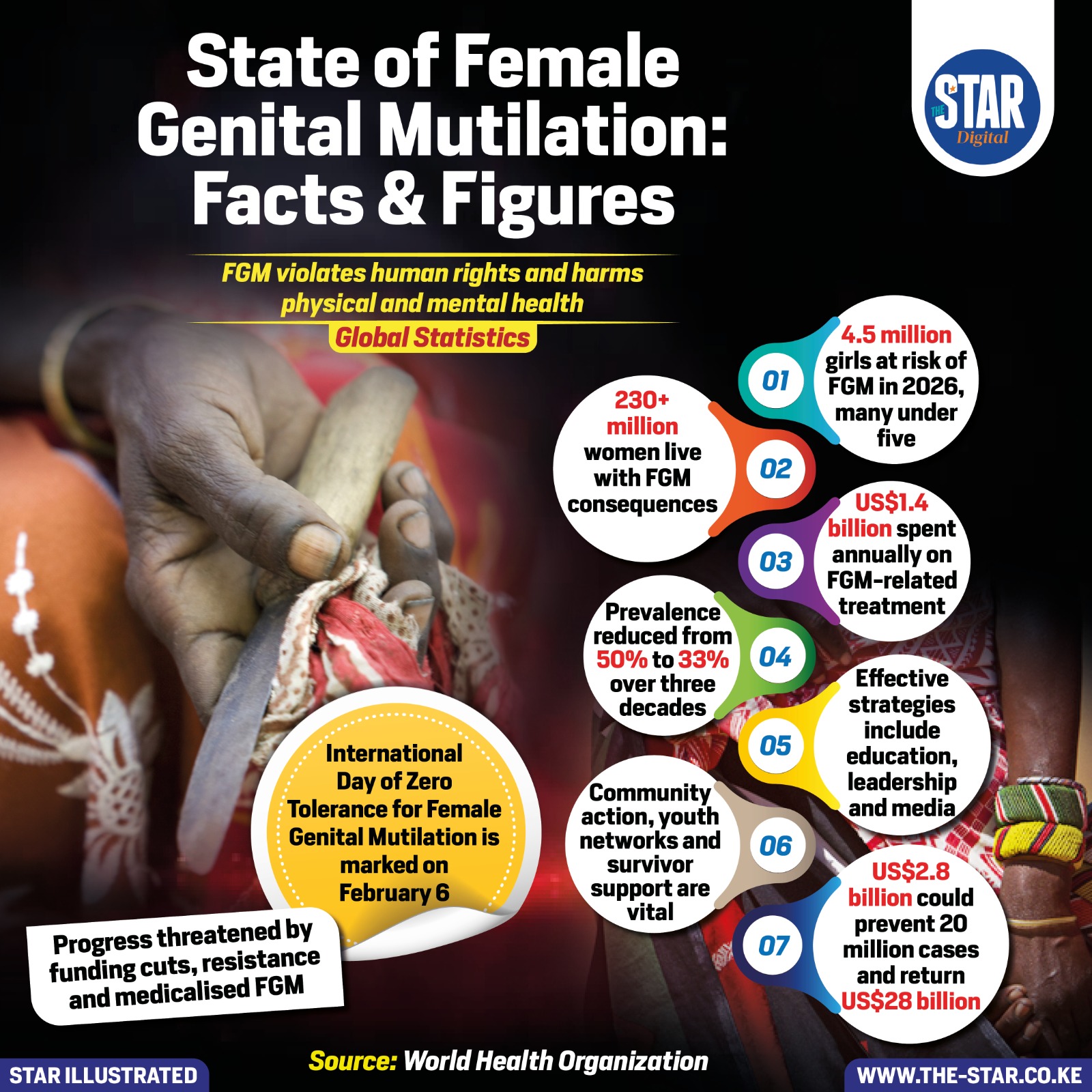
Female Genital Mutilation (FGM) remains a profound violation of human rights, impacting the physical and mental well-being of over 230 million women worldwide who currently live with its long-term consequences.
As of 2026, the urgency of this crisis is underscored by the fact that 4.5 million girls—many under the age of five—are at immediate risk of undergoing the procedure this year alone.
While the challenge is immense, the last three decades have shown that progress is possible; global prevalence rates have successfully dropped from 50% to 33%.
However, these gains are fragile. The movement toward eradication is currently threatened by a rise in medicalised FGM, persistent cultural resistance, and critical funding cuts.
The economic argument for intervention is as compelling as the moral one.
Currently, US$1.4 billion is spent annually on treating the health complications arising from FGM. In contrast, an investment of US$2.8 billion in prevention could avert 20 million cases and generate an economic return of US$28 billion.
To bridge this gap, effective strategies must prioritize community-led action, survivor support, and youth-driven networks.
Education and media engagement remain the most vital tools in shifting social norms and ensuring that the International Day of Zero Tolerance for Female Genital Mutilation, marked every February 6, eventually celebrates a world free of this practice.