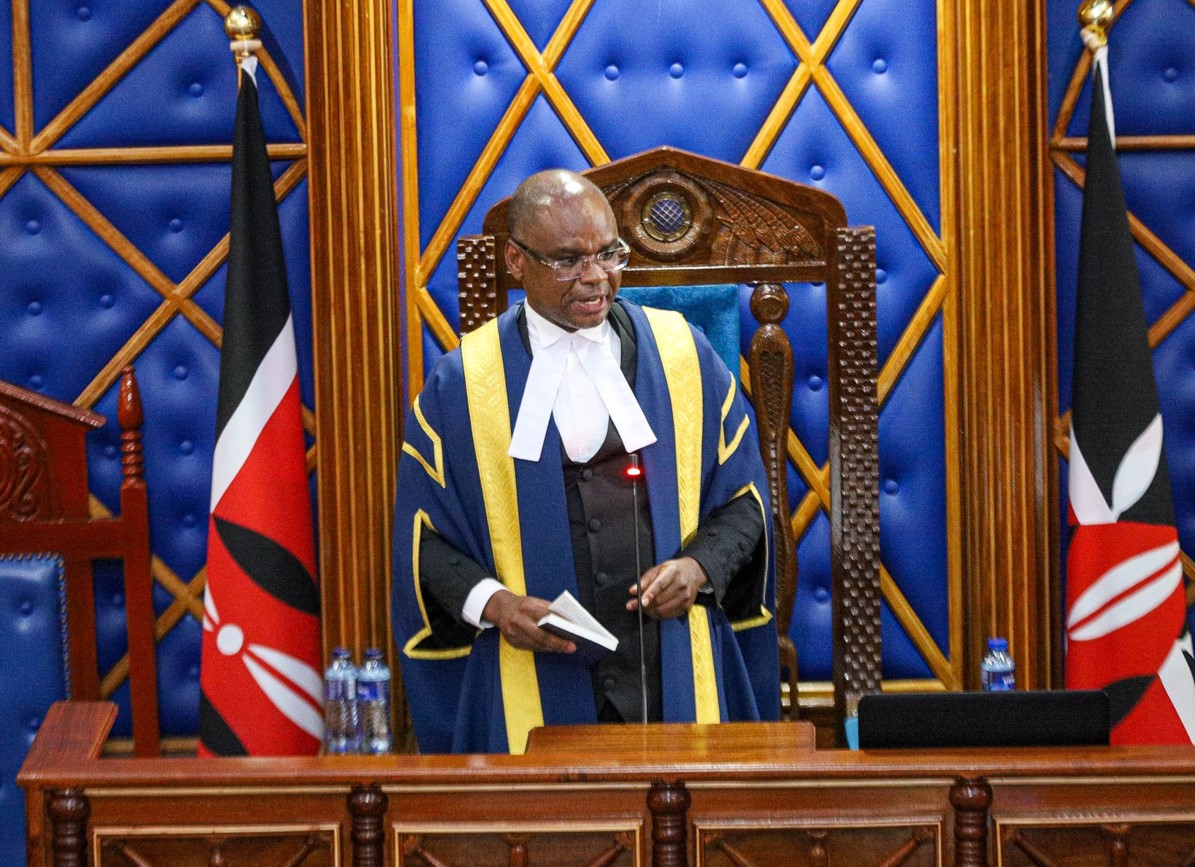
 Senate Speaker Amason Kingi/FILE
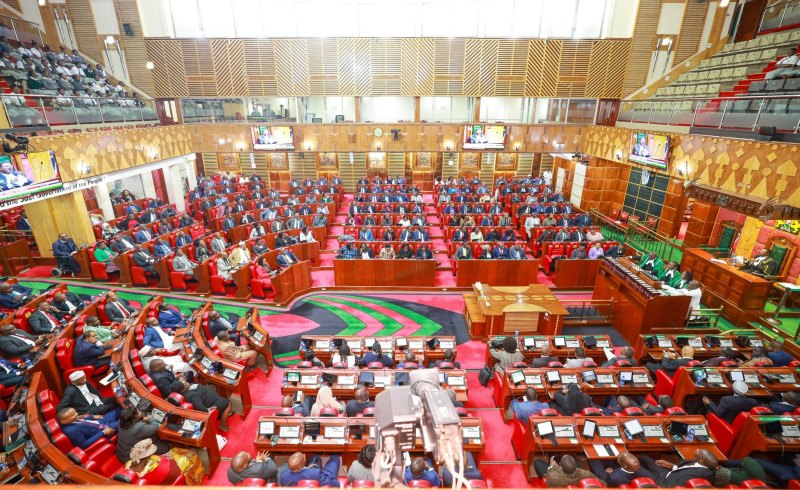
The standoff between the Senate and governors over accountability for billions of shillings sent to devolved units escalated on Tuesday after county chiefs announced they will not honour Senate summonses.
The escalation came as senators mounted a spirited pushback against accusations of intimidation, harassment, blackmail, and political witch-hunts levelled against them by governors.
The latest impasse followed a dramatic decision by the Council of Governors on Monday to suspend members' appearances before the Senate County Public Accounts Committee (CPAC).
They accused the senators of turning oversight hearings into forums for intimidation and settling of political scores.
However, Senate Speaker Amason Kingi dismissed the accusations, criticising the governors for opting for “public mudslinging and unsubstantiated allegations” instead of using established institutional mechanisms to address their grievances.
“Should the Council of Governors have concerns regarding the conduct or operations of Senate committees, established and legitimate institutional channels exist through which such concerns may be formally raised and addressed,” Kingi said in a statement on Tuesday.
He said the Senate remains firm in upholding the principles of accountability, safeguarding the promise of devolution, and discharging its constitutional mandate in the public interest.
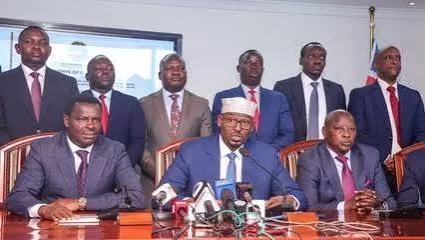
Moments after his statement, CoG chairman Ahmed Abdullahi released a letter addressed to the Speaker, requesting an urgent meeting with the Senate leadership.
“The request of this letter is to seek an engagement with the leadership of the Senate at the earliest opportunity to address the concerns raised, with a view to developing an engagement framework with these critical Senate oversight committees,” the letter reads.
Yet, even as the CoG projected a united front, cracks in the governors’ ranks quickly emerged.
On Tuesday, Narok Governor Patrick Ntutu and his Kitui counterpart Julius Malombe defied the CoG directive and appeared before Senate committees to respond to audit queries, a move that was welcomed — and loudly applauded — by senators.
Governor Ntutu appeared before CPAC to answer audit queries for the financial year ended June 30, 2025, while Governor Malombe separately appeared before the Senate Public Investments and Special Funds Committee.
In contrast, Murang’a Governor Irungu Kang’ata, who had been scheduled to appear before CPAC, failed to turn up, drawing sharp criticism from lawmakers.
The committee resolved to summon him afresh, on a date to be announced.
Ironically, CoG chairman Abdullahi himself, who is scheduled to appear before CPAC on February 20, has written to the committee requesting to appear earlier, on February 17 — barely days after leading the boycott announcement.
The decision by Ntutu and Malombe to honour the Senate summons was seized upon by senators as proof that the CoG directive was unconstitutional and unenforceable.
CPAC chairperson Moses Kajwang’ led a scathing attack on the governors’ lobby, accusing it of attempting to shield governors from scrutiny and “sanitise impunity” in county governments.
“If you come here with embarrassing records, we will embarrass you. If you come with embarrassing responses, we will embarrass you.”
“If your audit report is an embarrassment and indicative of theft, we will call it out,” Kajwang’ said.
However, he added that senators were ready to work cordially with county administrations that were organised and prepared.
“If you are organised, it becomes like a tennis game — we serve and you return the service,” he said.
Kajwang’ accused the CoG of increasingly behaving like “a gossip club and a trade union defending impunity,” insisting that Parliament would not entertain unsubstantiated allegations levelled through press conferences.
Minority Leader Stewart Madzayo thanked Governor Ntutu for honouring the summons, saying CPAC remained one of the Senate’s most critical oversight committees.
“This committee is central to the Senate’s oversight mandate. Any attempt to ruin its image must be firmly denounced,” Madzayo said, warning that governors who refuse to account for public funds would face consequences.
Minority Whip Ledama Ole Kina said governors’ collective action would not shield them from personal responsibility.
“The law is very clear. When a witness is summoned and fails to appear, they will be held personally accountable. This is not collective responsibility,” Ole Kina said, terming the boycott call “an act of arrogance”.
Nairobi Senator Edwin Sifuna described the CoG directive as illegal and unconstitutional, praising the two governors for distancing themselves from it.
“We are happy you did not follow that illegal directive. It was disappointing to see the governor of Wajir reading a statement purporting to suspend a constitutional process,” Sifuna said.
He accused some governors of appearing before committees unprepared and then crying foul when questioned about glaring misuse of public funds.
“Oversight means robustly following how public resources are used,” Sifuna said, citing a past case where Bungoma County allegedly spent Sh4 million lighting a Christmas tree in September, an expenditure he said embarrassed governors more than Senate questioning.
Nandi Senator Samson Cherargei said appearing before Senate committees was not a favour but a constitutional obligation.
“Just as we fight for counties to get funds, we must demand accountability. The problem governors face is of their own making,” Cherargei said.
CPAC member Enoch Wambua termed the CoG position “illegal and immoral,” accusing the council of attempting to suspend the Constitution through a boardroom resolution.
“You cannot suspend the Constitution by press conference,” Wambua said, adding that failure to submit to oversight threatened the very foundations of devolution.
As the standoff deepens, all eyes are now on whether dialogue between Senate leadership and the governors will cool tempers — or whether the constitutional clash will escalate, with far-reaching consequences for county governance and accountability.
INSTANT ANALYSIS
The standoff between governors and the Senate over accountability has intensified, exposing deep cracks within devolution. While the Council of Governors accuses senators of harassment and attempts a boycott, several governors have defied the directive, underscoring its weak grip. Senate leaders insist oversight is a constitutional duty, not intimidation. The clash reveals growing resistance by some county bosses to scrutiny, but senators appear determined to assert authority, framing the dispute as a test of accountability versus impunity.