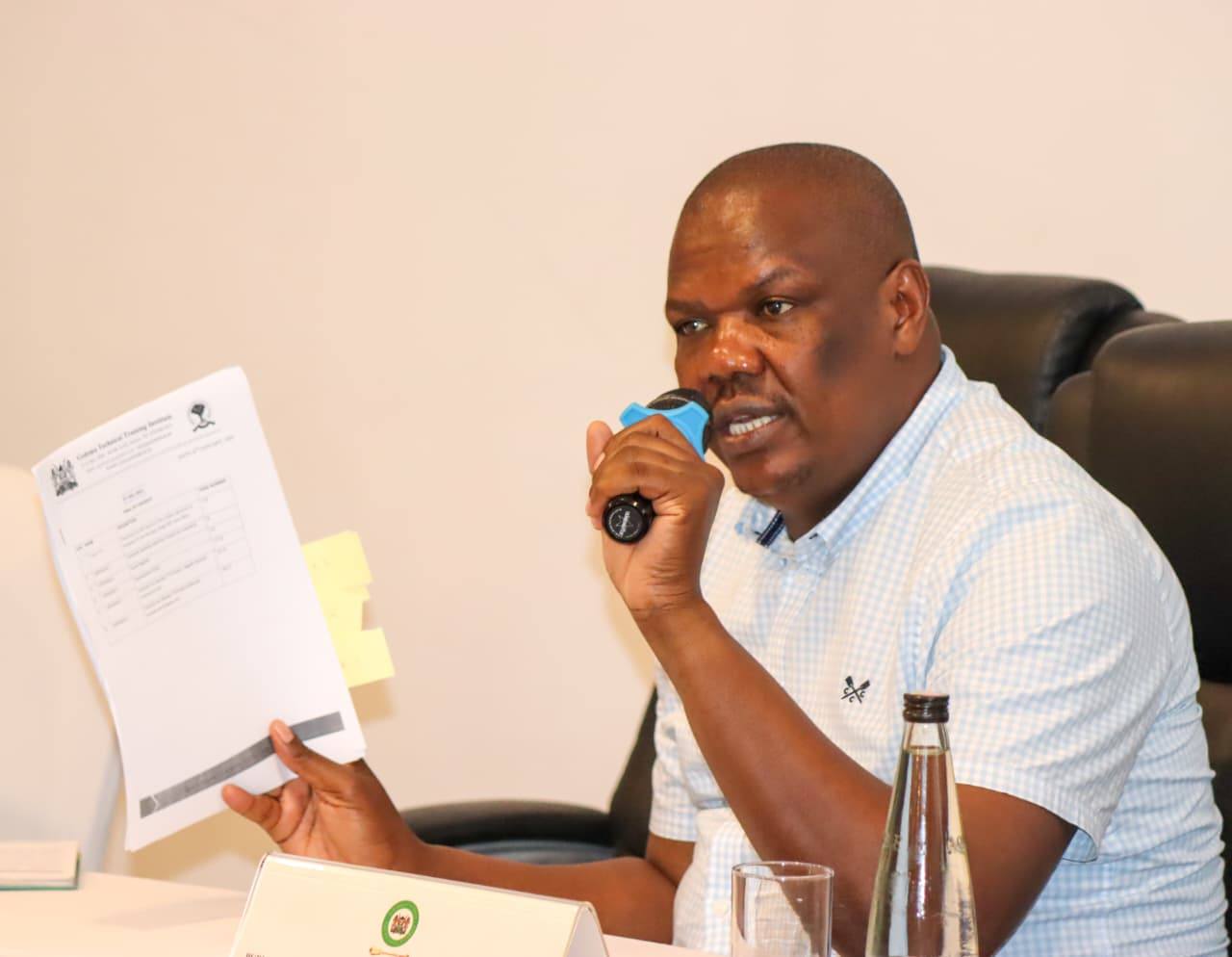
 Public Investments Committee on Governance and Education chairperson Wanami Wamboka during an engagement meeting with Coast institutions on February 10 /PARLIAMENT
Coast-based universities and technical institutions have been challenged to diversify their sources of income to shield themselves from delays in government funding and capitation.
The education sector continues to grapple with a funding deficit despite being allocated the lion's share of the 2025-26 national budget, receiving Sh702.7 billion, which represents about 28 per cent of the total budget of Sh4.239 trillion.
The amount includes Sh16.9 billion for scholarships, Sh41.5 billion for Helb loans, Sh7.7 billion for Tvet capitation and scholarships and Sh993 million for research, science, technology and innovation.
Government funding often covers only between 40 and 66 per cent of requirements in public universities and Tvet institutions, resulting in massive deficits, including a debt crisis exceeding Sh72 billion that universities faced as of March last year.
The Public Investments Committee on Governance and Education engaged institutions across the Coast region on Tuesday, urging proactive management of resources to protect learning programmes, strengthen infrastructure and safeguard students from financial shortfalls.
Key strategies include diversifying revenue through research grants, commercialising idle assets, strengthening private-sector partnerships and rationalising academic programmes.
The committee chaired by Bumula MP Wanami Wamboka scrutinised pending audit queries from the Office of the Auditor-General, providing guidance on compliance, prudent resource management and transparent use of institutional assets.
Members stressed that sustainable revenue mobilisation is key to long-term institutional stability.
At Pwani University, the committee flagged more than Sh45.3 million spent on a stalled perimeter fence project, highlighting risks of insecurity and encroachment.
University management was directed to address project challenges and ensure completion by June, securing students and public land.
At the Technical University of Mombasa, attention was drawn to the prolonged acting appointment of a procurement officer beyond the legal six-month limit.
The committee instructed the institution to fill the post competitively within six months, adding that it would institute probe into emerging procurement concerns raised in the auditor's report.
Members also raised gender imbalance at the university, where male students account for 69 per cent and noted that policy interventions are being developed to support graduate employment and inclusivity.
Taveta Technical and Vocational College was directed to establish essential departments, including Finance and Human Resources, alongside governance instruments such as a board charter and academic policies.
The committee also recommended setting up an audit committee to strengthen oversight.
Taita Taveta National Polytechnic and the Technical University of Mombasa Enterprise were called to account for governance, financial management, and compliance issues, with the committee emphasising that institutional enterprises must deliver value to the public.
Godoma Technical Training Institute was asked to reappear after failing to submit required audit documents on time.
The committee noted errors in the submitted records, reminding management that Parliament relies on accurate and verifiable information to track public resources.