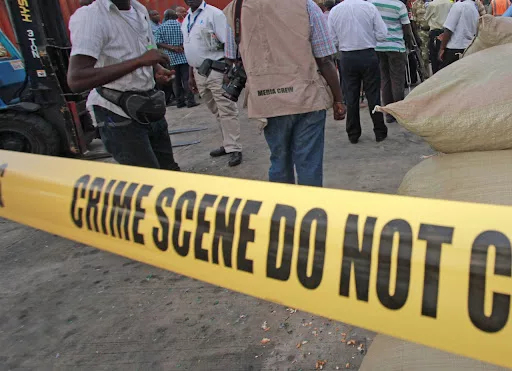
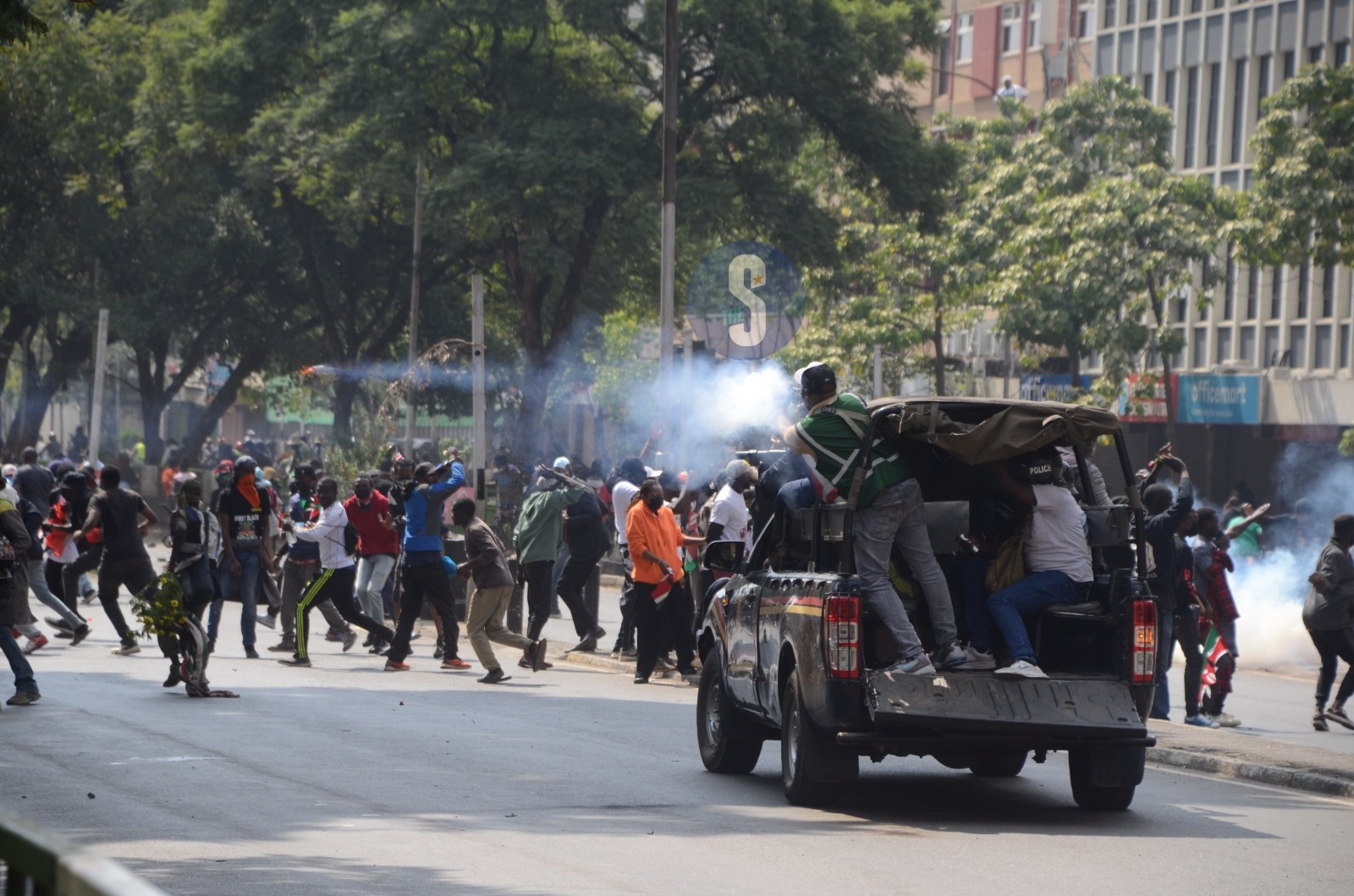
 Protesters scamper to safety in Nairobi CBD as anti-riot police fire teargas to disperse them during the June 25 protests. /FILE
Kenya’s fight against corruption has suffered a setback with the country’s standing on the latest global graft index sliding amid warnings that shrinking civic space and weakened accountability institutions are eroding gains made through years of reforms.
The 2025 Corruption Perceptions Index (CPI), released on February 10, 2026 by the global Transparency International movement, paints a bleak picture for both Kenya and the wider Sub-Saharan Africa region, which remains the lowest performing globally.
Kenya scored an average of 30 out of 100, placing it among 45 countries in the region that registered below the midpoint score of 50, a threshold Transparency International considers indicative of serious corruption challenges.
The CPI ranks 182 countries and territories and relies on 13 independent data sources, using a scale of zero to 100, where zero means the public sector is perceived as highly corrupt and 100 as very clean.
Kenya’s latest score marks a decline from 32 in 2024 and continues a pattern of stagnation that has characterised the country’s anti-corruption journey for more than a decade.
The country’s performance has hovered in a narrow band for years, signalling entrenched weaknesses in enforcement and governance systems.
“The country’s score has largely oscillated between 25 and 33 over the last 13 years, indicating high levels of corruption and stagnation in the fight against corruption despite several legislative and institutional reforms,” TI Kenya noted.
Across Sub-Saharan Africa, the overall outlook remains fragile. Only four of the region’s 49 countries scored above 50 — Botswana, Rwanda, Cabo Verde and Seychelles.
At 68, Seychelles retained its position as the region’s top performer, followed by Cabo Verde at 62, and Botswana and Rwanda at 58.
At the other end of the spectrum, Sudan scored 14, Eritrea 13, while Somalia and South Sudan posted the lowest scores at nine.
In East Africa, Rwanda continues to stand out with 58, far ahead of Tanzania at 40, Uganda at 25 and Burundi at 17, underscoring the governance gap within the bloc.
Globally, Kenya was listed among 50 countries whose CPI scores declined and among 10 in Sub-Saharan Africa that registered setbacks.
More broadly, over two-thirds of countries worldwide — 68 per cent — scored below 50, highlighting what Transparency International describes as persistent and systemic corruption risks across much of the planet.
This year, Denmark topped the rankings for the eighth consecutive year with a score of 89.
But beyond numerical comparisons, the report draws a strong link between corruption levels and the state of democracy and civic freedoms.
The CPI shows the stark contrast in controlling corruption between nations with strong, independent institutions, free and fair elections, and open civic space, and those ruled by repressive authoritarian regimes.
Full democracies have a CPI average of 71, flawed democracies average 47, and authoritarian regimes just 32.
The broader picture shows that democracy and strong, independent institutions are crucial for combatting corruption fully, effectively and sustainably.
“Countries with more open civic space tend to have lower levels of corruption. As civic space becomes more restricted, average CPI scores steadily decline, suggesting that shrinking freedoms often coincide with weaker anti-corruption environments,” Transparency International said.
According to the index, countries with open civic freedoms post average scores of 68, compared to 51 where freedoms are narrowed, 38 where they are obstructed, 32 where repressed and 30 where space is effectively closed.
Transparency International noted: “Countries where civic space is guaranteed and protected tend to control corruption better. Those where the freedoms of expression, assembly and association are duly safeguarded are generally more resilient against corruption and score better on the CPI.
"However, countries where these freedoms are lacking are more likely to lose control of corruption: 36 of the 50 countries where the CPI scores have significantly declined have also seen a reduction in civic space.”
The findings resonate in Kenya, where civil society groups and journalists have repeatedly raised concerns about restrictions, intimidation and reduced oversight space that weaken watchdog functions.
“When journalists are attacked or killed for investigating corruption, power cannot be held to account effectively and corruption tends to worsen,” TI said.
The report identifies justice systems and the rule of law as another critical pressure point. Where political or business interests interfere with judges and prosecutors, the law tends to protect elites rather than citizens.
Similarly, opaque political financing and weak checks and balances allow state capture, enabling private interests to influence public policy and budgets.
In everyday life, corruption often manifests through compromised public services, where diverted funds and inflated contracts reduce access to essentials such as health care, education and housing.
Kenya, however, posted a comparatively stronger showing in the provision of essential health services, falling within the group of countries scoring between 20 and 39 on the CPI but achieving a 68 per cent rating on health care accessibility and availability.
Still, Transparency International warns that without deeper structural reforms, progress in service delivery risks being undermined by systemic governance failures.
To reverse declining scores, the organisation is urging governments to ensure independent, transparent and accessible justice institutions, regulate political finance and lobbying, and give individuals harmed by corruption better access to legal remedies.
It also calls for the protection of civic space and anti-corruption reporting, stronger oversight of public spending, and tougher action to prevent, detect and punish large-scale corruption and illicit financial flows.
“At a time when we’re seeing a dangerous disregard for international norms from some states, we need to protect a rules-based global order that is grounded in transparency, accountability to citizens and respect for human rights,” said Transparency International chairperson François Valérian.
For Kenya, TI's message is clear: legislative reforms alone are not enough. Without safeguarding civil liberties, strengthening institutions and protecting watchdogs, the country risks remaining trapped in a cycle of stagnation where corruption persists despite repeated promises of change.