In the lush fields of Kakamega county, where maize and sugar cane have long dominated the agricultural landscape, a quiet technological shift is taking place.
For generations, farmers here have relied on experience and routine to manage their land, often applying fertiliser without fully understanding what their soil needs.
Now, a homegrown agritech startup is seeking to change that narrative by bringing science, data and artificial intelligence directly to the farm.
Angaza, a Kakamega-based startup, is developing a smart farming solution that combines rapid soil testing with artificial intelligence to give farmers instant, actionable advice on how to manage their soils and crops more efficiently.
The innovation comes at a critical moment for Kenya’s agriculture sector, which continues to grapple with declining soil fertility, rising input costs and climate uncertainty.
Kenya’s agricultural productivity has long been undermined by poor soil health.
Years of continuous monocropping, deforestation and the repeated use of the same fertilisers have left large tracts of farmland nutrient-deficient and increasingly acidic.
According to the Ministry of Agriculture, nearly 70 per cent of smallholder farmers apply fertilisers blindly, often using the wrong type or quantity resulting in low yields and wasted resources.
Experts warn that restoring soil health is essential not only for food production, but also for climate resilience and long-term food security.
Against this backdrop, Angaza’s technology could be a game changer.
Njuguna Mwaura, who leads the Angaza team, says the startup was founded to address persistent gaps in how farmers manage their soils.
“One of the biggest problems we are trying to resolve is farmers blindly applying fertilisers without knowing their soil’s real needs,” he says.
“Our application integrates rapid soil testing and AI to guide farmers on exactly what their land requires.”
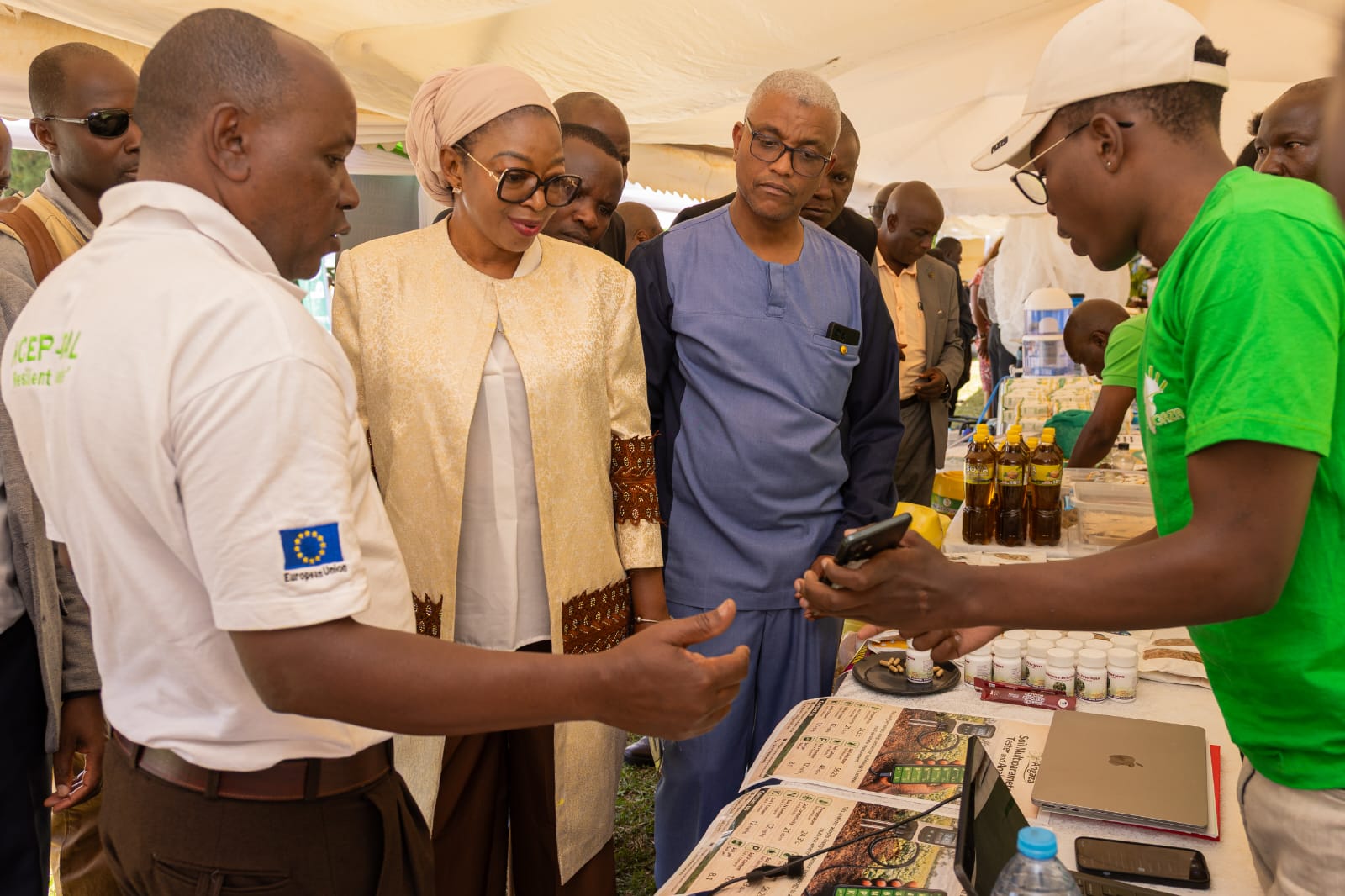
At the core of the innovation are smart soil meters, portable gadgets capable of measuring eight key soil parameters, including temperature, pH, nitrogen, phosphorus, potassium, salinity and electrical conductivity.
Once the sensors are placed in the soil, they collect data that is transmitted directly to Angaza’s AI-powered application.
David Mandala, a developer at Angaza, says the system was designed after the team observed farmers spending heavily on farm inputs without reliable data to guide their decisions.
“We developed this AI-driven application after identifying a major gap in agriculture where farmers were losing money because they were working without accurate information,” he says.
AI analyses soil data at an accuracy rate of about 92 per cent, conducting multiple analyses every minute to ensure recommendations are reliable.
“Once the data is analysed, farmers receive instant guidance on how to improve their soil and increase productivity,” he explains.
But the platform goes beyond soil health.
Farmers can also take photos of crops or livestock using a smartphone, and the AI analyses the images to detect pests, diseases or other threats, while recommending appropriate corrective measures.
“It’s a very easy way for farmers to get on-farm recommendations quickly,” Mwaura says.
“It can also be a powerful tool for agricultural extension officers who want to provide real-time guidance instead of relying only on textbooks.”
Angaza has also integrated action-based weather forecasting into the platform.
Unlike conventional forecasts that simply predict rainfall or dry spells, the app advises farmers on what actions to take based on 30- to 120-day weather projections and the specific crops they are growing.
Satellite mapping further enhances decision-making by giving farmers a comprehensive overview of their land.
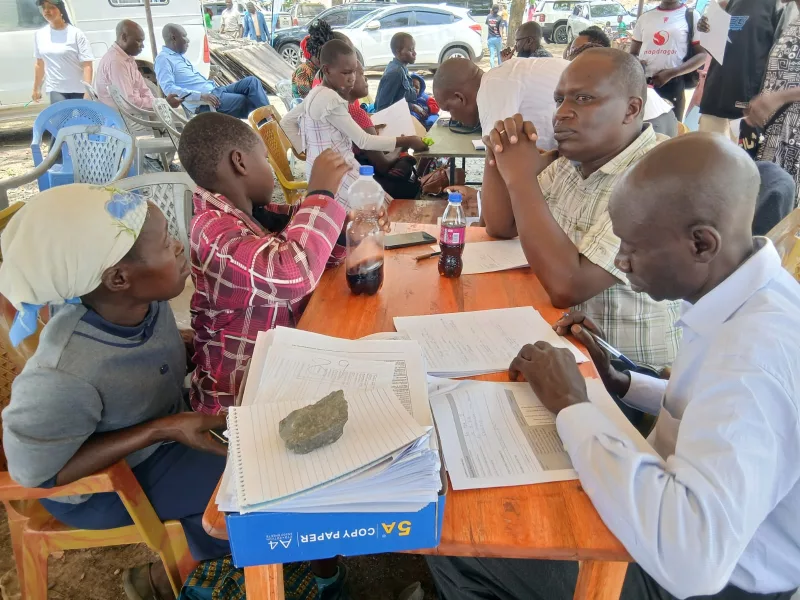
Currently, Angaza is piloting the application in collaboration with the Kakamega government and the Bukura Agricultural Training Centre.
Although the startup is still at the development stage, Mwaura says the product is expected to be ready for full rollout within the next one to two months.
Beyond Kakamega, the team plans to expand nationally and eventually into regional markets. The pilot is shedding light on the extent of soil degradation in the county.
“From our initial tests, most farms have very high acidity levels and low potassium,” Mwaura says.
“Farmers often apply only CAN and DAP fertilisers, yet their soils lack other essential nutrients. Our app helps them apply exactly what their farms need, saving money and improving yields.”
By enabling targeted fertiliser use, the technology has the potential to improve soil health while reducing costs for farmers.
For agricultural extension officers, it offers a science-based tool to support farmers directly in the field, bridging the gap between traditional knowledge and modern technology.
However, scaling the innovation comes with challenges.
Mandala notes that expanding the technology nationwide will require significant investment, particularly in farmer training and adoption.
“Teaching farmers to adopt new technology takes time and resources,” he says.
“We are currently seeking funding and partnerships to support training, deployment of sensors, cameras, connectivity solutions and system expansion.”
Despite these hurdles, the Angaza team remains optimistic.
“Our goal is to make smart, data-driven farming affordable and accessible to all farmers,” Mwaura says.
“With the right support, we can empower farmers to make informed decisions, increase productivity and secure their livelihoods.”
As Angaza prepares for its official launch, Kakamega’s fields may soon become the testing ground for a new era in Kenyan agriculture, one where technology and tradition work hand in hand to restore soil health and safeguard the country’s food future.