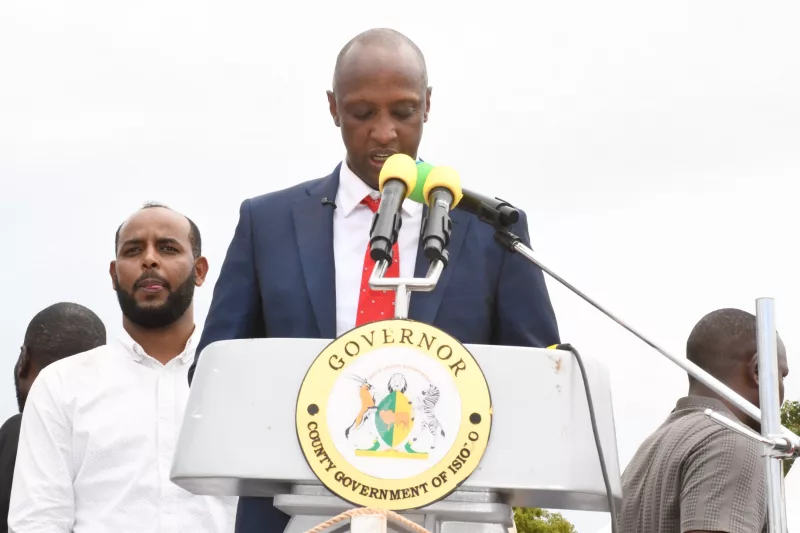
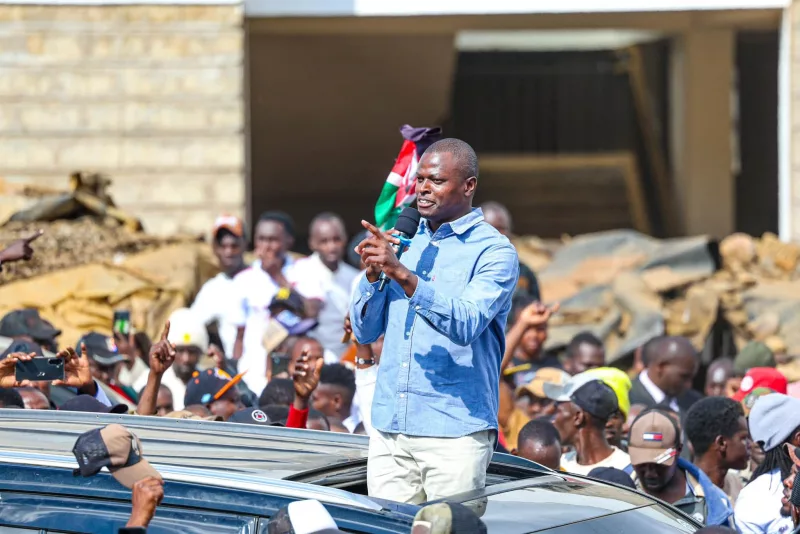
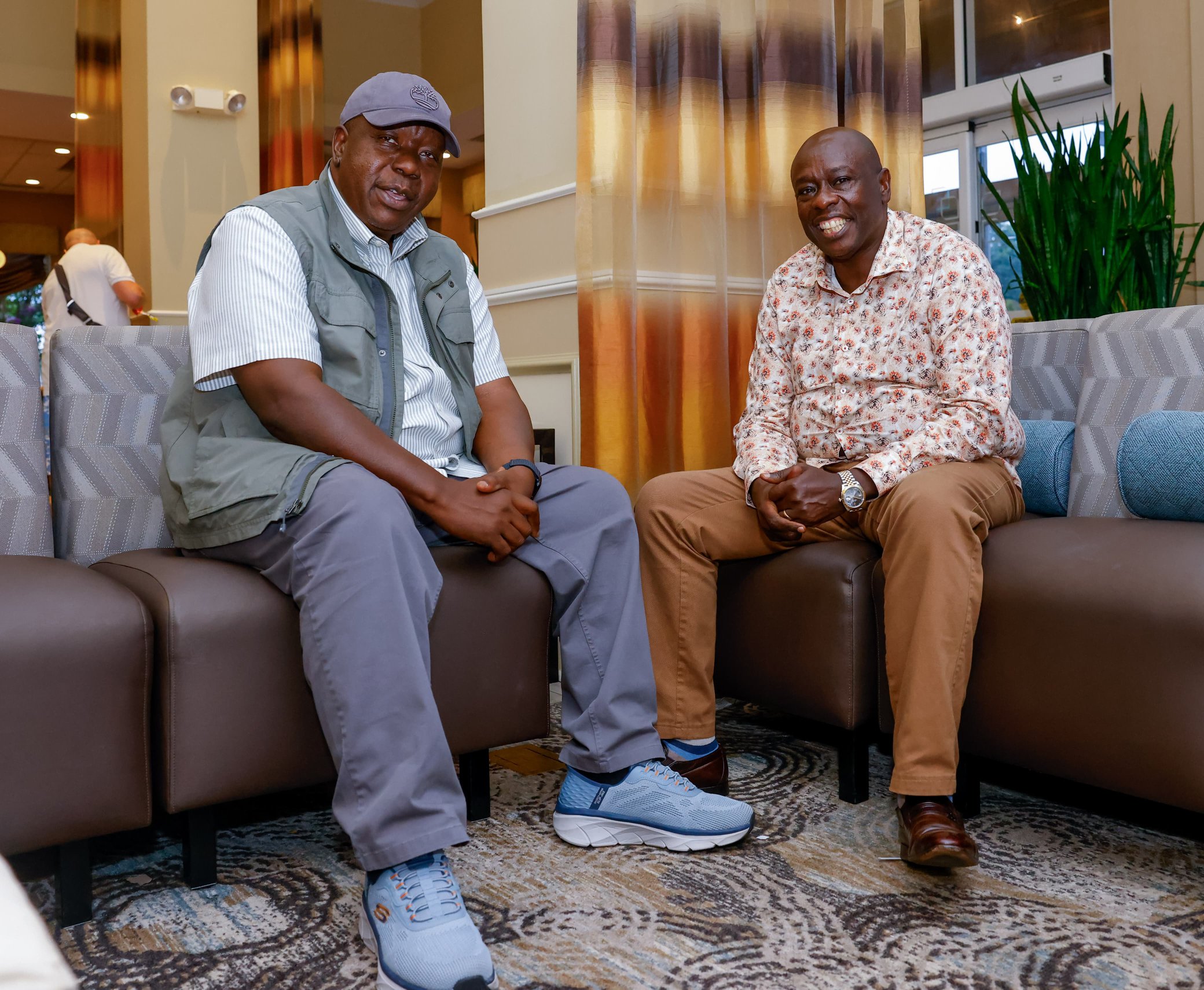
 Former DP Rigathi Gachagua and Ex-Interior CS Fred Matiangi during US tour [RIGATHI GACHAGUA/X]
For months, whispers of reconciliation between former Deputy President Rigathi Gachagua and former Interior Cabinet Secretary Fred Matiang’i have swirled through Kenya’s political corridors.
What once seemed a deep rift, rooted in ideological and personal clashes, is now being framed as a strategic move by opposition forces to challenge President William Ruto in 2027.
At the heart of these talks is Mt Kenya, the country’s most pivotal swing region. Gachagua, a longtime Mt Kenya political stalwart and leader of the Democracy for Citizens Party (DCP), commands a significant voter base.
Matiang’i, meanwhile, enjoys national recognition from his tenure as Interior CS and his post at the World Bank. For opposition strategists, aligning these figures under a common banner could consolidate votes and pose the most credible threat yet to Ruto’s re-election bid.
Sources close to the discussions say the talks began subtly with efforts to mend fences between Gachagua and former President Uhuru Kenyatta.
In November last year, Uhuru surprised political observers by publicly urging Mt Kenya politicians to stop attacking Gachagua.
The former president’s intervention, observers say, set the stage for dialogue between Gachagua and Matiang’i, who had previously been at odds over perceived incursions into Mt Kenya politics.
“The unity push is about strategy, not personality,” one senior opposition politician told the Star. “Gachagua’s main concern was that Matiang’i seemed to be encroaching on his base. Resolving that tension was critical before the opposition could think about 2027.”
Gachagua’s discomfort was not unfounded. Upon returning to Kenya in 2025, Matiang’i began participating in political events in central Kenya, which some interpreted as a direct challenge to DCP influence.
The former DP, still recovering politically from impeachment proceedings, viewed the overtures as an existential threat to his party’s influence. Tensions escalated publicly: Gachagua labelled Jubilee, the party Matiang’i had helped revive, a “red wheelbarrow,” while some allies accused Matiang’i of being a “state project.”
Yet, in recent months, the two men have appeared together at rallies and meetings, signalling a thaw in relations. Gachagua has reportedly agreed to support Matiang’i in consolidating votes in Kisii and Western Kenya, while Matiang’i has scaled back political activity that might clash with DCP’s Mt Kenya dominance.
DCP spokesman Ken Njohi confirmed the collaboration. “They have been working together and exchanging notes for close to a year now,” he said.
Embakasi Central MP Benjamin Gathiru, a staunch Gachagua ally, described the past differences as largely ideological and temporary.
“The DCP leader only asked Matiang’i to consolidate his Kisii backyard, just as Kalonzo {Musyoka} has locked Ukambani. Their working together is easy,” he said.
Yet the story cannot be reduced to a simple handshake.
The rift between Gachagua and Matiang’i dates back to when the then-Interior CS led anti-corruption campaigns that targeted several political allies of Gachagua.
The former DP accused Matiang’i of orchestrating a politically motivated crackdown, a claim the former minister has consistently denied. The public clash played into Ruto’s hands, fragmenting the opposition vote and ensuring his 2022 victory.
Political analysts argue that repairing the relationship between Gachagua and Matiang’i could significantly alter Kenya Kwanza’s 2027 calculus.
Mt Kenya accounts for roughly 15–20 per cent of national votes and consolidating this region under a single opposition candidate could shift the balance in several tight constituencies.
“This is about leverage,” says political strategist Dr Peter Waweru. “Gachagua brings numbers and networks in Mt Kenya; Matiang’i offers national recognition and credibility. Together, they form a potent combination that the opposition has lacked.”
The talks also involve coordination with Wiper leader Kalonzo Musyoka and the broader Azimio coalition, though not without tension. Some in DCP are wary of fully integrating into Azimio structures, citing concerns over internal power dynamics and the allocation of positions.
Kitui Central MP Makali Mulu, a Kalonzo ally, downplayed fears of infighting. “We are just in the initial processes of agreeing on a ticket,” he said. “There is one mission: to remove Ruto from power.”
For ordinary voters, the truce remains largely abstract. In Nyeri town, farmer Peter Kamau expressed cautious optimism.
“If they can work together, maybe we get a candidate who can deliver,” he said. “But we want results, not just promises.” Similar sentiments were echoed in Kisii and Kiambu, where residents said they were tired of political infighting.
The opposition’s strategy, however, is not without risks. Some critics argue that relying heavily on Mt Kenya votes may alienate other regions.
Others question whether the unity between Gachagua and Matiang’i can withstand the pressures of candidate selection, campaign financing and local rivalries. Political analyst Prof Wanjiku Mutu notes that the upcoming election will test not only alliances but also the opposition’s ability to present a coherent agenda.
“Unity is necessary, but not sufficient,” she said. “Voters are increasingly issue-driven. They want policies, not just personalities.”
Meanwhile, Kenya Kwanza, the ruling coalition, has seized on the rapprochement to sharpen its messaging.
Gachagua’s critics note that Ruto’s team is highlighting infrastructure achievements, financial inclusion programmes, and other reforms to counter any narrative of disunity. Deputy President Kithure Kindiki, Ruto’s ally, has dismissed the opposition’s efforts as “window dressing.”
But the optics of collaboration between two former rivals could resonate beyond Mt Kenya. Political observers argue that it sends a signal to other potential swing regions that opposition parties are capable of compromise and coordinated action.
In a country where fragmented opposition has historically handed victories to incumbents, the symbolism of unity may carry as much weight as the numbers themselves.
Legal and procedural hurdles remain. Analysts caution that for the opposition to fully leverage this collaboration, parties must formalise agreements on ticket allocation, candidate vetting, and campaign strategy well before official nominations. Delays or perceived betrayals could unravel the fragile truce.
For Gachagua and Matiang’i, the calculus is clear: compromise now may yield strategic dividends in 2027.
For the opposition, the challenge is to translate reconciliations into a credible, nationwide electoral platform.
And for President Ruto, the once-certain road to re-election may now have unexpected twists, forcing his team to navigate an opposition that is no longer divided.
As Kenya edges closer to 2027, the political chessboard is being rearranged. Gachagua’s Mt Kenya influence, Matiang’i’s national stature and Kenyatta’s mediating hand could reshape the electoral battlefield.
Whether this unity will hold under scrutiny, deliver votes, or ultimately unseat a sitting president remains to be seen—but one certainty is that the dynamics of the race have shifted.