Kenya has recorded a score pointing to a troubling decline in bold and committed leadership in the fight against corruption, according to the latest Corruption Perceptions Index (CPI) released by Transparency International-Kenya.
The 2025 CPI shows Kenya scored an average of 30 out of 100, placing it among 45 countries in Sub-Saharan Africa that scored below the 50-point mark.
The score represents a two-point drop from 2024, when Kenya posted 32 points, and highlights persistent stagnation in tackling graft despite years of legal and institutional reforms.
Corruption remains a serious and entrenched challenge across Sub-Saharan Africa, the report notes, with the region emerging once again as the lowest-performing globally.
Out of 49 countries in the region, the average score stands at 32 out of 100, with only four countries scoring above 50. Ten countries have significantly worsened since 2012, while only seven recorded improvements over the same period.
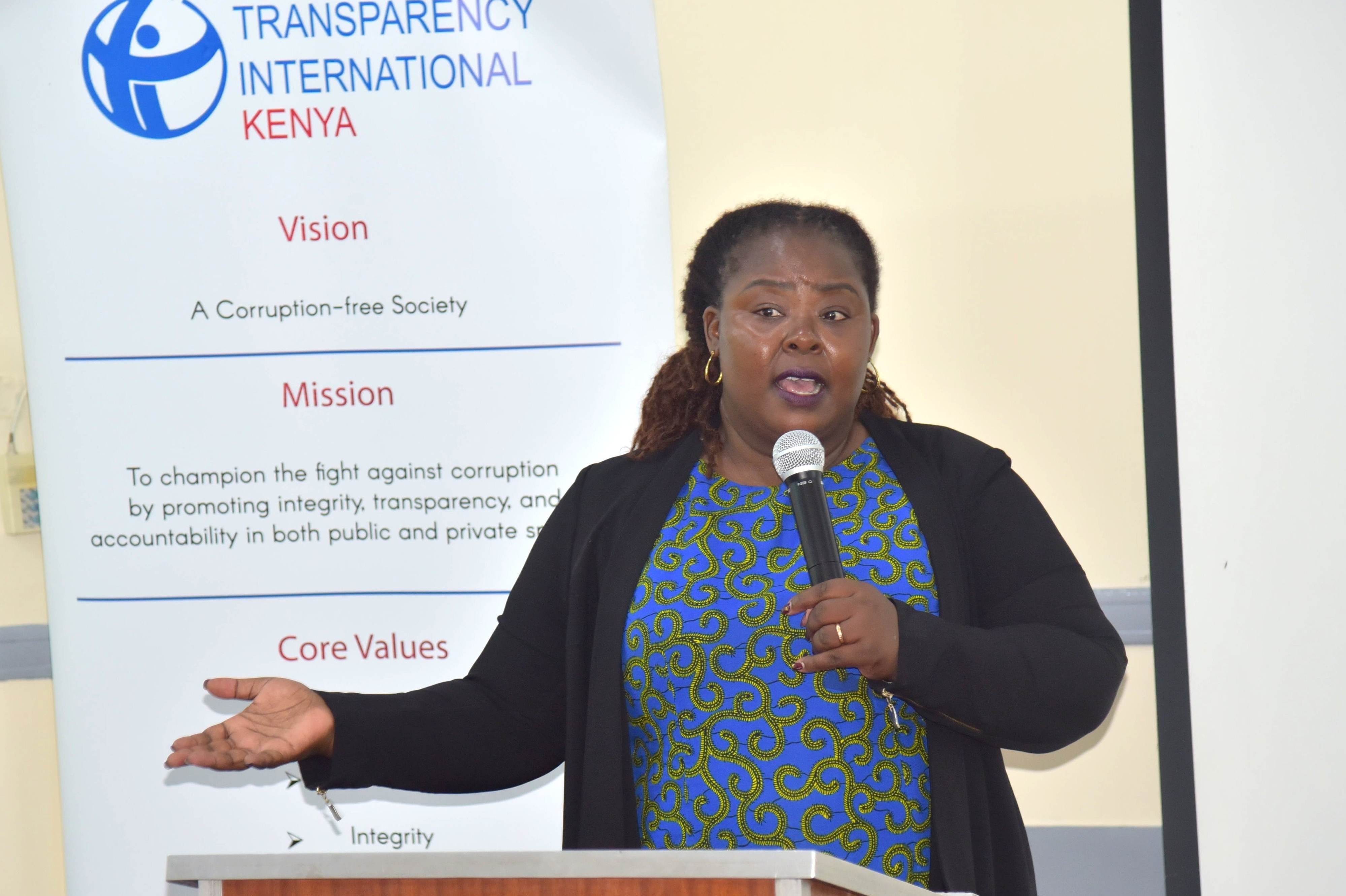
“Weakened standards and a lack of enforcement of existing anti-corruption legislation, as well as gaps in the implementation of the leadership and integrity provisions in the Constitution of Kenya, are lowering the bar and undermining anti-corruption efforts,” said Sheila Masinde, Executive Director of Transparency International-Kenya.
The CPI ranks 182 countries and territories based on perceived levels of public sector corruption, using a scale from zero (highly corrupt) to 100 (very clean).
Within Sub-Saharan Africa, Seychelles remains the highest performer with a score of 68, followed by Cape Verde (62), Botswana (58) and Rwanda (58). At the bottom of the index are Sudan (14), Eritrea (13), Somalia (9) and South Sudan (9).
In the East African region, Rwanda leads with a score of 58, followed by Tanzania (40), Uganda (25) and Burundi (17). Kenya’s score places it below the regional average of several peers and reinforces concerns over governance and accountability.
“Kenya’s latest score indicates that corruption is no longer a series of isolated incidents; it has evolved into a sophisticated, resilient system that has permeated all levels of society and government, undermining democracy, the rule of law, good governance, transparency, and accountability,” Masinde added.
The report further highlights worrying global trends, noting that democracies—traditionally stronger performers on anti-corruption measures—are experiencing notable declines. Countries such as the United States (64), Canada (75) and New Zealand (81), alongside European nations including the United Kingdom (70), France (66) and Sweden (80), have all seen deteriorating scores.
Another concerning pattern identified in the CPI is the shrinking of civic space.
Since 2012, 36 of the 50 countries with significant declines in CPI scores have also experienced restrictions on freedoms of expression, association and assembly—factors the report links to weakened oversight and reduced public accountability.
Globally, Denmark retained its position at the top of the index for the eighth consecutive year with a score of 89, followed closely by Finland (88) and Singapore (84).
Transparency International-Kenya noted that Kenya’s score has largely oscillated between 25 and 33 over the last 13 years, underscoring a pattern of stagnation.