The Central Bank of Kenya (CBK) has lowered its key interest rate from 9.0 per cent to 8.75 per cent in a move aimed at making loans cheaper for businesses and households and supporting economic growth.
The decision was announced on February 10, 2026, following a Monetary Policy Committee (MPC) meeting. It comes amid stable inflation and signs of economic resilience.
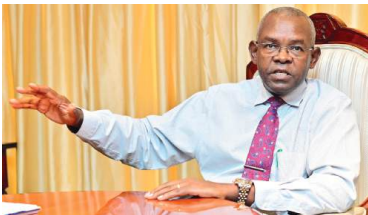
CBK Governor and MPC chair Kamau Thugge said the rate cut reflects the Committee’s confidence that there is room to ease monetary policy without jeopardising price or exchange rate stability.
“This step is intended to support lending to the private sector and stimulate economic activity while keeping inflation expectations firmly anchored,” Thugge said.
The MPC noted that the economy remains resilient. Real GDP grew by 4.9 per cent in the third quarter of 2025, supported by a rebound in the industrial sector and steady performance in services. Leading economic indicators point to improved activity in the fourth quarter.
Overall economic growth for 2025 is estimated at 5.0 per cent, slightly below the earlier projection of 5.2 per cent, largely due to slower agricultural output.
The economy is expected to expand by 5.5 per cent in 2026 and 5.6 per cent in 2027, driven by continued strength in services, recovery in industry, and stable agricultural growth.
On inflation, Thugge said the country continues to experience a stable price environment.
“Overall inflation declined to 4.4 per cent in January 2026, from 4.5 per cent in December, remaining below the midpoint of our target range,” he said.
Non-core inflation fell to 10.3 per cent from 11.2 per cent, mainly due to lower prices of key vegetables such as tomatoes and onions. Core inflation rose slightly to 2.2 per cent from 2.0 per cent, reflecting modest increases in prices of some processed foods, including maize flour.
The MPC expects inflation to remain stable in the near term, supported by stable food and energy prices and a steady exchange rate.
Globally, economic growth has remained resilient, with an estimated expansion of 3.3 per cent in 2025. The MPC cited strong consumer spending, improved financial conditions, and increased investment in artificial intelligence-led technologies, particularly in the United States, as key drivers. It also noted risks from weak global demand, geopolitical tensions in the Middle East, and uncertainties linked to the Russia-Ukraine conflict.
The banking sector remains stable, supported by strong liquidity and capital adequacy ratios. Non-performing loans declined to 15.5 per cent in January 2026 from 16.7 per cent in October 2025, reflecting improvements in the real estate, manufacturing, trade, and construction sectors.
Credit growth to the private sector continued to improve, reaching 6.4 per cent in January 2026 from 5.9 per cent in December 2025. Average commercial bank lending rates fell to 14.8 per cent from 15.0 per cent, easing borrowing costs for businesses and consumers.
Thugge said reforms are being implemented to strengthen monetary policy transmission.
“The revised Risk-Based Credit Pricing Model (RBCPM), which will be fully operational by March 2026, will improve the pass-through of policy decisions to commercial bank lending rates and enhance transparency in loan pricing,” he said.
To further support lending, the MPC approved narrowing the interest rate corridor around the Central Bank Rate from 75 basis points to plus or minus 50 basis points. The discount window rate’s upper bound was also reduced from 75 to 50 basis points above the CBR.
“These measures are intended to align interbank rates closely with the CBR and make borrowing costs more predictable for businesses and households,” Thugge said.
The MPC also reviewed fiscal developments and noted the ongoing implementation of the 2025/26 financial year government budget, alongside a fiscal consolidation strategy aimed at reducing medium-term debt vulnerabilities.
Thugge said the CBK will continue to closely monitor domestic and global developments and adjust policy if necessary.
“We will continue to evaluate economic conditions, inflation trends, and financial sector stability to ensure that our policy actions remain effective and supportive of growth,” he said.
The MPC is scheduled to meet again in April 2026 to review developments and make further monetary policy decisions.