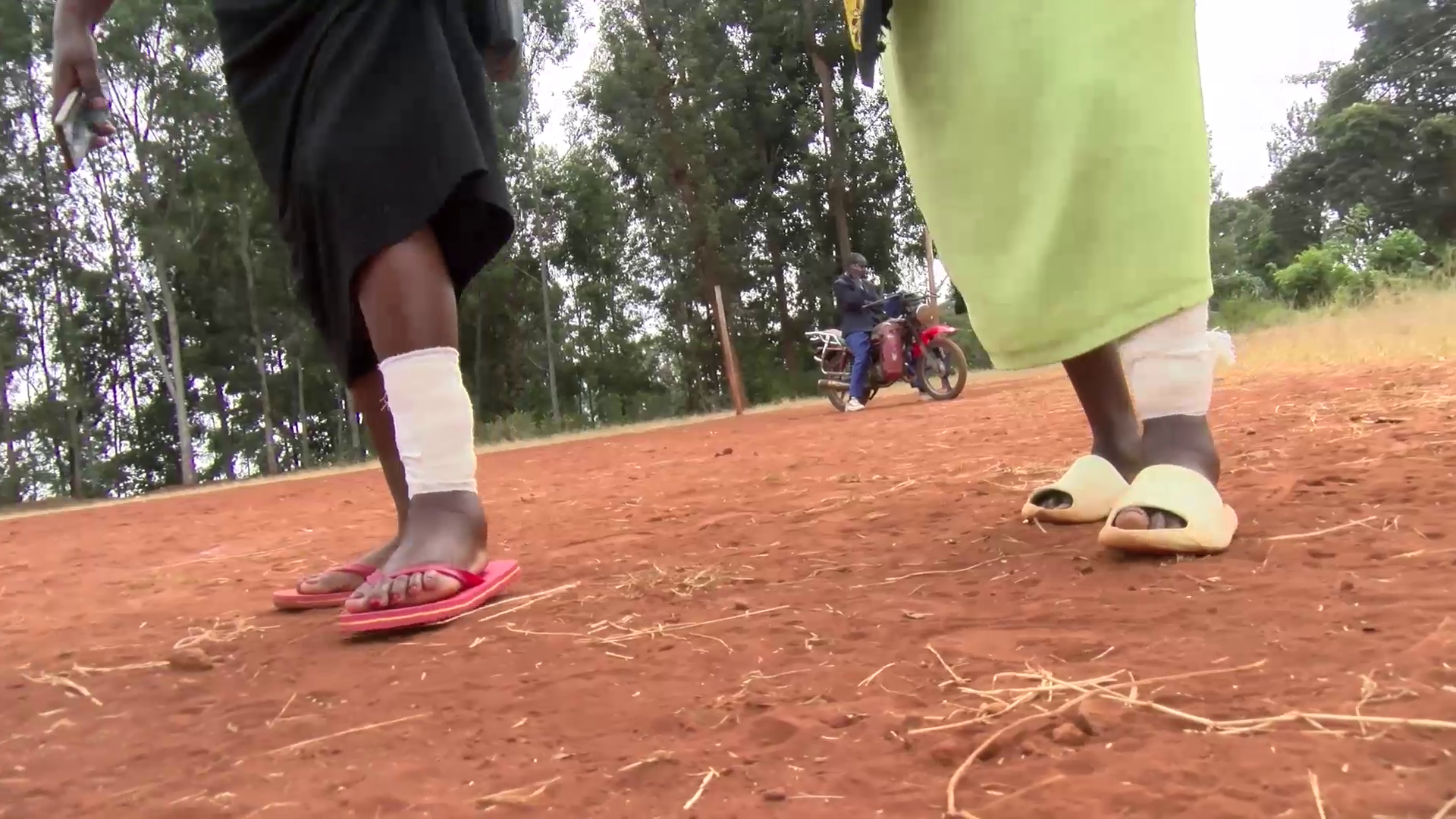
 Two victims of dog bites from Maragi village near Murang'a town/ ALICE WAITHERA
Scores of Murang’a residents bitten and mauled by stray dogs are urging the county government to curb the rising cases and fear of serious injuries and deadly rabies.
Attacks have been reported in several parts of the county, leaving victims injured, traumatised and unable to carry on with their daily activities. In Kanjama village in Mathioya constituency alone, more than 10 residents are nursing dog bite wounds.
In the Maragi area near Murang’a town, at least 10 residents have also been attacked, sustaining injuries serious enough to keep them away from work and school. Attacks have also been reported in the Kambirwa area in Kiharu constituency and Thanga-ini in Gatanga constituency.
A schoolgirl in Kambirwa was bitten on the cheek, raising alarm over the safety of children as they walk to and from school.
Resident James Karanja of Maragi village told the Star of his ordeal last Tuesday at 7 am as he was heading to work.
“I was walking to work when I saw a dog nearby and didn’t pay it any attention. Suddenly, it jumped at me and bit my left leg, wrestling me to the ground,” he said.
Karanja said he was fortunate to have been wearing trousers, which reduced the depth of the bite. He was rushed to Murang’a County Referral Hospital, where he received costly rabies injections and treatment.
He required five injections, each costing Sh1,200, in addition to medication.
Even more worrying, Karanja said, is the safety of children who are now escorted to school by their parents, to ward off possible attacks. But parents often can’t stop rabid dogs.
“Any time you hear a dog bark, you jump. We are living in fear because there are so many dogs roaming around, and you don’t know which one will bite you,” he said, urging the county to ensure rabid dogs are put down,n and others are vaccinated.
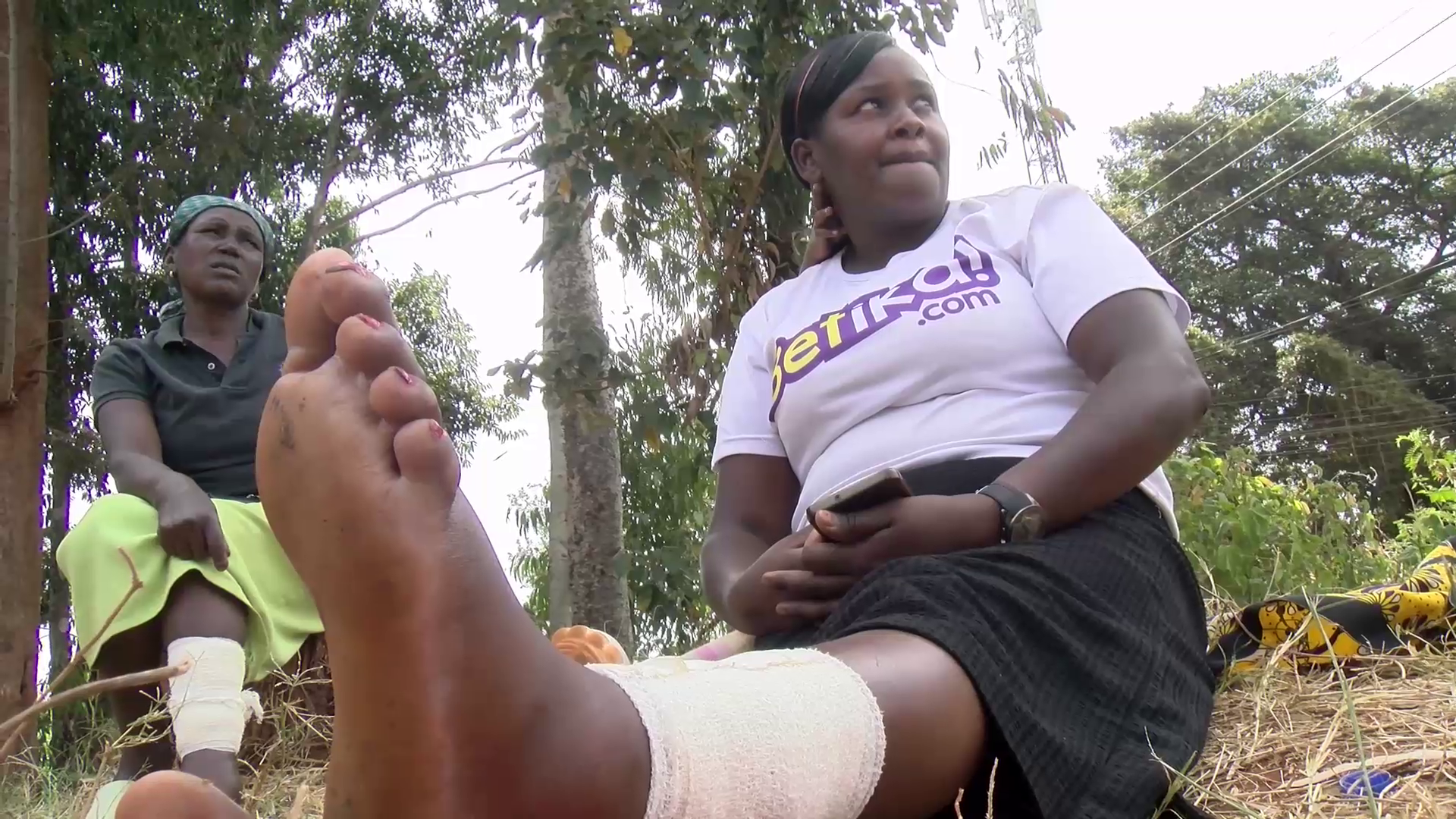 Two women who have sustained dog bite wounds after being attacked by stray dogs in Maragi village, Murang'a/ ALICE WAITHERA
In the same village, Regina Wangui said a dog attacked her and left her and her lower primary school child injured and traumatised.
Wangui was escorting her child to school in Murang’a town when a dog suddenly pounced on the girl, biting her on the calf.
“I tried to fight it off but failed. A passerby came to help, but the dog would not let go,” she said.
A boda boda rider used a large stick to beat the dog away, leaving the girl with a gaping wound on her leg.
Since the attack, Wangui said her daughter has been too frightened to leave the house and go to school.
Wangui, who operates a boutique in Murang’a town, said she has been unable to open her shop since the attack due to severe pain that has kept her awake at night.
Jane Muthoni was attacked as she walked to a nearby farm where she is a casual worker.
“I was shocked when this small dog suddenly bit me as we were passing each other,” she said.
Muthoni was rescued by passersby who threw stones at the dog, forcing it to release her leg. She said she bled profusely, and medics told her the injury could not be stitched as the dog had bitten off a chunk of flesh.
The single mother said the attack has left her struggling to provide for her children as she relies on casual jobs.
“I haven’t been able to work since the attack. Feeding my children has become a challenge because I have no other source of income,” she said.
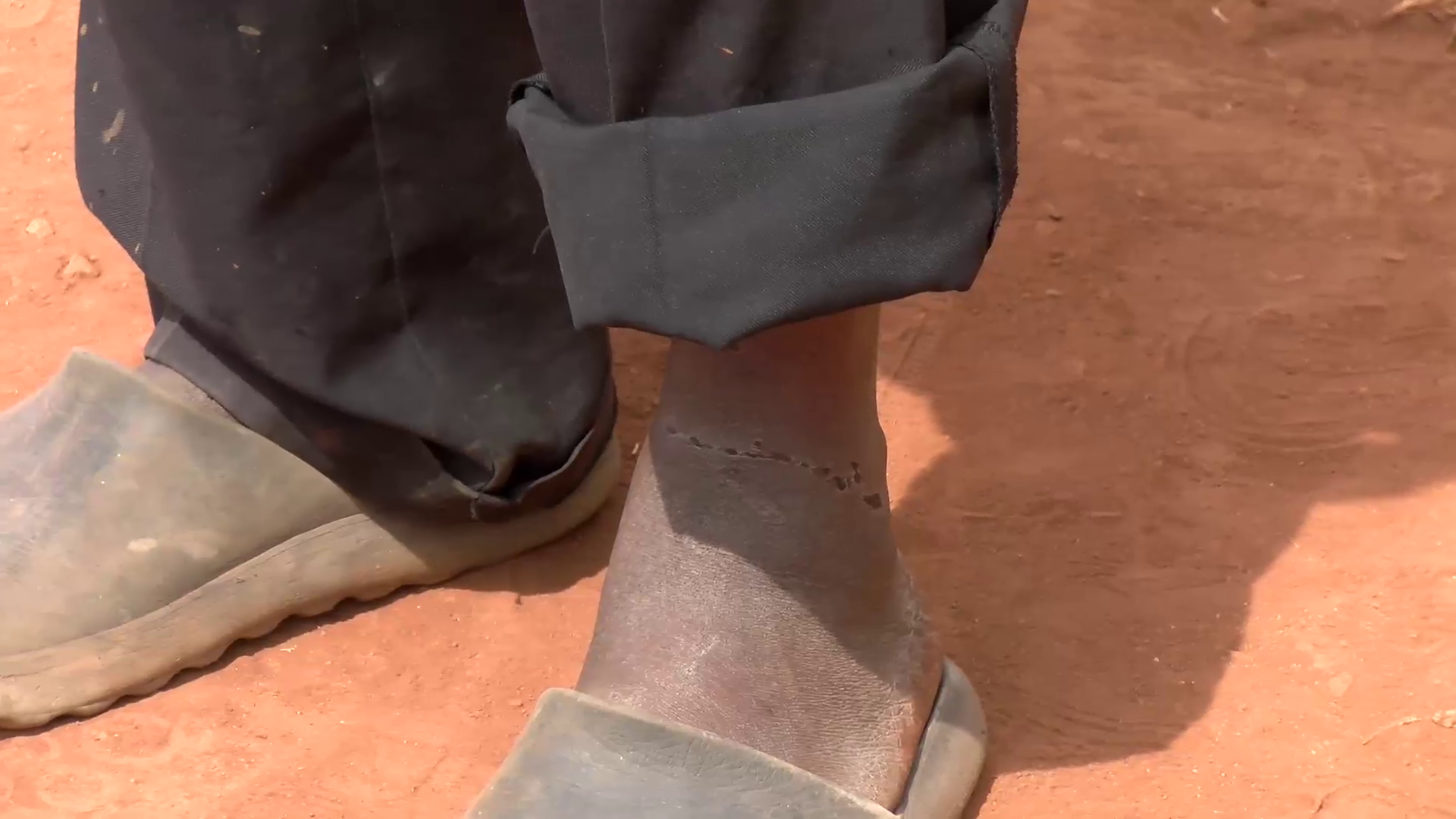 A resident of Maragi village in Murang'a shows dog bites' scars on his foot/ ALICE WAITHERA
Victims are appealing to the county government to waive treatment charges at public health facilities, saying the attacks have forced them to incur unexpected and unaffordable medical expenses.
Last week, the Murang’a Department of Public Health warned residents to be on high alert for stray dogs roaming villages and shopping centres, saying they pose a serious health risk.
Residents were advised to seek immediate medical attention after any dog bite, as most of the stray dogs are suspected to be infected with rabies, a deadly viral disease that is almost always fatal if untreated.
County Health Promotion Officer Danson Mwangi said the county has stepped up public awareness campaigns.
Mwangi urged residents to watch out for dogs showing symptoms such as excessive drooling, sudden aggression, lack of coordination, and fear of water (hence, the name hydrophobia for rabies), which may indicate rabies infection.
In humans, he said, rabies may begin with flu-like symptoms, pain, hyperactivity and confusion before progressing to severe neurological complications as the virus causes inflammation of the brain.
Rabies has no cure once clinical symptoms appear and is almost always fatal. However, infection can be prevented through timely administration of rabies post-exposure prophylaxis, which includes wound cleaning and a series of vaccines. They include rabies immunoglobulin (RIG), a crucial, life-saving injection providing immediate, temporary antibodies to prevent rabies after an animal bite or exposure. It is used with the rabies vaccine for unvaccinated individuals.
Rabies is endemic across most of Africa, causing thousands of human deaths annually, primarily (99 per cent) due to bites from infected domestic and stray dogs. Key rabies-carrying animals include dogs, jackals, mongooses, bats and cats.
INSTANT ANALYSIS
The County Health Promotion officer, Danson Mwangi, confirmed that an unconfirmed number of residents have suffered dog bites but noted that the county administration has escalated awareness creation on the issue.
In humans, the infection may exhibit symptoms such as flu-like signs, pain, hyperactivity and confusion in the early stages before progressing to severe neurological symptoms as the diseases causes more inflammation in the brain.