

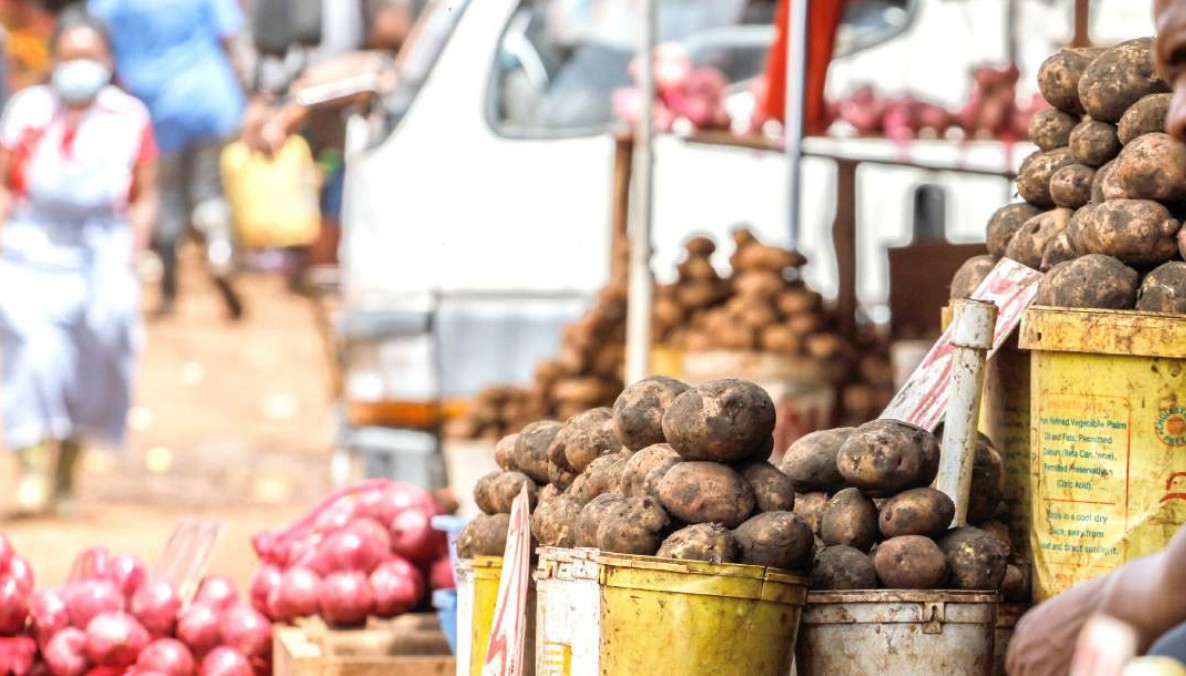
It is a Saturday morning at Gikomba, East Africa’s biggest open-air market.
Traders speak of slower days and thinner margins as they go about their activities.
Mama Achieng, a second-hand clothes vendor, says she now sells fewer items even on traditionally busy days.
Read Also
“People come, they look, they bargain, then they leave,” she says. “They promise to come back, but most don’t. Everyone is counting coins.”
She has had to employ two Burundi nationals who move around city estates hawking the clothes and shoes she deals in.
For boda boda riders, the story is similar. Fuel costs and maintenance expenses have eaten into earnings.
Henry Oluoch, a boda boda rider, says sometimes he doesn’t even make Sh1,000, with weekends being the slowest.
Within the week, he makes at least Sh1500 a day, but it goes into petrol, airtime and data to remain online for business on hailing apps.
“I spend between Sh350 and Sh400 on food for my family. There is nothing left to save,” he notes.
What was once a decent daily income has been reduced to just enough to refuel and take something home.
The story is the same for Irene Kemunto, a mama mboga in Umoja estate. The mother of three says earnings from her business have shrunk.
“I used to make a profit of at least 2,000 every day; nowadays, a profit of 1,000 is by sheer luck.”
Salons, barbershops, hawkers and mama mboga traders—the backbone of neighbourhood economies—are seeing fewer customers and smaller purchases.
A client who once bought vegetables for the week now buys for a day. A salon customer stretches hairstyles longer between visits.
“This is what declining purchasing power looks like in real life,” Consumer Federation of Kenya Secretary General Stephen Mutoro notes.
“For a growing number of families, disposable income has shrunk. Headline inflation figures may suggest stability, for political optics, but they mask a deeper reality: real incomes have continued to significantly decline,” he adds.
On paper, Kenya’s economy appears to be holding steady. Inflation numbers have cooled, macro-economic indicators suggest relative stability, and official data points to an economy regaining balance after years of shocks.
But on the streets, in markets, estates and bus stages across the country, a very different story is unfolding—one defined by shrinking incomes, subdued demand and an informal sector struggling to stay afloat.
For millions of Kenyans who live and work in the so-called hustler economy, survival has become a daily negotiation with scarcity.
Sh1,000 no longer stretches the way it did even two years ago. Wages have stagnated, costs have surged, and disposable income has all but vanished.
“Consumer spending is visibly subdued, not because Kenyans have suddenly become frugal, but because purchasing power has been eroded. Low demand, rather than improved affordability, explains the calmer inflation numbers,” Mutoro told the Star.
“From a consumer protection perspective, this should concern policymakers. When households are forced to cut back, the ripple effects are felt across the entire economy, particularly among informal traders and small enterprises.”
According to the Federation of Kenya Employers (FKE), the informal sector has long served as a buffer for millions seeking livelihoods in the absence of sufficient formal jobs.
However, the dominance of informality, unregulated, low-paying, and devoid of social protections is also a sign of systemic economic vulnerability.
“It reflects not just the ingenuity of Kenyans, but the failure of our systems to offer secure and meaningful employment,” FKE chief executive Jacqueline Mugo, says.
“Support for MSMEs, which are considered the engine of job creation, must go beyond token funding to include mentorship, innovation support, and access to markets.”
Across urban and rural Kenya alike, the cost of essentials has continued to climb.
Food prices remain elevated, public transport fares fluctuate with fuel costs, electricity bills are unpredictable, and rents in towns and cities have refused to ease.
Add a heavier tax burden—from fuel levies to consumption taxes—and the squeeze on household budgets becomes relentless. Yet wages have not kept pace.
This erosion of purchasing power is being felt most acutely in the informal economy, which employs more than 80 per cent of Kenya’s workforce and contributes roughly a third of GDP.
“When households are forced to cut back, the ripple effects are felt across the entire economy,” says Mutoro. “Demand falls, small traders suffer, jobs are lost and the economy slows further.”
This demand-side weakness, he argues, should concern policymakers just as much as inflation or debt ratios.
The hustle economy thrives on volume. Small margins are sustained by steady customer flow. When consumers retreat, the model collapses.
Informal traders have little buffer. They lack access to affordable credit, insurance, or social protection. Many operate hand-to-mouth, reinvesting daily earnings back into stock.
“When sales slow down, the impact is immediate,” says Mutoro. “You don’t just lose profits—you lose working capital.
Some traders respond by raising prices slightly to survive, but this often backfires, pushing customers away. Others reduce quality or quantities, further weakening consumer trust.
The result is a vicious cycle: low incomes reduce spending, low spending hurts traders, struggling traders cut jobs or close, and household incomes fall even further.
The squeeze has also reignited resistance among small traders to digital payment platforms.
While mobile money once promised convenience and security, transaction fees, delays, reversals and the growing visibility of transactions to tax authorities have made many informal operators wary.
“I prefer cash to avoid the charges that come with mobile transactions. Some people also end up reversing cash, so I avoid the risk, said Mohamed Abdi, an electronics dealer at Nairobi’s busy Luthuli Avenue.
While President William Ruto has rolled out several initiatives to support entrepreneurship mainly among the youth, including the NYOTA Fund (National Youth Opportunities Towards Advancement Project, businesses and households are still struggling.
An economist, Dave Andave, is worried that although the government is pushing several initiatives to support those at the bottom of the economic pyramid, tokens handed to hustlers are purely for consumption with zero long-term gains.
"I understand that he is keeping up with his hustler narrative. While the little he is sharing is good to keep money circulating in the economy, those tokens, including Hustler and Nyota funds, are doing too little to change the lives of beneficiaries. It is tokenism disguised as empowerment. The truth is that life is becoming extremely unbearable for the majority of Kenyans,'' he said.
"The value of Sh1,000 has sunk to the lowest point. My clear analysis is that the value has sunk close to the value of Sh500 since 2020. You could buy six items in the food basket with Sh1,000 in 2019. This has dropped significantly to just four. When production cost is up, consumers carry the cross,'' Andave said.
'His views are shared by his colleague, Mary Ndanu, who projects that things will worsen as the country's general elections near. Inflation will hit the roof once politicians embark on campaigns. I pray for calmness in the geopolitical space. Any slight disruption in the global supply chain will simply add fuel to the fire.''
The government has since announced plans to increase the minimum taxable income from the current Sh24,000 to Sh30,000, describing it as a progressive step that would ease the cost of living for many Kenyans.
According to Treasury Cabinet Secretary John Mbadi, Kenyans earning a monthly income of Sh30,000 and below would be exempt from Pay As You Earn (PAYE), an increase from the current threshold that covers only salaried workers earning Sh24,000 and below.
Speaking when he hosted UDA aspirants at State House, Nairobi, last week, President Ruto said the measure would help shield households from recurring financial challenges by increasing disposable income.
"One and a half million working Kenyans will not pay any taxes, and another 500,000 will have their taxes reduced to 25 per cent. This is how, progressively, we will manage the cost of living. Bottom Up was not just a slogan,” Ruto said.
Cofek is calling for deliberate interventions to restore purchasing power and place consumers at the centre of economic planning.
These include relief on essential goods, fair and predictable taxation, strict price monitoring and stronger consumer protection frameworks.
“There must be policies that recognise the lived realities of consumers,” Mutoro says. “This means easing the burden on essentials, ensuring taxes are not punitive, and protecting households from exploitative pricing.”
He also urges greater transparency in pricing, especially in sectors like energy, food and transport, where cost increases cascade through the economy.
For the informal sector, supportive policies could include lower compliance costs, affordable credit, simplified taxation and social protection mechanisms that cushion traders during downturns.
As Kenya edges closer to the 2027 election cycle, the political temptation to focus on headline numbers is expected to grow, but economists warn that ignoring household distress carries risks.
“People vote with their lived experiences. If the economy looks good on paper but feels harsh in daily life, trust in institutions erodes,” notes economist Stephen Mwangi.
Cofek’ s position is that economic success must be measured not only by macro-economic indicators, but by household welfare.
“There is a need for deliberate interventions to restore purchasing power like relief on essential goods, fair taxation, strict price monitoring and policies that put consumers at the centre of economic planning,” Mutoro said.







