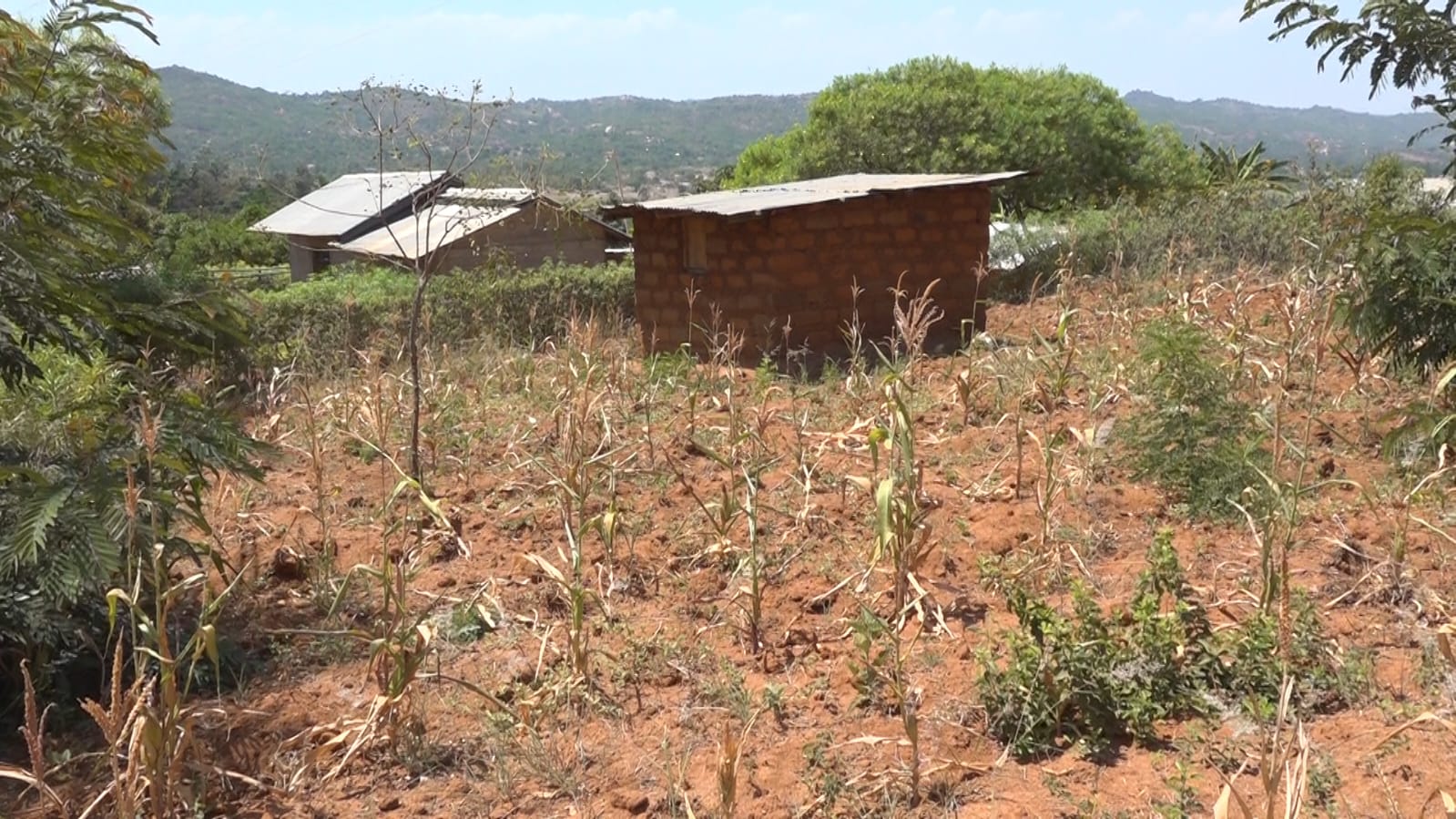
 Crops wither on farms in Githuuri village, Kiharu, in Murang'a county on February 3, 2026 / ALICE WAITHERA
The national government has been urged to expand irrigation services to the semi-arid area of Githuuri village in Kiharu constituency, Murang’a county, to support sustainable farming and improve livelihoods.
Residents said although the community lives near the Sagana River, the absence of irrigation systems has left large portions of fertile land unutilised.
This has in turn left them vulnerable to food shortages and malnutrition, and low household incomes.
The call was made during the commissioning of a new piped water project for domestic use, a development residents described as a major step forward after years of relying on the river for water.
“We are happy that we’ll be getting clean water for use in our homes," resident Damaris Mwangi said.
"It will make life easier and boost hygiene levels because our area is very dry, but it would do us more good if we have irrigation water on our farms so we could feed ourselves and raise our economic standards.”
Community members recalled that an earlier irrigation scheme had once supported productive farming in nearby areas before the water supply stopped at Kimathi, an area widely known for rice cultivation.
In 2016, Kimathi-Githuuri was commissioned to channel water from the Sagana and Rutune rivers to Githuuri, which is downstream and borders the agriculturally productive Kirinyaga county.
In Kimathi, it helped many households shift from sand harvesting to the more beneficial rice growing, turning the once bare lands into their source of income.
But as more farmers embraced rice growing in the area, those downstream received less and less water on their farms before the irrigation water eventually stopped getting to them, cutting short their farming activities.
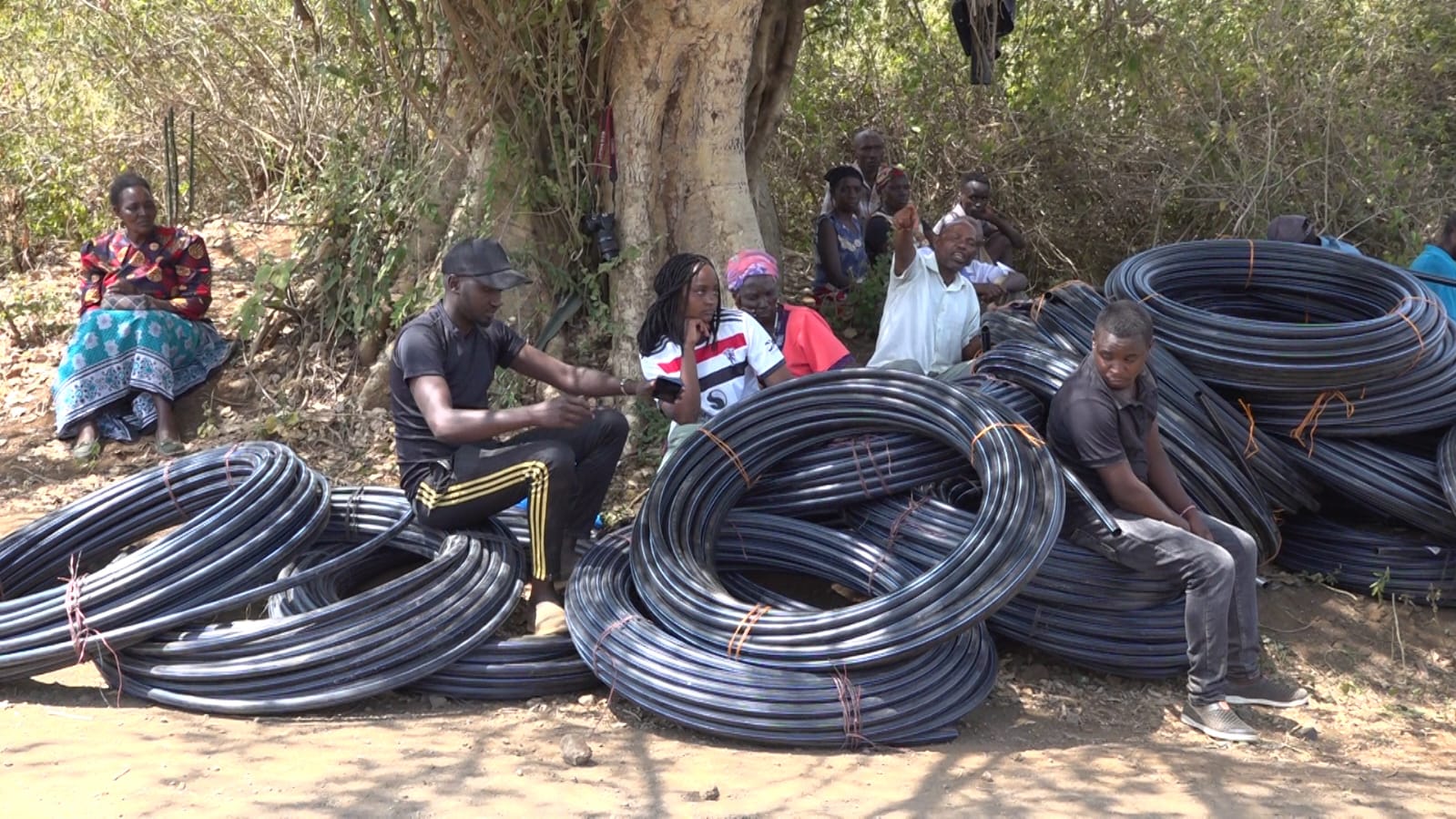 Githuuri residents in Kiharu constituency during the commissioning of a domestic water project/ ALICE WAITHERA
“When the irrigation was functioning, families were able to farm consistently and meet their own needs. Now we depend entirely on rainfall, which has become unreliable because of the changing climate patterns,” Mwangi said.
The Kimathi-Githuuri project was started in 2007 by residents but stalled, and in 2015 the community leadership approached the county government for assistance, culminating in a Sh220 million funding.
Resident Reuben Njuiri said the area’s soils are well suited for horticulture, including fruits and vegetables, but remain largely unused due to lack of water.
“With proper irrigation, we can grow bananas, tomatoes, vegetables, and pawpaws. The land here is productive, but it cannot yield without water,” he said.
Njuiri lauded efforts to provide them with water for domestic use, which he said will ease the burden for women and children who have been risking their lives as they fetch water from Sagana River.
“We are always worried about the safety of our children and the quality of the water. Now that we have clean water at home, we can focus on other activities, including farming, if irrigation is provided.”
Resident John Mwangi said unpredictable weather has made rain-fed agriculture increasingly difficult.
He said in yesteryears, farming relied on seasonal rains that have since become disrupted by climate change, leaving them hungry.
Area MCA Ruiru Miako acknowledged the long-standing water challenges in the village, noting that Githuuri has gone for years without a reliable water supply.
“These people are hardworking and ready to farm,” Miako said.
“Extending irrigation here would not only secure food for families but also create surplus produce for the market and improve incomes.”
Murang’a County Integrated Development Plan (CIDP) 2023-27 identified lack of irrigation water as a priority challenge for the county, especially in semi-arid zones where rain-fed agriculture fails to reliably sustain food production.
The Kimathi-Githuuri project is listed as one of the irrigation schemes set for expansion to raise beneficiaries and improve their food security.
The CIDP indicates that about 67 per cent of Murang’a residents have access to domestic water with the county aiming for near universal water coverage in 2027.