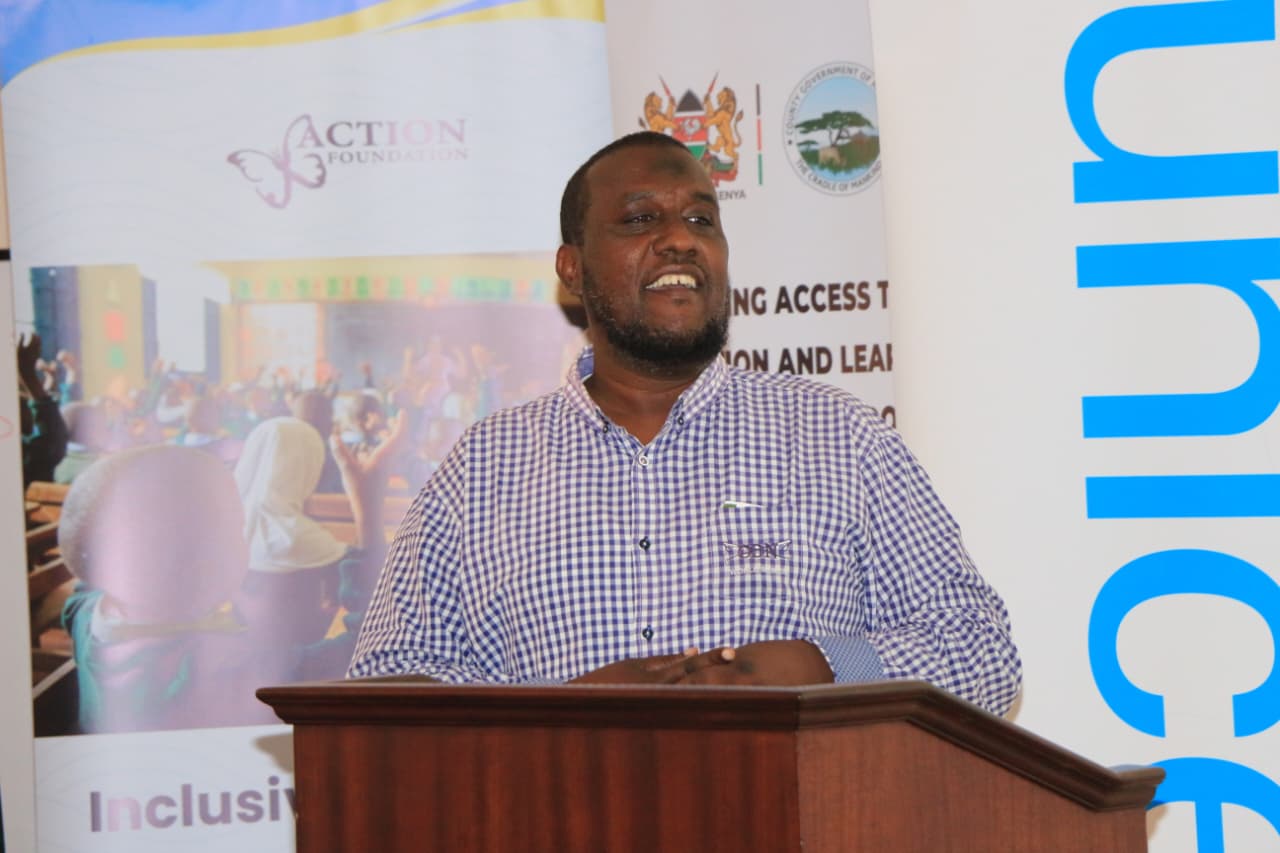
 Abdullahı Maalim, a governance and policy expert with 25+ years of experience in public administration, devolution, and institutional reform./HANDOUT
As the second cohort of learners prepares to sit the Kenya Junior School Education Assessment (KJSEA) in 2026, Kenya’s education reform has entered a more settled and reflective phase.
The early debates that once dominated public discourse—whether the Competency-Based Education (CBE) system was viable or should supplant the legacy examination regime—have largely receded.
In their place has emerged a more consequential question: how to manage the transition into Senior School in a manner that is equitable, coherent and aligned with how children actually learn and develop.
The decision to anchor Senior School placement on a composite of 60 per cent KJSEA performance and evidence drawn from continuous assessment across Grades 6 to 8 marks a decisive break from Kenya’s historical dependence on a single, high-stakes examination.
It reflects a growing policy consensus that learning is cumulative, developmental and uneven, and that no solitary test can adequately capture a learner’s full range of capabilities, interests and potential.
Within this framework, KJSEA is not an endpoint but a synthesis—an aggregation of a learner’s Junior School journey rather than a narrow gatekeeping device. For decades, Kenya’s assessment culture was shaped by ranking and elimination.
Achievement was measured comparatively, and educational success was often reduced to relative position rather than actual competence. The cumulative assessment logic underpinning KJSEA challenges this orthodoxy by privileging progression, consistency and demonstrated mastery over time.
Classroom-based evidence gathered through projects, practical tasks, portfolios and sustained teacher observation is no longer peripheral; it now carries substantive weight in shaping a learner’s next educational pathway. This shift has far-reaching implications for career guidance and learner development.
Senior School introduces three distinct pathways—Science, Technology, Engineering and Mathematics; Social Sciences; and Arts and Sports Science—each designed as a legitimate route to further education, training and productive work. For these pathways to function as intended, guidance must begin early.
By the time learners approach Grade 9, many have already formed learning identities shaped by aptitude, interest and experience. When interpreted carefully, assessment data from Grades 6 to 8 can support informed pathway decisions grounded in evidence rather than examination anxiety or social expectation.
The emphasis on cumulative assessment also calls for a broader cultural recalibration, particularly among parents and communities long accustomed to equating success with a narrow academic hierarchy.
Under CBE, success is increasingly framed as alignment—between a learner’s strengths, interests and available opportunities—rather than competition alone.
The three pathways are not stratified by prestige but represent differentiated responses to the diverse ways learners engage with knowledge and skill. Importantly, they are not intended as permanent tracks. A credible CBE system must retain flexibility, allowing learners to shift pathways as they mature, acquire new competencies and refine their aspirations.
At the same time, the legitimacy of this assessment model rests squarely on equity and public trust. School-based assessments can only fulfil their purpose if teachers are adequately trained, supported and guided by clear national standards.
Robust moderation mechanisms and sustained professional development are essential to prevent variations in school context from becoming variations in opportunity. This concern is particularly acute in marginalised and resource-constrained regions, where staffing challenges and infrastructure gaps remain pronounced.
A cumulative assessment system that is not perceived as fair risks undermining the very reform it seeks to advance. Clarity of communication is therefore indispensable. Parents and learners require more than policy declarations; they need transparent explanations of how assessment evidence is generated, how placement decisions are made and what options remain open after transition.
Transparency is not merely a matter of public confidence—it shapes whether learners experience assessment as constructive guidance or as opaque judgment. The second KJSEA cohort thus presents Kenya with a critical moment, not to reopen settled debates, but to deepen implementation.
The move towards cumulative assessment signals a broader philosophical shift in education policy—one that seeks to centre the learner rather than the examination.
If managed with consistency, integrity and sustained investment in assessment and guidance capacity, KJSEA may ultimately be remembered not as another national test, but as a turning point in how Kenya understands learning, potential and progression.
The writer is a governance and policy expert with 25+ years of experience in public administration, devolution, and institutional reform. He has held senior roles including Education & Governance Sector Lead at the Frontier Counties Development Council, Wajır County Secretary, and Chief Officer in Health, Roads, Devolution, and Education.