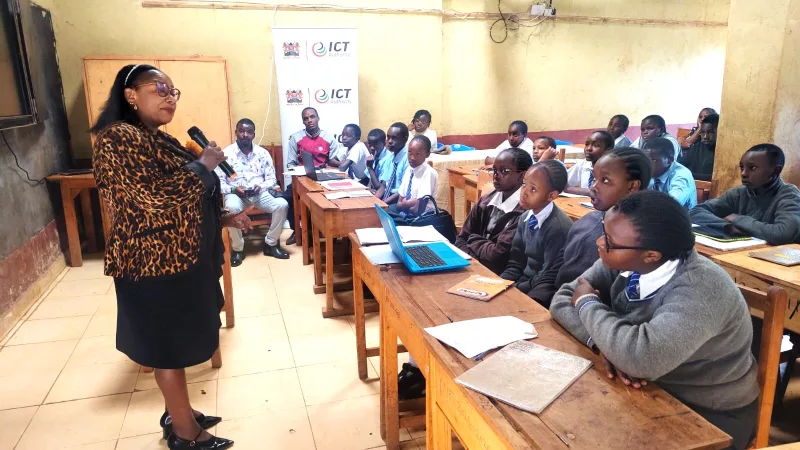
 Public Health PS Mary Muthoni during a free medical camp at Ngiriambu primary school in Kirinyaga county on January 31, 2026/ ALICE WAITHERA
Public Health Principal Secretary Mary Muthoni has urged women to prioritise regular cervical cancer screening in order to reduce their risk of developing the disease.
Kenya records about 6,000 new cervical cancer cases annually, with about 3,500 women dying from the disease each year, with the PS describing the figures as alarming and largely preventable.
She spoke during a free medical camp held in Ngiriambu, Kirinyaga county, where she said that early diagnosis remains the most effective weapon against cancer.
Muthoni said that many patients seek treatment when the disease is already at an advanced stage.
“Early diagnosis can mean the difference between life and death. These numbers are a reminder that cervical cancer is still taking too many lives despite being one of the most preventable cancers,” she added.
The medical camp was organised during January, which is globally recognised as Cervical Cancer Awareness Month, as part of efforts to mobilise women to undergo screening.
“This campaign for screening should be taken very seriously. We want to stop losing women to cervical cancer by ensuring treatment begins before the disease becomes irreversible,” she said.
Muthoni said that the Ministry of Health is working closely with county governments to strengthen cancer diagnosis and expand access to treatment services.
She cited Kirinyaga county as an example, saying several diagnostic and treatment machines have been procured and installed at Kerugoya County Referral Hospital, Kimbimbi hospital and Kianyaga hospital, with plans underway to extend the services to lower-level health facilities.
At the medical camp, thousands of Kirinyaga residents were screened for various cancers, including cervical, breast and prostate cancer.
Njagi Kinyuru, 62, said he was screened for prostate cancer for the first time, admitting that fear of traditional testing methods had previously kept him away. He welcomed the introduction of less invasive screening techniques.
“In the past, we heard scary stories about physical examinations, and that discouraged many men. Now, it’s just a blood test that shows your status,” he said, adding that earlier access to such tests could have saved many lives.
Mary Muthike, nurse-in-charge for Kirinyaga East subcounty, confirmed that 15 women were found with cervical lesions requiring immediate medical attention during the camp.
She said the women underwent thermal ablation treatment, a minimally invasive medical procedure that uses heat to destroy targeted tissue, and with proper follow-up, the lesions are expected to be completely eradicated within a year.
“These women did not know what was happening in their bodies. Without screening, the lesions would have progressed into cancer. You often don’t know until it’s too late,” Muthike said.
She added that the introduction of Human Papilloma Virus testing, which provides clear negative, positive or suspicious results, has significantly improved early detection and timely intervention.
At the same time, the PS cautioned Kenyans against self-medication, warning that the practice increases the risk of antimicrobial resistance, which makes infections harder to treat.
“Self-medication is unacceptable. There are scheduled medicines that should never be dispensed without a prescription,” she said, calling on pharmacy owners to adhere to regulations.
“When antimicrobial resistance develops, medicine will eventually fail when you need it most.”
Cervical cancer is the second most common cancer among women in Kenya after breast cancer.
The disease is primarily caused by persistent infection with high-risk strains of HPV and is preventable through vaccination and regular screening.
Globally, cervical cancer remains a major public health concern, with hundreds of thousands of new cases reported each year, the majority occurring in low- and middle-income countries where access to screening and treatment is limited.
The World Health Organization has called for the elimination of the disease as a public health problem through HPV vaccination, regular screening and early treatment.
Kenya has adopted this approach by rolling out HPV vaccination for young girls, expanding screening services and strengthening referral and treatment systems.