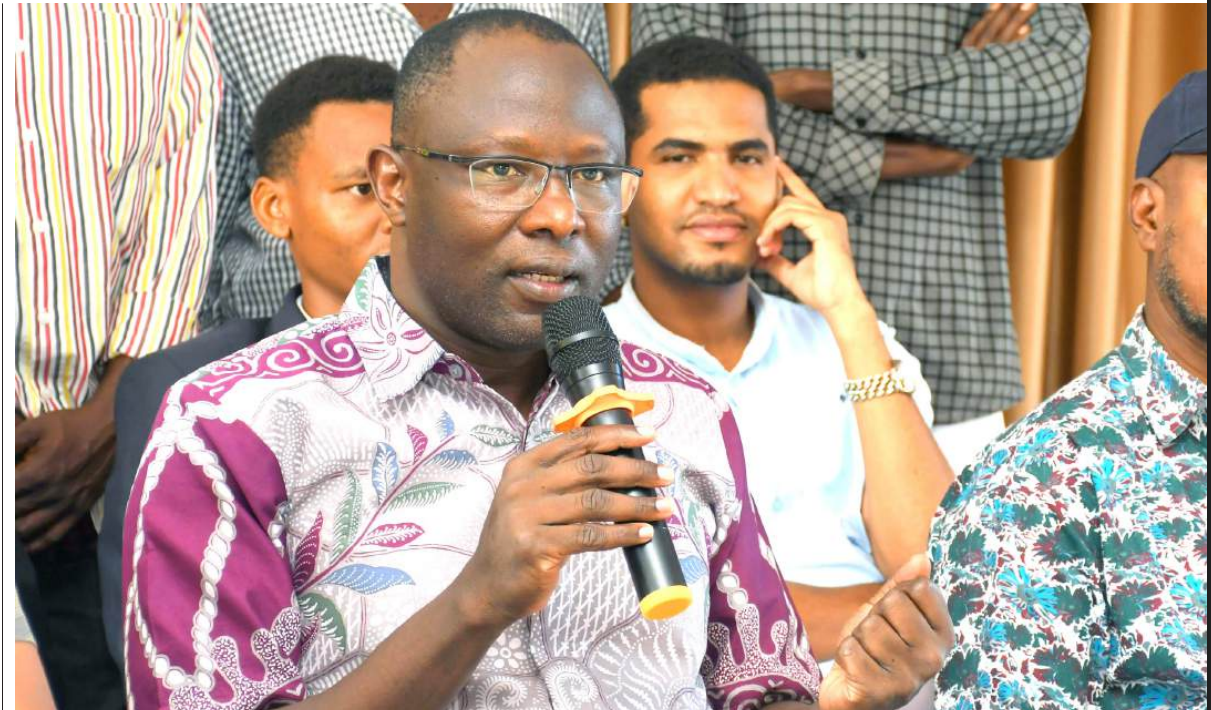
 IEBC
chairperson
Erastus
Ethekon and
outgoing
CEO Hussein
Marjan in
Mombasa
/BRIAN OTIENO
IEBC
chairperson
Erastus
Ethekon and
outgoing
CEO Hussein
Marjan in
Mombasa
/BRIAN OTIENO
A major storm is brewing at the Independent Electoral and Boundaries Commission (IEBC) following a serious internal crisis involving the newly appointed commissioners and long-serving chief executive officer Hussein Marjan.
Reports indicate that the commissioners, led by chairperson Erustus Ethekon, have removed Marjan from his position, citing a breakdown in working relations.
“The plenary met and decided to let Marjan go because they say they cannot work with him,” disclosed a source familiar with the situation.
This decision comes at a critical juncture, just six months after the new commission took office amid significant political pressure as the country gears up for the high-stakes 2027 General Election.
Following the plenary session held early last week, Marjan reportedly sought a "clarification" during his meeting with Ethekon. He requested a formal recommendation for his retirement.
“The chair wrote the letter, only for Marjan to show up on Thursday with new demands,” explained a senior officer within the commission.
Marjan allegedly requested a complete payout of his salary for the remaining duration of his contract, along with gratuity, all to be settled within 14 days. If these demands were not met, he indicated he would remain in office. Within this context, the commissioners collectively expressed their frustration, stating emphatically that they would not work with Marjan.
“Now the commission is negotiating with Marjan on a mutual separation,” said another source, underscoring the turmoil enveloping the agency.
Late last evening, the Star exclusively obtained Marjan’s farewell letter to staff, in which he confirmed his departure from IEBC
“As you may be aware, the commission and I have mutually agreed on a structured transition in the office of the Commission Secretary/chief executive officer,” Marjan wrote. “I write to you today to express my sincere appreciation to each one of you for the privilege of serving alongside you over the years.”
Notably, Marjan made no reference to the fallout, instead striking a conciliatory tone as he thanked the commissioners and staff for their support.
“It has been the greatest honour of my professional life to walk this journey with you. I am confident that the Secretariat will continue to uphold its mandate with integrity, professionalism and excellence,” he said.
In parting, Marjan urged staff to remain steadfast. “Stand firm in adhering to the rule of law, uphold integrity in the execution of your duties, and always remain guided by the supreme obligation to protect the democratic rights and interests of the citizens of our beloved Republic,” he wrote.
This fallout virtually underscores the gravity of the upcoming 2027 elections. Many analysts warn that any mismanagement could plunge Kenya into chaos.
Inside the IEBC, disagreements over preparations for the elections have become increasingly apparent. As political temperatures rise, the atmosphere within the commission has become increasingly fraught with tension.
On Tuesday evening, unconfirmed reports surfaced, suggesting that Marjan had already been dismissed from his role. Nevertheless, repeated attempts to reach Ethekon, Marjan and IEBC communications manager Purity Njeru proved futile, reflecting the opaque nature of the ongoing crisis.
The timing of the dispute is significant, considering that the IEBC is currently rolling out early preparations for the 2027 elections and that multibillion-shilling tenders loom on the horizon.
These include a Sh7 billion procurement for KIEMS kits and a Sh3 billion contract for printing ballot papers. This delicate moment has put additional pressure on the leadership within the IEBC, giving rise to growing concerns from various stakeholders.
As the crisis unfolded, leaders from the opposition coalition met with IEBC officials, echoing widespread dissatisfaction with Marjan's leadership. They specifically demanded that the commission sever ties with Smartmatic, the technology firm that supplied the KIEMS kits used during the controversial 2022 elections.
The technology was pivotal during Raila Odinga's challenge of the 2022 electoral outcome. Wiper Leader Kalonzo Musyoka, who led the delegation, insisted that Marjan must be removed from overseeing the 2027 polls.
During discussions with commissioners last week, Kalonzo criticised the ongoing management of the commission. "We are not confident in his leadership ahead of the 2027 elections," he said, underscoring the urgent need for change. He further threatened to mobilise public protests against the IEBC should Marjan continue in his role.
The opposition has raised concerns surrounding the procurement of KIEMS kits and alleged irregularities, declaring that the elections cannot proceed under the current leadership. Kalonzo argued that since the contracts with Smartmatic were signed before the new commissioners took office, it would be wise to settle Marjan's dues and permit him to resign.
Marjan’s potential exit highlights a troubling pattern in the IEBC’s history, which is marked by conflict between its CEOs and the commissioners. Each transition has often been marred by controversies, particularly regarding procurement and election technology.
For instance, Marjan's predecessor, Ezra Chiloba, was controversially dismissed in October 2018 following a fractious relationship with the then-chairperson, Wafula Chebukati. Their disagreements arose primarily from audit-related issues. Following Chiloba's exit, three commissioners resigned, citing a lack of faith in leadership and a dysfunctional operational environment.
Chiloba himself expressed concerns over the IEBC’s governance, suggesting that upcoming challenges would significantly influence his successor.
Adding to this legacy of instability, James Oswago, a former CEO, faced allegations related to the notorious “Chickengate” scandal—a scheme involving kickbacks for ballot printing contracts. He contended that, as CEO, he could not be held criminally responsible for the actions of subordinate officers, a view that reflects the ongoing complexities of governance and accountability within the commission.
As negotiations regarding Marjan’s departure continue, the IEBC finds itself at a crossroads. The call for leadership restructuring emerges against a backdrop of public distrust, with many Kenyans closely monitoring developments within the commission.
Mounting pressure from the opposition and the near certainty of protests highlight the urgent need for effective governance reforms. While Marjan has reportedly agreed in principle to exit, the conditions he has set have complicated matters further and left the commission in a precarious situation.
INSTANT ANALYSIS
With financial constraints, internal conflict and escalating political demands, the IEBC faces yet another period of profound instability as it prepares for the crucial 2027 general election. The commission has publicly announced that it needs to replace its technology infrastructure on the grounds that the equipment is obsolete.