The looming post-Raila succession battle within ODM is lifting the veil on the Odinga family, revealing a political lineage defined not only by firebrand activism but by fierce independence of thought.
While Oburu Oginga was swiftly elevated to replace Raila as ODM party leader, cracks have emerged, not necessarily within the party alone, but inside the country’s most storied political family.
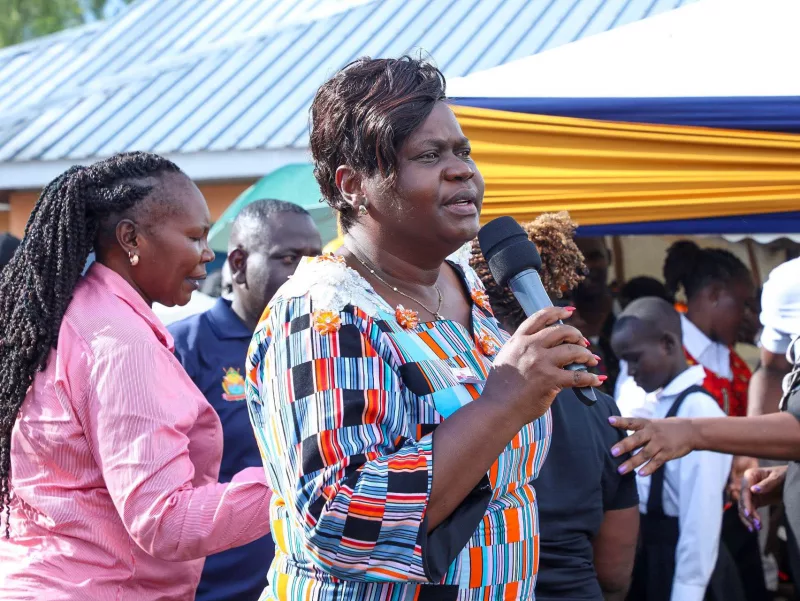
Oburu’s sister, Ruth Odinga, and his niece, Winnie Odinga, have openly questioned key party decisions, positioning themselves at odds with the new party leadership even as they insist there is no family fallout.
Both Ruth and Winnie, Raila Odinga’s last-born daughter, are increasingly perceived to be gravitating towards ODM dissenters critical of Oburu’s leadership, fueling speculation of internal rebellion.
Winnie, however, has been quick to separate politics from family ties.
“I believe Dr Oburu would be the first person to defend my right to have different opinions. I love Dr Oburu, he is my only dad. I don’t know why this has become national news,” she said last week.
Ruth has also pushed back against claims of a family rift, arguing that the public disagreements reflect the very democratic space the Odingas have long championed.
“We are a family that has remained united, and that unity is not about to die anytime soon,” Ruth said, days after Winnie and Raila Odinga Jr staged a rally in Kibra, a move widely interpreted as taking the political contest to Oburu’s backyard.
“What has been interpreted as a ‘rift’ is the democratic space we have enjoyed over the years,” Ruth added. “It means we cannot always agree, but we will always voice our differing opinions.”
Yet even as political tensions simmer, the Odingas continue to blur the line between public disagreement and private unity.
On January 26, Ruth shared breakfast with Oburu, posting a smiling photograph of the two together, just days after a fiery media interview in which she accused ODM of rushing headlong into a political deal with President William Ruto’s UDA.
“Breakfast with my brother, Dr Oburu Oginga,” Ruth wrote, a post that appeared calculated to cool speculation of a family fallout.
The interview, however, laid bare her discomfort with ODM’s political direction.
Ruth questioned the urgency with which the party is pursuing a coalition agreement, warning that haste could cost it strategic leverage.
“ODM should not be in a hurry to enter into a coalition agreement as though it is some kind of emergency. 2027 is not going anywhere. Even if ODM sits still and does nothing, 2027 will come,” she said.
The controversial UDA–ODM deal was sanctioned at a party meeting chaired by Oburu, placing him squarely at the centre of the growing internal unease.
Ruth also raised alarm over what she described as unexplained financial activity within the party, questioning the source of funds circulating amid the coalition push.
“We are seeing a situation where a lot of money is flying around, and there appears to be a deliberate approach to commit ODM into a coalition agreement more than a year before the next general election,” she said.
“Where is the money coming from? Is it in the Budget and Appropriations Committee at the National Assembly? I know the government has not given ODM party money. So where is all the money coming from?”
The current disagreements mirror a long-standing Odinga family tradition of fierce debate — a trait traced back to Raila Odinga himself.
At Raila’s burial last year, his sister Akinyi Wenwa offered a revealing glimpse into the former prime minister’s independent streak, describing a man defiant from a young age.
“Oburu would tell you how Raila was strong-headed in school,” she recalled.
“There was a rule that when you are caned by the teacher, you were supposed to get up, salute and say thank you teacher — which he (Raila) refused to do. Every time, he would walk away mumbling. The teacher would call him back, cane him again, until the teacher just gave up.”
Akinyi said the same stubborn independence defined family interactions behind closed doors.
“As a family, we also used to have our differences, and we still do. We can have very hot arguments,” she said.
She recounted confrontations with Raila over his political decisions, moments intense enough to alarm household staff, yet fleeting enough to dissolve almost instantly.
“One time, he came to my house and we were having a hot argument until my housemaid thought we were going to physically fight. I followed him to the toilet and to his car, shouting that I had refused,” she said.
“You won’t believe it, the following day we were on the phone laughing as if nothing had happened.”
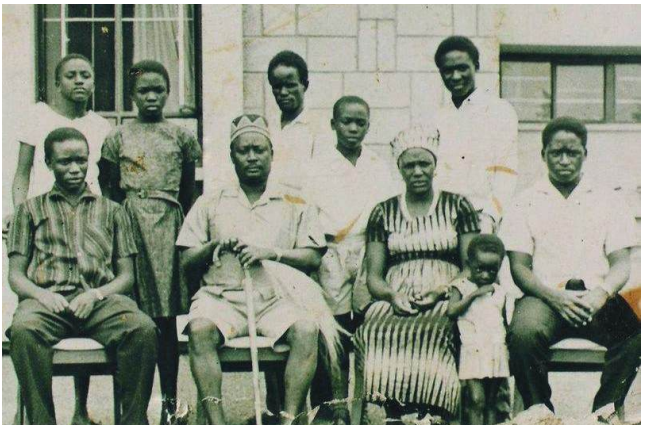
To understand the present, one must go back to the source – Jaramogi Oginga Odinga himself.
The first Vice President was a man of formidable principles and openly disagreed with the founding President Jomo Kenyatta on ideologies.
At one time in Kisumu in 1969, Oginga disrupted Kenyatta’s speech in a tense public ceremony to unveil the Russia hospital – the present-day JOOTRH, named after him.
President Kenyatta had visited Kisumu barely three months after Tom Mboya’s assassination as he sought to stamp his authority in Nyanza province.
A war of words ensued between him and Oginga, fuelling the already tense moments, including on communist versus Western leanings.
Kenyatta asked Oginga why he was misbehaving, and the latter reminded him he had fought for his release from detention.
The crowd, which largely had KPU supporters, turned hostile. The presidential guard and police opened fire on them. Several people died in the altercation.
INSTANT ANALYSIS
The journey to 2027 will test whether the Odinga tradition can survive in a new political landscape. But if history is a lesson, the house that Jaramogi built stands on a foundation of resilient, unbreakable ties. As such, it could be that the spirit of struggle is the family’s most difficult inheritance, and a glue that binds them together. The nation watches.