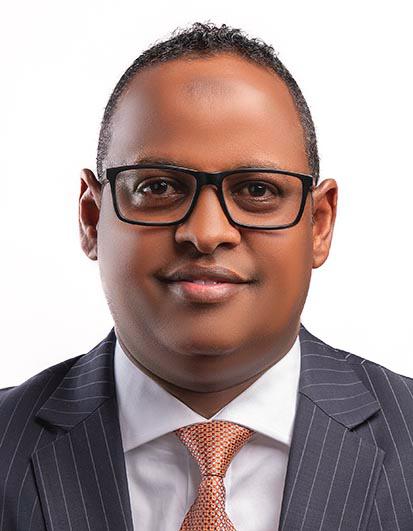
 Hon. Mustafa Abdirashid Ahmed MCA Iftin and current Deputy Speaker of Garissa County Assembly./COURTESY
A recent visit to Marsabit, under the invitation of Hon. Col. (RTD) Raso Ali, for a fundraising drive toward the construction of an Islamic girls’ integrated school, the first of its kind in the county offered a lesson that went far beyond the event itself.
With CS Hon. Ali Hassan Joho as the chief guest, the gathering became an unexpected demonstration of how political cohesion, when genuinely practiced, can shape development outcomes and regional confidence.
What was immediately evident was the solidarity among leaders from the Coastal region. From Lamu to LungaLunga to Tana River, their unity was not loud or theatrical; it was calm, assured, and purposeful.
They spoke in harmony, stood behind one another, and projected a shared commitment to collective progress.
This cohesion has not emerged by accident. It is the product of leaders who understand that individual ambition, when not disciplined by a common agenda, can easily become an obstacle to development.
The contrast with Northern Kenya is difficult to ignore. Leadership in the region is often characterised by persistent rivalry, public quarrels, and fragmentation. Instead of consolidating voices to advocate for development, leaders pull in different directions, weakening their collective influence.
Political competition, rather than sharpening ideas, too often degenerates into personal conflict, leaving communities to bear the cost in stalled projects, neglected services, and unmet expectations.
This is not a failure of capacity or intellect. Northern Kenya has no shortage of educated leaders, seasoned professionals, or clear development needs.
The challenge lies in the absence of cohesion, of leaders willing to subordinate personal differences to regional interests. Without unity, even the most compelling development agenda struggles to gain traction at the national level.
Other regions have shown that a different path is possible. Counties that have embraced structured, professional forums to articulate development priorities have benefited from continuity and focus.
These platforms reduce political temperature, encourage consultation, and ensure that leadership energy is directed toward solving problems rather than sustaining conflict.
Marsabit’s lesson is therefore both timely and instructive. Political cohesion does not demand uniformity of thought, nor does it require the suppression of dissent.
It calls for maturity, mutual respect, and a shared understanding that leadership is ultimately about service. When leaders stand together on matters of regional importance, they amplify their bargaining power and accelerate development.
For Northern Kenya, the way forward must involve deliberate efforts to build unity across political, ethnic, and personal lines. Leaders must invest in trust-building, institutionalised dialogue, and collective planning.
Citizens, too, have a role to play by rejecting divisive politics and supporting leaders who prioritise cooperation over confrontation.
Marsabit reminds us that cohesion is not a luxury, it is a necessity. Where leaders walk together, progress follows. Where they remain divided, underdevelopment persists. The choice, and the responsibility, lies squarely with those entrusted to lead.
The author is the MCA for Iftin ward and Deputy Speaker Garissa County Aasembly. A columnist and A playwright.