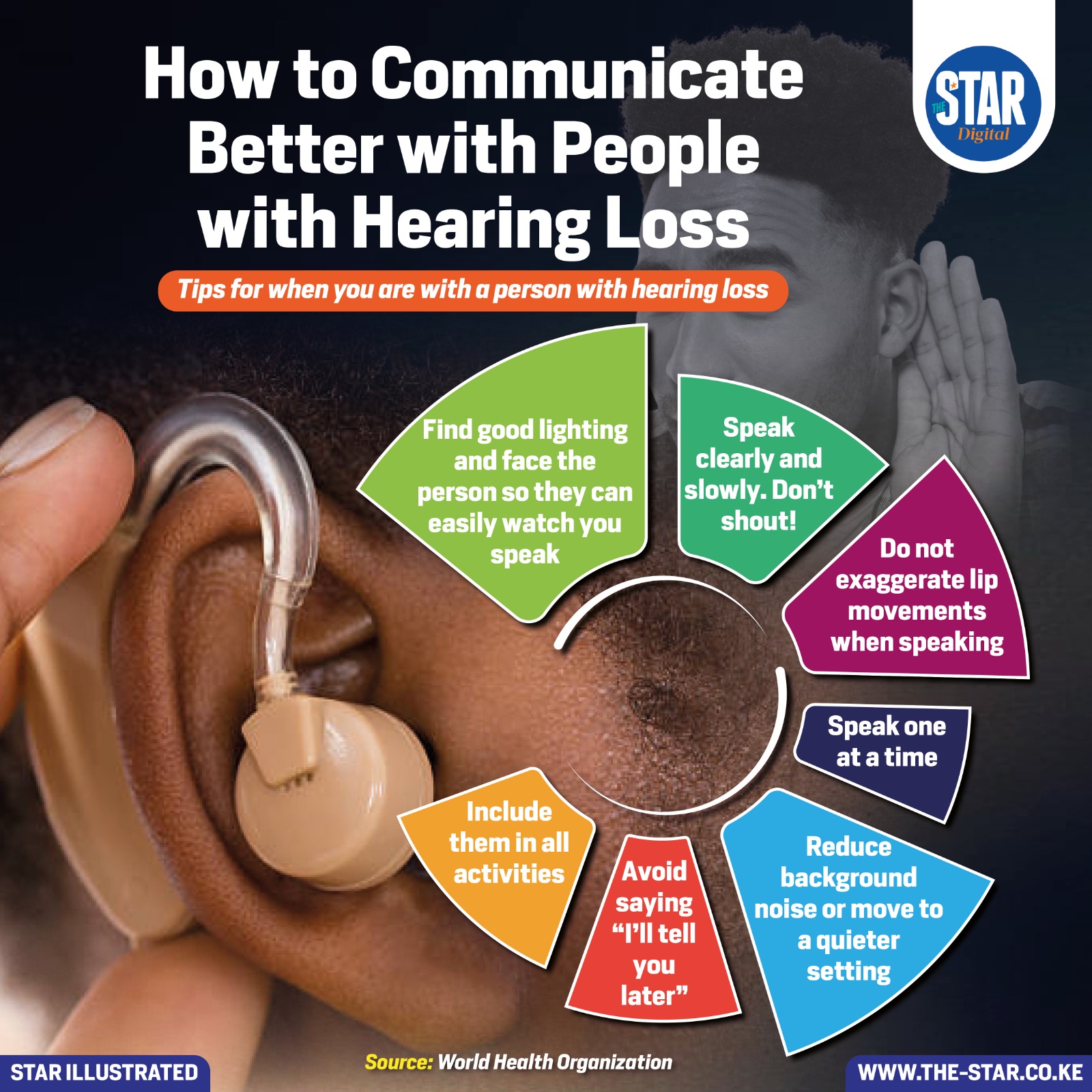
Communicating effectively with people with hearing loss is essential for inclusion and understanding, according to guidance from the World Health Organization (WHO).
WHO recommends facing the person directly and maintaining eye contact, as many people rely on lip-reading and facial expressions.
Speaking clearly at a moderate pace helps, but shouting should be avoided because it can distort speech.
Read Also
Reducing background noise improves comprehension, especially in crowded or noisy environments.
Using simple language and short sentences makes communication easier.
Visual cues such as gestures, written notes or text messages can support spoken communication.