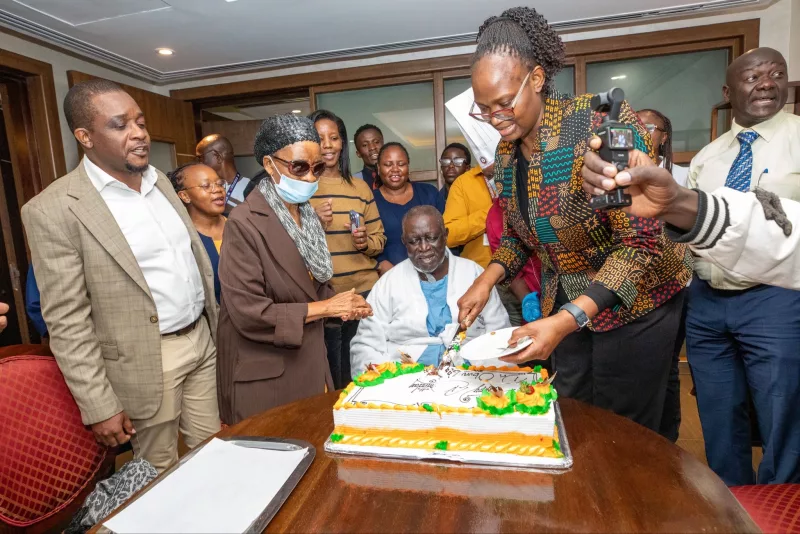
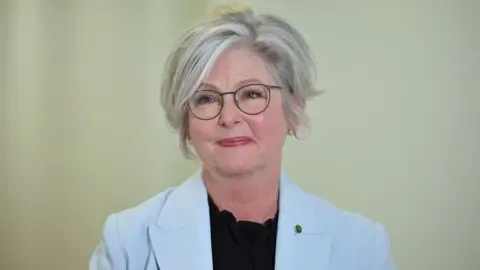
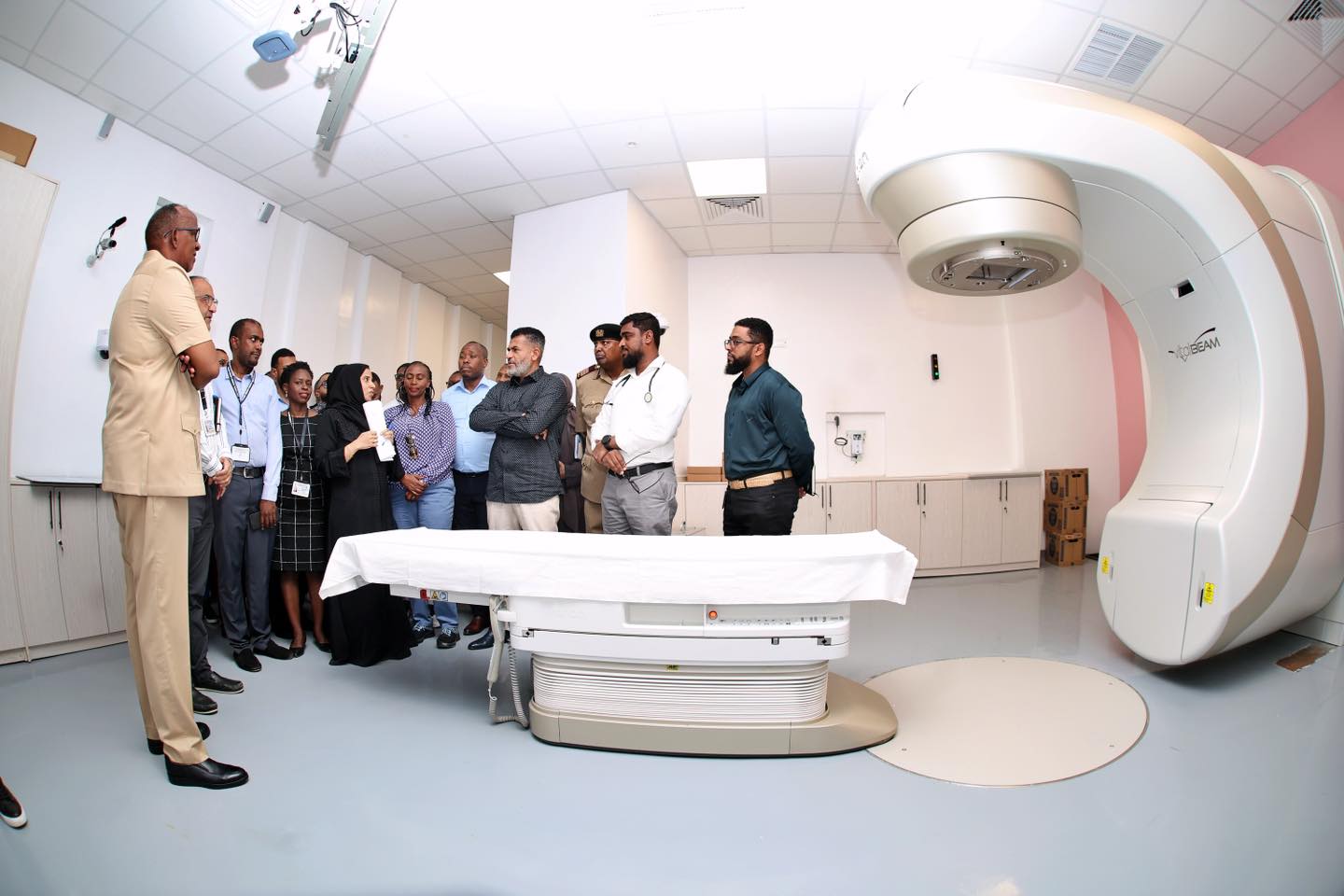
 Health CS Aden Duale and Mombasa Governor
Abdulswamad Nassir at the CGTRH regional cancer centre on Thursday / BRIAN
OTIENO
Health CS Aden Duale and Mombasa Governor
Abdulswamad Nassir at the CGTRH regional cancer centre on Thursday / BRIAN
OTIENO
At least 29,000 Kenyans die from cancer every year, with about 44,000 new cases diagnosed, according to the Health ministry.
Health CS Aden Duale said on Thursday this translates to 122 Kenyans diagnosed with cancer every day in the country, with 80 losing their lives daily.
“These are not just figures. These are our parents, our children and our breadwinners,” he said.
Duale said this calls for more investment to ensure cancer patients receive timely, safe and affordable care without the indignity of the unnecessary hardships. The CS spoke at the Coast General Teaching and Referral Hospital Cancer Centre.
To ensure more dignity for cancer patients, the CGTRH cancer centre, just like the two other cancer centres in Nakuru and Garissa, will have a dedicated Social Health Authority (SHA) account.
This will remove the unnecessary long queues for cancer patients and all SHA requirements with be dispensed with faster.
The ministry is leading the National Cancer Control Strategy.
To curb the high death rates, the Health ministry, through SHA, has enhanced the oncology package from Sh550,000 to Sh800,000 per household.
“This is to protect our families from the catastrophic spending that has historically driven many of them into poverty following cancer diagnosis,” Duale said.
The enhancement was made in October last year.
Mombasa Governor Abdulswamad Nassir said the county is carrying a national responsibility in the fight against cancer, with only 39 per cent of the cancer patients treated at CGTRH regional cancer centre coming from Mombasa.
“The majority travel from neighbouring counties—Kilifi, Kwale, Taita Taveta and Lamu—and even as far as Machakos, Makueni and Murang’a for treatment here,” he said.
CGTRH is the principal referral hospital for the entire Coast region and hosts the only public radiotherapy facility in the region, making it a critical pillar in Kenya’s cancer care ecosystem.
Since the cancer centre was established in 2018, there has been steady expansion of oncology services.
“The radiotherapy department, which has been operational since March 2022, now treats an average of 60–70 patients every day. With only one Linac machine, demand has consistently outpaced capacity,” Nassir said.
“I am therefore pleased to inform the public that a second Linac cancer treatment machine has now been fully installed, is operational, and is already treating patients.
“We are deeply grateful to IAEA and the Ministry of Health for the donation of an additional Linac cancer treatment machine, which will significantly increase our capacity and help us meet the growing demand for radiotherapy services.”
This additional machine immediately doubles the radiotherapy capacity, significantly reducing waiting times and strengthens Mombasa’s position as a regional hub for cancer care, the governor said.
“We will continue investing in lifesaving infrastructure so no Kenyan is denied treatment because of where they live,” Nassir said.
Machine failures have also been a problem, as they break down frequently, taking time, as much as a month, for them to be repaired.
The government has now agreed with machine providers to ensure the machines are operational 24/7 by having a dedicated technician from the provider to service them regularly.
“We have agreed with the governors of Mombasa, Garissa and Nakuru that a critical component of the machines is how they can be protected. These machines are very expensive," Duale said.
“As a ministry we have agreed we are going to pay for the service level agreement so the companies that brought these machines will service them 24/7 so that there is no patient who will wait in the queue because the machine is down,” he said.
The county government will take care of all the other accessories, the CS said.
“This month is cervical cancer month. We are resolving operational bottlenecks such as the shortage of equipment, imaging reagents, applicators, through a pool procurement and improved planning through Kemsa so that we ensure no one is turned away because those items are missing,” Duale said.
Nassir, who chairs the health committee of the Council of Governors, said Mombasa has provided land for the construction of a specialised cancer ward.
Instant Analysis:
Over the past three years, the CGTRH regional cancer centre has grown from treating about 6,000 cancer patients annually to more than 13,000 patients a year, a clear sign of rising demand.
Focus now shifts to early detection. Many patients still arrive at CGTRH with advanced disease, when treatment options are limited. The county will now leverage SHA through primary healthcare to strengthen screening, early diagnosis, and timely referral, shifting the system from late intervention to prevention and early care.