
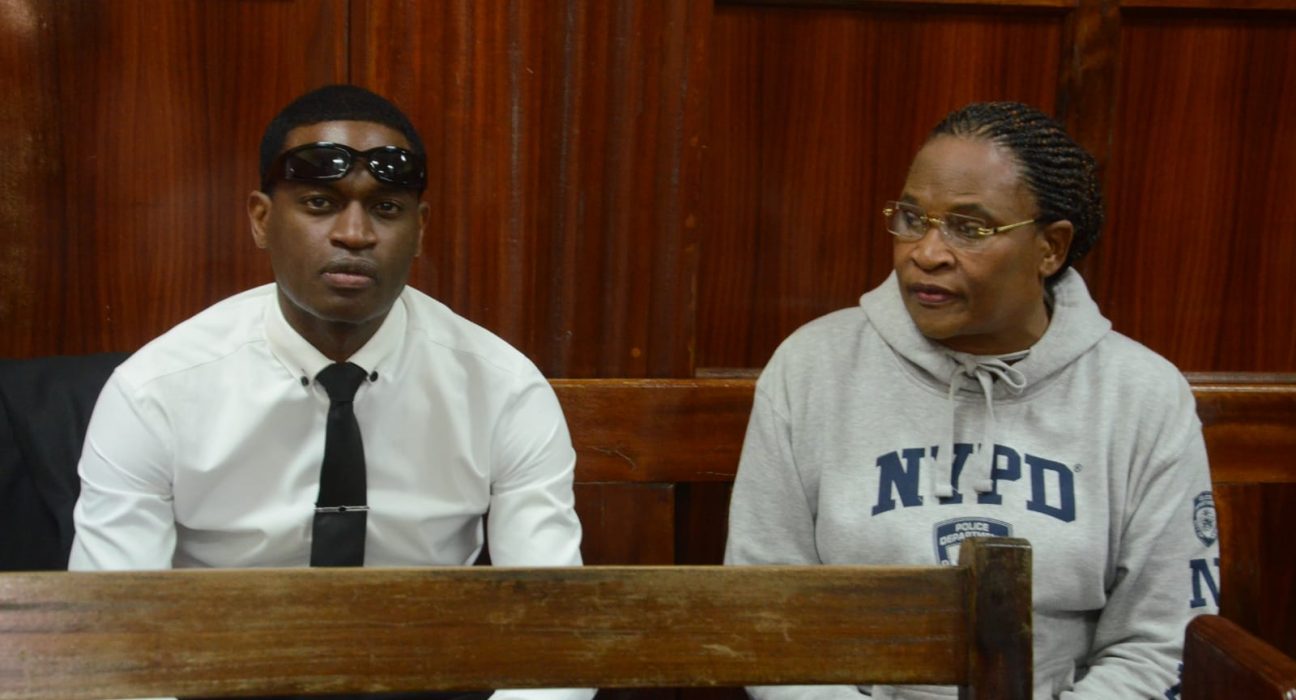
A US-based Kenyan woman seeking a share of former Cabinet minister Simeon Nyachae’s Sh2 billion estate suffered a setback on Thursday after the High Court ruled that she was not a widow of the deceased.
Justice Eric Ogola further ruled that Margaret Chweya’s children — Rodney David Chweya, John Paul Chweya and Patricia Chweya — were fathered by different men who are all still alive, and that the children should therefore pursue any claims for benefits from their respective biological fathers.
The decision adds to a growing number of high-profile inheritance disputes involving prominent Kenyan families. Among them is a case involving the family of former President Mwai Kibaki, which has been taken to court by Jacob Ocholla, who claims to be Kibaki’s firstborn son.
There is also an ongoing succession dispute within the family of former President Daniel Moi. His grandson, Collins Kibet Toriotich Moi, the eldest son of Jonathan Toroitich Moi — Moi’s firstborn son who died of pancreatic cancer on April 20, 2019 — is seeking a share of the estate, which has been estimated to be worth about Sh300 billion.
In the Nyachae matter, Margaret moved to court in 2022 after she and her three children were excluded from the list of beneficiaries of Nyachae’s estate.
Nyachae died on February 21, 2021, aged 88.
Margaret told the court that she was customarily married to Nyachae in 1973, before relocating to the United States in the 1980s. She claimed Nyachae facilitated her move to the US and visited her there regularly.
However, the Nyachae family, through the estate’s executors — Charles Nyachae, Angela Nyachae and Eric Nyachae — denied any relationship between Nyachae and Margaret or her children.
Their lawyer, George Muchiri, told the court that Margaret had been married to four different men at different times and was never married to Nyachae.
Muchiri said the executors commissioned investigations to establish Margaret’s identity, marital history and family circumstances, including details of her marriages, children and timelines.
According to the findings presented in court, Margaret was married to four men — two in Kenya and two in the United States — identified as Jacob Machuki Mokaya, Michael Pondo Migowa, George Gordon Odero and James Leroy Totten.
During her testimony in July 2023, Margaret denied being married to the men but acknowledged that she had entered into what she described as a “marriage of convenience” with Totten.
In his judgment delivered in Nairobi on Thursday, Justice Ogola said Margaret failed to produce evidence to support her claim that she was married to Nyachae.
The court noted that the burden of proof rested with the applicants — Margaret and her children — and that she was required to demonstrate the existence of a Kisii customary marriage in line with evidentiary standards.
“Throughout the evidence, she has not in any way proved that the said cultural ceremonies were ever conducted. There is no witness to the alleged wedding ceremonies. Pictures alone cannot prove marriage,” Justice Ogola said.
“This court finds and holds that the first applicant was not a wife of the deceased, Honourable Simeon Nyachae.”
On whether Margaret and her children could benefit from Nyachae’s estate as dependants, the court said this would have required proof that Nyachae maintained or supported them.
Justice Ogola stated that, having found Margaret was not Nyachae’s wife and that the children were not his biological offspring, the remaining issue was whether they qualified as dependants.
He said the applicants were required to demonstrate that they were being maintained by Nyachae immediately before his death.
Margaret had claimed that Nyachae provided financial support to her family and had purchased a house for them in Loresho, Nairobi.
However, the court found that although the Loresho house was registered in Margaret’s name, there was no evidence linking Nyachae to its purchase.
“The first applicant has not provided tangible evidence to support this allegation. On the other hand, Michael Pondo provided bank statements showing payment of the purchase price of the house. These statements were not contested. There is no link between the deceased and the Loresho house,” Justice Ogola said.
Michael Pondo was among three men who testified in court, stating that they were previously married to Margaret and had children with her.
Margaret also alleged that Nyachae frequently visited her in the US and provided financial support for the family.
“There is no evidence supporting the allegation that the deceased visited them in the USA. There are not even photographs to corroborate these claims,” the court held.
The judge noted that while the applicants failed to provide evidence of Nyachae’s involvement, both Pondo and Jacob Mokaya produced photographs and financial records showing that they supported Margaret and her sons.
The court also cited the testimony of a witness, Randy Wall, who provided uncontested evidence regarding Margaret’s marriages to George Gordon Odero and James Leroy Totten, as well as changes to her name over the years.
“There is also evidence on record of name changes by the second and third applicants, Rodney Chweya and John Paul Chweya. This evidence casts doubt on whether the deceased was active in the lives of the first to third applicants,” Justice Ogola said.
The court found the testimonies of Jacob Mokaya and Michael Pondo credible, noting that both men identified themselves as the biological fathers of Rodney and John Paul and described their efforts to care for the children before they were taken to the US by their mother.
“In my view, if Rodney and John Paul are seeking their fathers, their fathers are still alive. They are at liberty to pursue inheritance from their biological fathers, who testified that they continue to care for them,” the judge said.
Justice Ogola ruled that Rodney and John Paul had no legal basis to claim inheritance from Nyachae’s estate.
The court also considered the testimony of Patricia Chweya, Margaret’s daughter, who disowned the Chweya name and said her real name was Patricia Moraa Odero.
She told the court that Nyachae was not her father, stating that her biological father was George Gordon Odero and that DNA tests had confirmed this.
Although Margaret had included Patricia in the suit, claiming to act on her behalf, Patricia — who testified virtually from California, US — said she had neither authorised the suit nor signed any documents related to it.
Justice Ogola commended her testimony.
“The fourth applicant has demonstrated maturity and integrity by disowning these proceedings. The path chosen by her brothers is closed. They should seek inheritance from their respective biological fathers,” he said.
In conclusion, the court held that Margaret was never a wife of Nyachae and that her children were not dependants of the deceased.
The case was dismissed, with the applicants ordered to pay costs. The judge noted that the matter did not qualify as a family dispute.
“These were not members of the Nyachae family, and they must therefore bear the costs of these proceedings,” Justice Ogola ruled.







