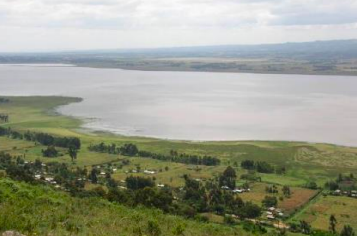
Lake Ol’Bolossat.
The government has stepped up efforts to restore Lake Ol’Bolossat amid concerns over shrinking water levels and rising human-wildlife conflicts.
Located on the Kinangop Plateau in Nyandarua county, Ol'Bolossat is Kenya’s only natural lake in the central highlands,
It however faces faces multiple challenges, including poaching, illegal fishing, settlement encroachment, deforestation, water pollution, and inadequate catchment management.
Human-wildlife conflicts have also escalated, with hippos attacking residents, livestock, and destroying crops.
On Wednesday, Environment PS Festus Ng’eno and his Wildlife counterpart Silvia Museiya chaired a high-level meeting in Nairobi to fast-track restoration initiatives.
Priorities include resurveying and marking lake boundaries, restoring degraded catchment areas, regulating water use, and reviewing illegal land titles.
The lake, covering approximately 4,800 square kilometres, has lost 68 per cent of its surface area.
It is home to over 800 hippopotamuses, more than 300 bird species and mudfish, making it a vital hub for wildlife and nature tourism.
Lake Ol'Bolossat also serves as the source of the Ewaso Ng’iro River, supporting livelihoods in five counties and feeding iconic tourist sites such as Ol-Pajeta and Lewa conservancies.
The restoration programme is guided by the 2020–2030 Integrated Management Plan developed by Nyandarua county and the National Environment Management Authority, with a multi-agency approach involving officials from the State Department of Forestry, Kenya Wildlife Service, National Museums of Kenya, Water Resources Authority, and local communities.
Tourism and Wildlife CS Rebecca Miano said the lake’s ecosystem must be preserved for its biodiversity, ecosystem services, and socio-economic value, ensuring benefits for present and future generations.