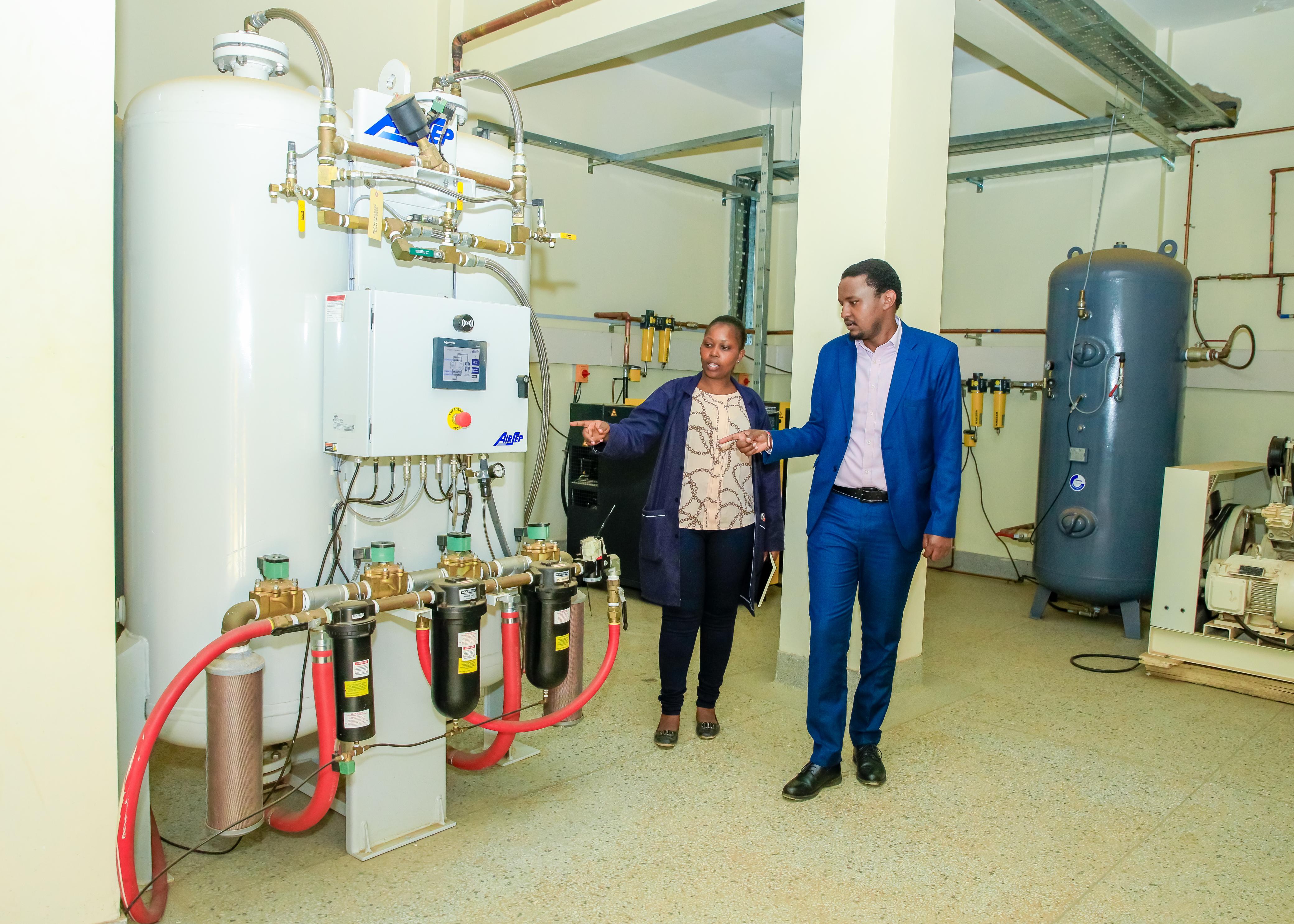
 Biomedical engineer Lizbeth Muchiri with the Director of Medical Services in Kirinyaga County Esbon Gakuo during a routine inspection exercise at the county oxygen manufacturing plant at Kerugoya County Referral Hospital./ALICE WAITHERA
Kirinyaga hospitals previously spent millions of shillings on sourcing oxygen from external suppliers.
But with the on-site plant, hospital operations have been strengthened by shifting the facility from reliance on irregular cylinder deliveries to a self-sufficient system that guarantees a steady supply of medical-grade oxygen.
The plant has also ensured uninterrupted 24-hour availability of oxygen for critical care, emergency surgeries and respiratory therapies, improving efficiency at the referral hospital and other public health facilities across the county.
Speaking during a routine inspection, County Director of Medical Services Esbon Gakuo said the plant has the capacity to generate up to 1,000 litres of pure medical-grade oxygen every 24 hours at a purity level of 95 per cent, which meets international medical standards.
He noted that this saves the county government about Sh15 million annually, funds that were previously spent on outsourced oxygen supplies.
“Since it became operational four years ago, the plant has cumulatively saved the county more than Sh80 million, freeing up resources for further investment in healthcare services,” Gakuo said.
He explained that oxygen is piped directly from the plant to every bed in the hospital, including operating theatres, general wards, the casualty department and the Newborn Unit, eliminating dependence on oxygen cylinders that were inconvenient and often posed safety risks during transportation.
In addition to oxygen, the facility also produces other medical gases and medical air used to operate critical equipment in theatres, including anesthesia and aspiration machines.
“With a reliable in-house source of oxygen, the county no longer needs to refer patients to other facilities due to shortages, as was the case when we depended on external suppliers,” Gakuo said.
To enhance sustainability, the county is in the process of installing a 6,000-litre liquid oxygen storage tank at the hospital. The tank will serve as a backup during routine maintenance or power outages and will be able to meet the county’s oxygen needs for up to two weeks once completed.
Biomedical engineer Lizbeth Muchiri, who oversees production and maintenance of the plant, emphasized its lifesaving role. “Oxygen is a drug, and we are proud to provide this service to our patients,” she said.
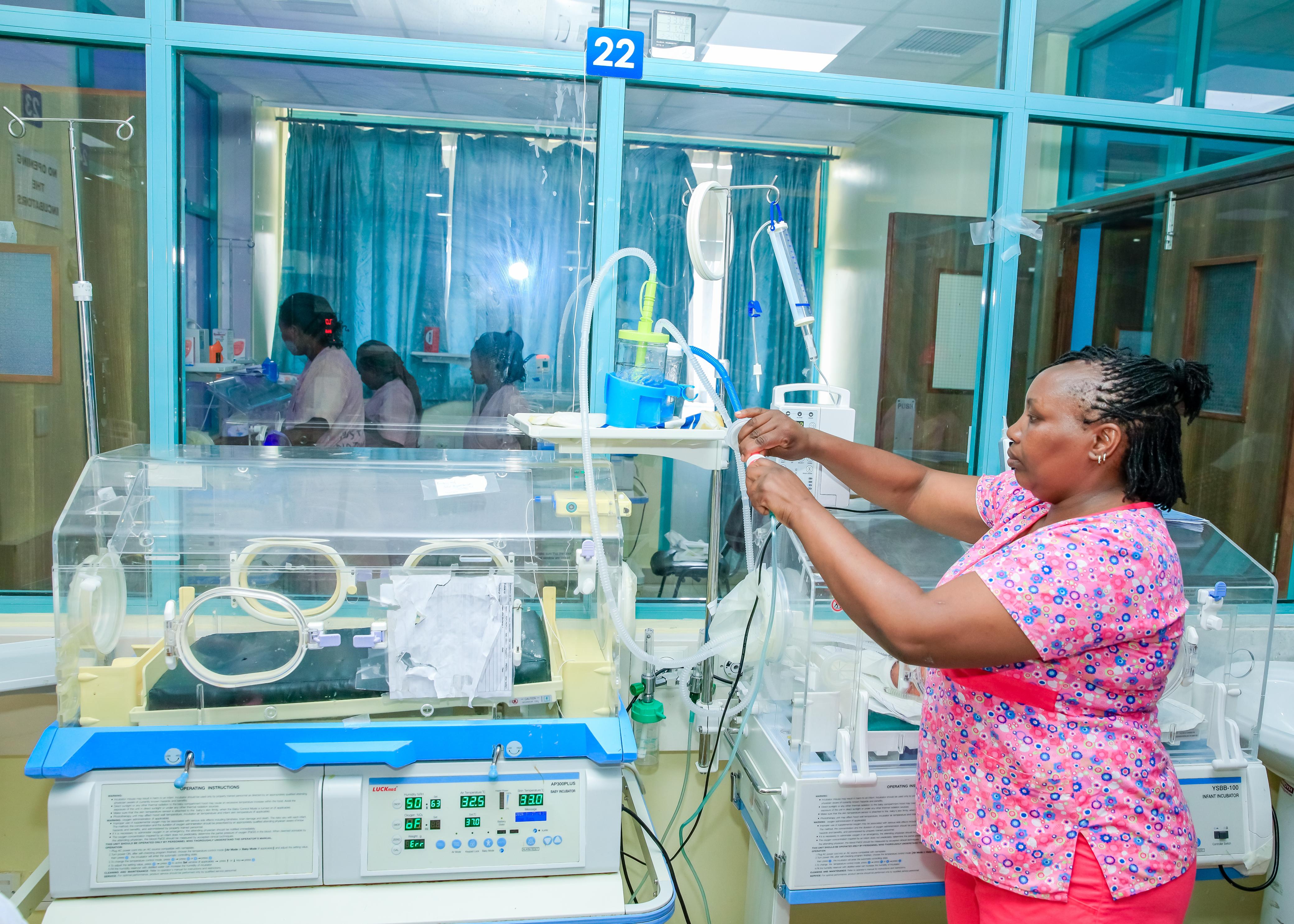 Jackline Christine Njeri, a pediatric critical care nurse at Kerugoya County Referral Hospital fixing piped oxygen at the NewBorn Unit.
Muchiri said the facility has so far supplied about 40 million litres of oxygen. The plant comprises an air compressor, a dryer and an oxygen generator, which removes all other components of air to produce pure oxygen suitable for medical use.
The oxygen plant forms part of Governor Anne Waiguru’s broader strategy to strengthen health infrastructure and service delivery across Kirinyaga county.
The county has upgraded Kianyaga, Kimbimbi and Sagana hospitals from level 3 to level 4 facilities thus decentralizing services from the referral hospital and bringing care closer to communities.
Waiguru said the modern five-storey complex at Kerugoya now serves as the county’s main referral hospital, attending to an average of 600 outpatients and 400 inpatients daily, many of whom require oxygen support for surgery, emergency care and neonatal services.
She added that the expanded oxygen capacity now ensures uninterrupted supply across all public health facilities in the county.
The governor said the county has expanded access to primary healthcare, increasing the number of operational public health facilities from 65 in 2017 to 77 today, with 12 newly built centres already operational and eight more lined up for commissioning. This will raise the total to 85 facilities.
“These investments have reduced travel time and healthcare-related costs for residents by up to 40 per cent and led to improved health outcomes,” Waiguru said.
She said antenatal coverage has increased from 45 to 63 per cent while maternal mortality has declined from 88 to 55 deaths per 100,000 live births, and neonatal mortality has dropped from 26 to 10 deaths per 1,000 live births.
To support the expanded infrastructure, the county has recruited more than 150 health workers since 2017, including specialists, enabling the provision of services such as oncology, neurology, orthopedics, urology and epidemiology.
The county has also digitized health services, with Kerugoya County Referral Hospital going fully paperless for outpatient services, while all other facilities are equipped with Electronic Health Information Systems integrated with SHA to improve efficiency, accountability and reimbursement tracking.