For more than five years, 50-yea-old tea farmer Hellen Nyakerario from Nyamira county endured a persistent, gnawing pain in her lower back and legs.
Each day, the ache grew, sapping her strength and making even the simplest tasks feel like mountains to climb.
She sought answers at her local hospital, often relying on painkillers for relief. Nobody could explain why her body was betraying her.
Amid the pain, she began to notice an unusual pulsating sensation on the lower left side of her abdomen. Repeated visits to hospitals yielded no clarity.
As the discomfort worsened and her ability to work faltered, Nyakerario decided to seek specialised care, hoping someone would provide the diagnosis to pinpoint the cause of her suffering.
Her journey took her to Jaramogi Oginga Odinga Teaching and Referral Hospital (JOOTRH) in Kisumu, where advanced imaging revealed a hidden and life-threatening danger: a dangerously enlarged abdominal aorta.
She was admitted on January 8, 2026, and surgery was scheduled a week later.
An abdominal aortic aneurysm (AAA) occurs when the body’s largest artery weakens and balloons as it passes through the abdomen.
Invisible from the outside, it silently grows, threatening catastrophic rupture — a condition Dr Robert Sadia says is one of the leading causes of sudden adult death. Sadia is cardiovascular surgeon at JOOTRH.
“Rupture happens when the artery expands beyond safe limits, causing massive internal bleeding within minutes,” he explained.
The surgery that followed was complex and delicate.
A team of vascular surgeons, cardiovascular specialists, anaesthetists, and critical care personnel worked in close coordination to remove and replace the damaged section of Nyakerario's aorta.
The operation, a first for JOOTRH’s cardiothoracic unit, marked a major milestone, bringing advanced vascular surgery closer to communities in western Kenya.
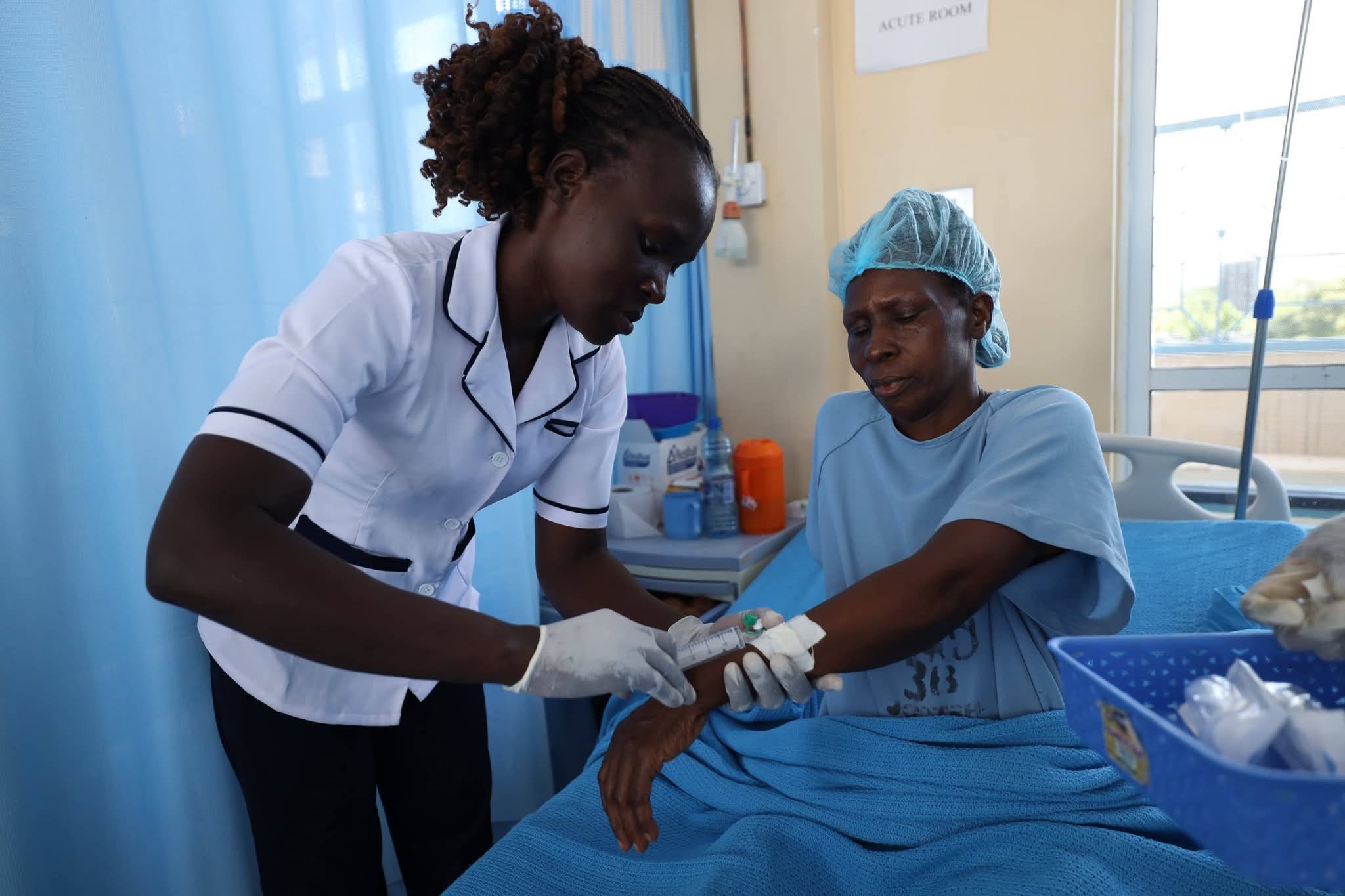
Now recovering steadily in her ward, Nyakerario says she feels stronger with each passing day. Supported by her family, she is hopeful of returning to her normal life soon.
Medical experts caution that AAAs are often silent killers. Globally, they account for roughly 170,000 deaths annually, with adults over 55 years of age most at risk.
Studies show that up to 80 per cent of patients with a ruptured aneurysm die, many before reaching a hospital, while even emergency surgery carries a mortality rate exceeding 40 per cent.
For Nyakerario, the danger had been hidden beneath the surface.
Her story is a reminder of the thousands of Kenyans who suffer silently for lack of specialised care.
Her successful surgery, however, offers a glimpse of hope — evidence that public referral hospitals are increasingly able to deliver life-saving, highly specialised care.