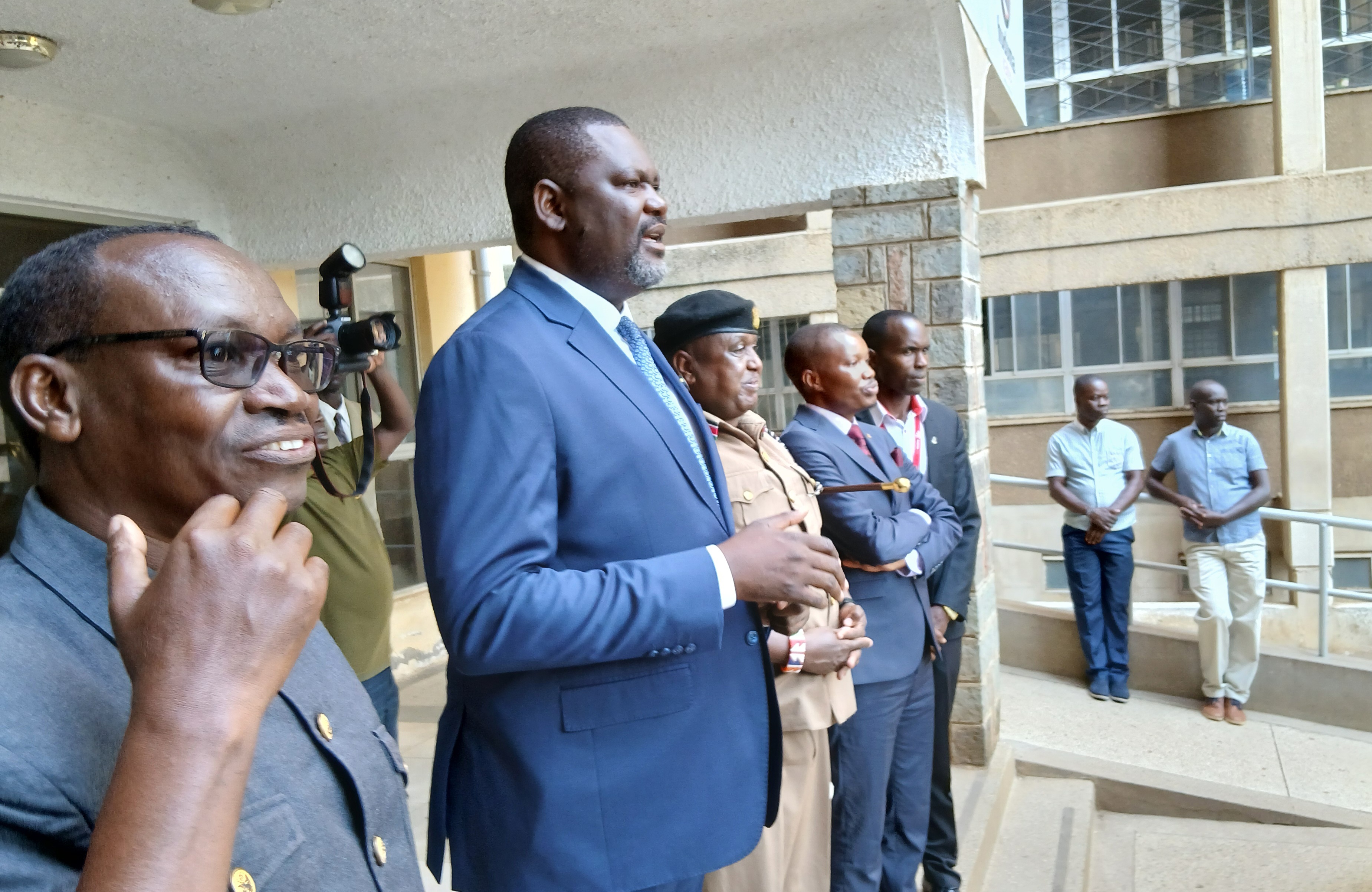
Public Service Cabinet Secretary Geoffrey Ruku has threatened a sweeping crackdown on absentee civil servants after a surprise morning inspection revealed that only about 20 per cent of national government offices at the new Nyanza regional headquarters were open by the official reporting time of 8 am.
During an impromptu visit, the CS went door to door and found most workstations unmanned, even as members of the public queued for services — a situation he said reflects a deep-rooted culture of lateness that is crippling government service delivery.
Ruku, however, lauded officers at the State Department for Immigration and Huduma Kenya, saying he found all staff in those units at their workstations on time.
He said he had observed a similar culture of punctuality in immigration offices in other regions, including Mombasa, Nyeri and Embu, and urged other departments to emulate them.
“That tells us it is not impossible. It is about leadership, culture and accountability,” Ruku noted.
In several other departments, including civil registration offices responsible for birth and death certificates and identity documents, the CS said he found long queues but very few officers present.
He termed the situation a violation of Article 232 of the constitution, which sets out the values and principles of public service, including accountability, responsiveness and efficient use of public resources.
“Kenyans are our customers. They pay our salaries through taxes. When they arrive on time and find empty offices, we are failing them and wasting their time,” Ruku said.
The CS described the findings as unacceptable and warned that the government was finalising reforms that will make attendance monitoring automatic, with consequences for officers who repeatedly fail to report on time.
“We cannot continue with a public service where officers choose when to report to work. The systems we are putting in place will ensure that those who do not comply with attendance and performance requirements exit the service within the law,” he said.
At the centre of the planned crackdown is the introduction of a biometric attendance system to be linked to an ongoing national payroll clean-up.
The CS said the process, which began in October 2025, is aimed at streamlining human resource management and sealing loopholes that allow absenteeism to thrive.
“Attendance will no longer be a matter of goodwill. It will be captured by systems and enforced,” he said, adding that the reforms are expected to take firmer shape by April.
The CS directed human resource managers across ministries and state departments to tighten supervision and submit monthly reports on staff attendance, as well as responsiveness to public inquiries made through official emails and telephone lines.
“If those communication channels are not working or not being answered, then we are failing Kenyans,” Ruku said.
The CS further criticised senior officers for failing to mentor interns, noting that many young trainees reported early while their supervisors were absent.
“These interns come to learn from their seniors, but the seniors are not at their desks. That is the wrong attitude in public service,” he said.
Ruku said the government has been receiving increased complaints from members of the public and legislators over slow and poor service in key ministries, piling pressure on the State to restore efficiency and accountability.
He underscored that disciplinary procedures, including possible dismissal, will be applied to habitual offenders once the new systems take full effect.
“We cannot keep travelling around the country to check who has reported to work. The systems will now do that. Those who are not ready to serve Kenyans diligently will have to make way for those who are,” the CS warned.