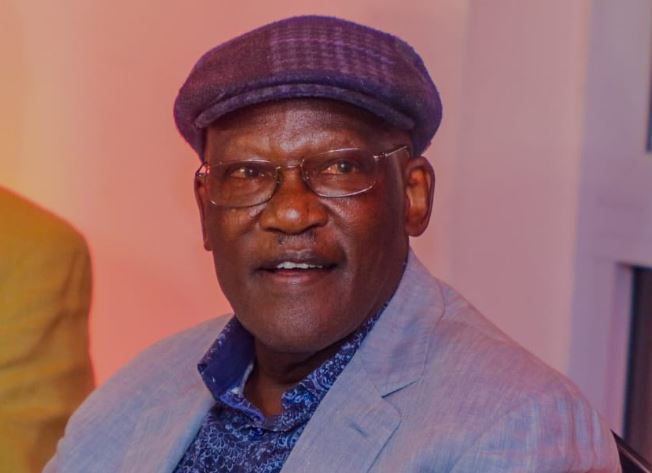
 Johnson Muthama, Commissioner of Parliamentary Service Commission.
Moments of political confrontation often become defining chapters in a nation’s democratic journey, not merely because of the disruption itself, but because of how citizens interpret what they witness.
The recent attack during a Sunday church service in Witima ACK, Nyeri County, where tear gas disrupted worshippers and former Deputy President Rigathi Gachagua was present, has once again brought into focus the fragile line between politics, security, and public life in Kenya.
A church is ordinarily a place of peace, prayer, and unity. When chaos erupts in such a setting, it sends a message that goes far beyond the immediate incident. It creates fear, deepens political tension, and shapes public perception. In a politically charged environment, perception can be as powerful as reality.
Kenya has witnessed similar incidents before. During President Uhuru Kenyatta’s administration, a church service at the African Independent Pentecostal Church of Africa (AIPCA) in Kenol, Murang’a County—attended by then–Deputy President William Ruto and several other leaders, including myself—was disrupted with teargas and live bullets fired inside the church on October 4, 2020, resulting in one death and several serious injuries.
Another fracas occurred during the burial of Mahoo Ward Member of County Assembly (MCA) Ronald Habel Sagurani in Taita Taveta County in August 2021, prior to Dr. Ruto’s arrival. That incident quickly took on a political dimension. It raised difficult and uncomfortable questions that remain relevant today, especially in light of the events in Witima.
The first question is unavoidable: Does chaos help someone win an election, whether it is caused by the state or stage-managed by individuals seeking public sympathy?
Experience suggests that when a political figure appears to be mistreated, humiliated, or unfairly targeted, public sympathy can shift in their favour. In William Ruto’s case, repeated scenes where he seemed isolated within the government or publicly embarrassed contributed to an image of a leader fighting against a powerful system.
For many citizens who already felt excluded from influence and opportunity, that narrative resonated strongly. Whether intentionally or not, those moments strengthened his political identity and may have played a role in his eventual electoral success. However, it would be a mistake to assume that chaos is a reliable path to victory.
Public sympathy is not automatic, and it does not last forever. Voters may initially react emotionally, but they also want stability, seriousness, and practical solutions to everyday challenges. If incidents appear exaggerated, manipulated, or suspicious, the same public can quickly grow skeptical. Sympathy can turn into fatigue, and outrage into doubt.
This leads to a second, more sensitive question: If Ruto’s mistreatment helped build his political support, will similar incidents today produce the same outcome for those involved?
The answer is not necessarily. Kenya’s political awareness has grown. Citizens are more critical and more alert to the possibility of political theater. What may have worked in one political season may not succeed in another. Repetition can reduce impact, especially if motives are questioned.
Another serious concern arises if allegations ever emerge that political actors are stage-managing disruptions at their own meetings to gain sympathy. If such claims were proven true, the implications would be deeply troubling. It would mean fear and disorder are being deliberately used as campaign tools.
It would also raise urgent security concerns: who are the people carrying out these acts? Where are they obtaining the weapons to cause such mayhem? And how are they operating outside formal security structures without being stopped? Are the goons causing this mayhem, or is the system responsible?
If it is the goons, who is supplying them with these weapons? And if it is the system, have those involved been brought to book? Kenyans are left wondering who should be held to blame. These questions point directly to the responsibility of the state. The government has a constitutional duty to ensure that all political leaders—whether in government or opposition—can travel, gather, worship, and campaign without fear. If violent groups or illegal weapons are involved in political events, security agencies must investigate firmly and impartially.
Failure to do so creates suspicion that the law is being applied selectively or that some actors are being shielded. At the same time, political leaders outside government also bear responsibility. Using inflammatory language, exaggerating threats, or turning every disruption into a political weapon only fuels tension.
Democracy cannot mature where disorder becomes part of campaign strategy. Ultimately, the larger issue is political maturity. Every Kenyan has the right to seek elective office and to look for votes in every part of this country. Leadership should be earned through persuasion, policies, and vision—not through intimidation, disruption, or emotional manipulation.
Both the Kenol and Witima incidents remind us that while chaos may generate headlines and short-term reactions, it does not build lasting legitimacy. Leaders eventually face the test of governance, where stability, inclusion, and trust matter far more than dramatic moments. Kenya’s democracy is still evolving.
Real progress will be seen when political competition is peaceful, security is applied fairly, and voters make decisions based on ideas rather than fear.
That is the path toward a stronger, more confident nation where leadership is decided not by confrontation, but by the will of the people expressed freely and safely.
The writer serves as a Commissioner of Parliamentary Service Commission.