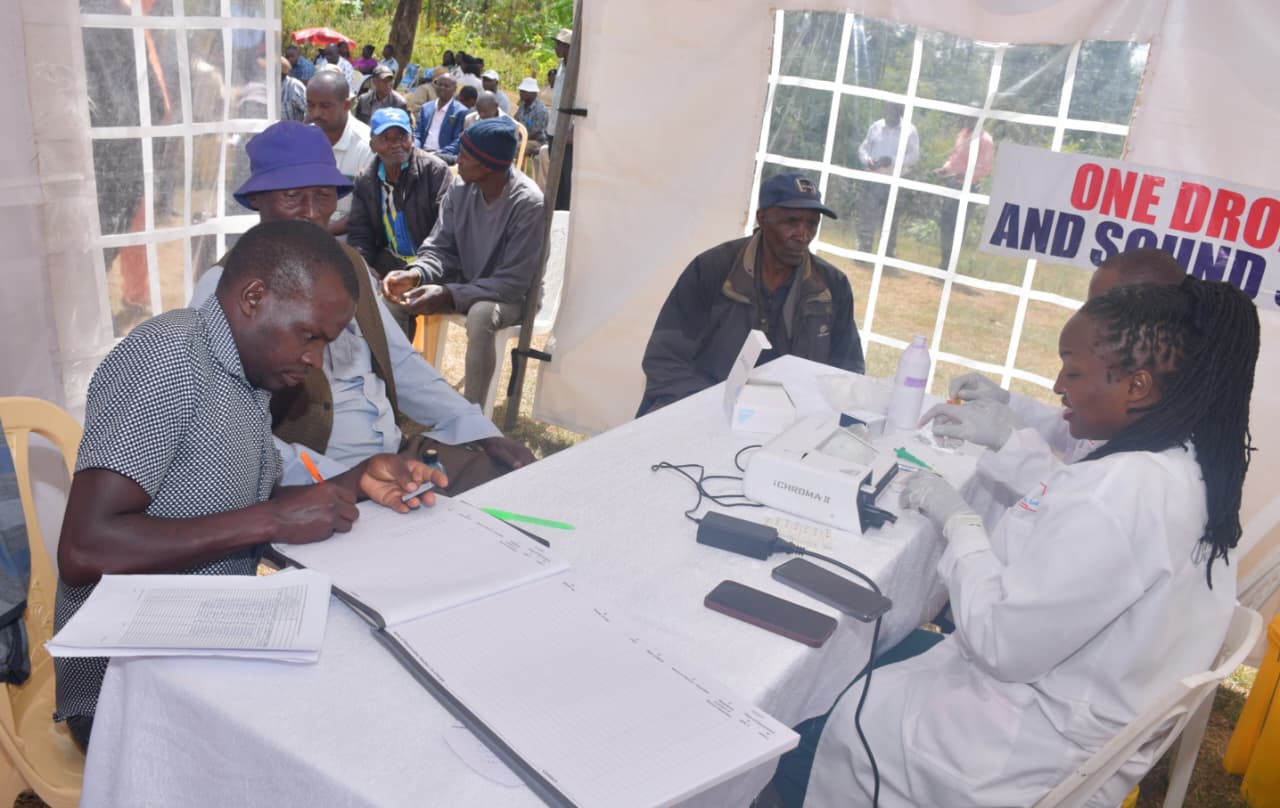
 Medics testing Ngiriambu residents during a four-day medical camp at Ngiriambu primary school in Kirinyaga/ ALICE WAITHERA
Fifteen people tested positive for cervical and prostate cancer during a free medical camp in Kirinyaga county.
This has sparked concerns over the high prevalence of cancer in the county.
Six women tested positive for cervical cancer and seven men for prostate cancer during the camp that started on Tuesday and set to conclude on Friday at Ngiriambu Primary School.
It has been organised by the Ministry of Health in partnership with the county government and private organisations to provide free screening and create awareness on cancer.
Edymong Cheruiyot, a director at Minnovate Afya company, that expands access to rapid diagnostic tests and one of the partners, said the patients have been referred to Kerugoya Level 5 Hospital for further tests. He said most people tested negative for breast cancer.
“We have screened more than 200 people in the two days and cervical and prostate cancers are coming out as most prevalent,” he said.
Cheruiyot, however, urged health facilities to embrace the latest cancer testing technology, especially in cervical cancer screening.
He said the Visual Inspection with Acetic Acid (VIA) testing method that is being used in many facilities relies on the medical officer conducting the examination, making it susceptible to errors.
VIA involves the use of a speculum to examine the cervix and applying acetic acid before waiting for a minute to observe colour changes. A positive examination shows well defined white areas while a negative one indicates no changes in colour.
Most women reported experiencing discomfort and shied away from repeat screenings.
But with advanced techniques such as Oncoprotein HPV testing, tests are done in a laboratory to detect specific bio-markers of cervical cancer, making it more efficient.
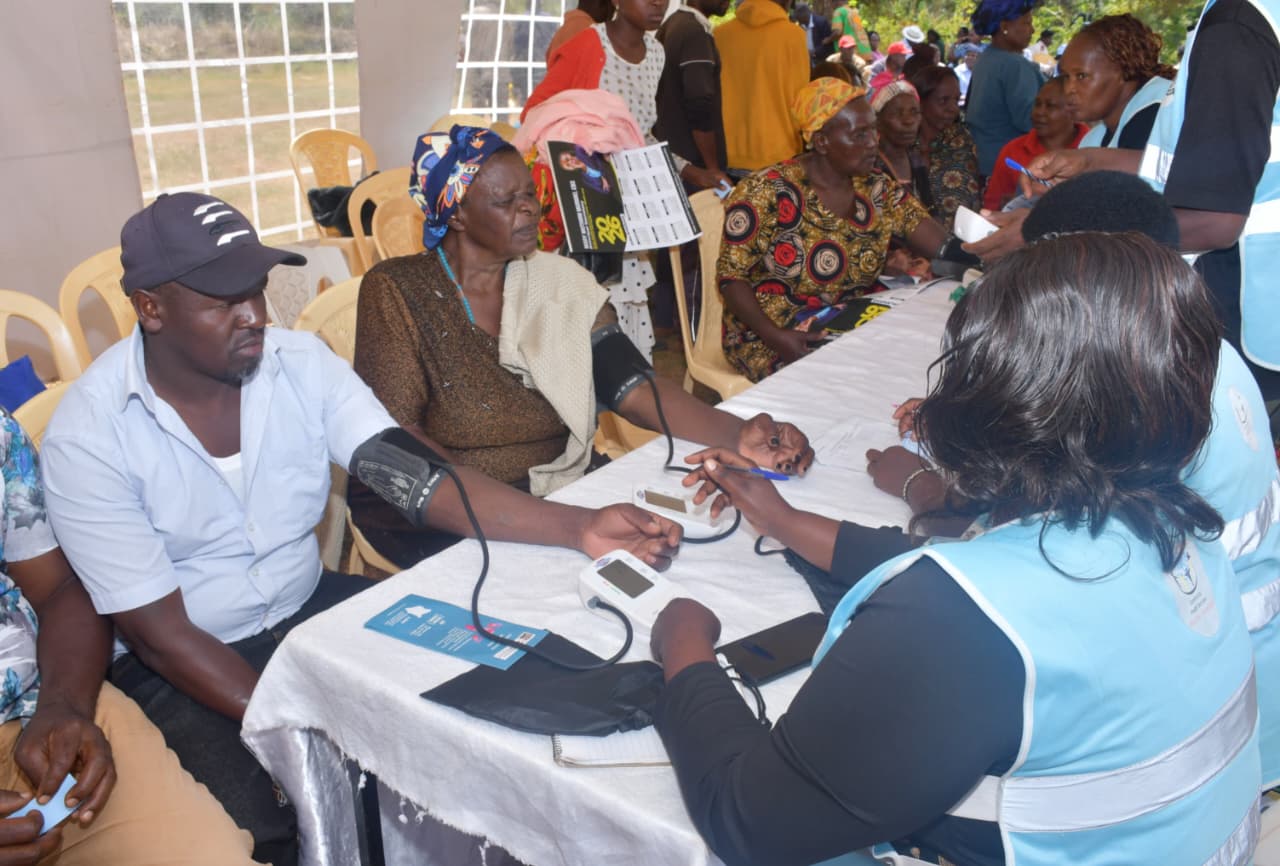 Kirinyaga residents during a free medical camp at Ngiriambu Primary School /ALICE WAITHERA
Cheruiyot said cancer screening has shifted from traditional methods found to be invasive and uncomfortable to blood specimen screening.
“We have screening methods that are providing results in just about 15 minutes unlike the previous methods that would take days,” he said.
Cheruiyot also urged residents to take advantage of the free camp to get screened, underscoring the importance of early diagnosis in cancer treatment.
He said two patients with severe hypertension were immediately rushed to a health facility using an ambulance.
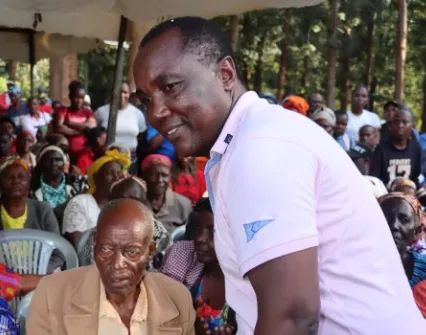
The camp has been organised to mark the cancer month and had by Wednesday attracted more than 500 elderly men and women.
Kirinyaga East deputy county commissioner James Maina said it was encouraging to see a high number of men come out to get screened for cancer.
“Normally, men don’t even seek treatment until it’s too late. They perceive healthcare as a women issue,” he said.
Beneficiary Justus Kamau called for more awareness on chronic conditions that he said continue to silently ravage villages.
Kamau said many people suffer from cancer but failure to get screened sees them get diagnosed too late, either out of ignorance or financial constraints.
“Sometimes, the hospitals are too far away and people are just trying to survive day by day. It becomes difficult to seek medical attention unless one is in a lot of pain,” he said, encouraging the government to organise similar camps in other parts of the county.
Pauline Kibicho challenged the government to consider subsidising cancer treatment, saying many people end up losing their lives due to lack of funds.
“Even when one is screened and diagnosed, treatment requires a lot of money that many families cannot afford. We have done many fundraising to support cancer patients,” she said.
According to data from the county health department, one in every nine deaths in the county is cancer-related, making it a major cause of premature deaths.
The county operates a cancer care and screening centre at Kerugoya Level 5 Hospital, which serves patients from Kirinyaga and neighbouring counties, offering early detection, referrals and follow-up support to reduce the need for long-distance travel to national referral hospitals.
Nationally, the Ministry of Health and National Cancer Registry data indicates that thousands of new cancer cases are recorded in Kenya every year, with breast, cervical, prostate and oesophageal cancers being the most common.
Health experts attribute the high mortality rates to late diagnosis, limited access to specialised treatment and the high cost of care.
The government has, however, stepped up efforts through public awareness campaigns, the rollout of the National Cancer Control Strategy, and expanded screening programmes in counties.